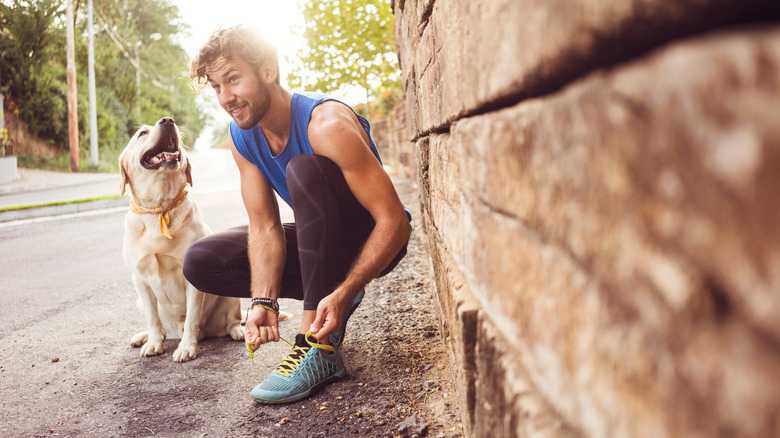
Genius Ways To Get Into A Workout Routine With Your Dog
DogsDog HealthGenius Ways To Get Into A Workout Routine With Your DogByCynthia AnayaUpdated: May 13, 2025 3:47 pm ESTVesnaandjic/Getty ImagesWe may receive a commission on purchases made from links.Everyone knows exercise provides a range of benefits to humans. It helps dogs in the same ways. Ideally, most healthy dogs should get some form of physical and mental exercise on a daily basis; up to 30 to 120 minutes a day, depending on breed, age, and overall health, with an average of 30 minutes of daily exercise recommended for humans. That means you could start a routine with your dog and work out together every day, whether it involves running, swimming, or playing with a toy, to both meet your requirements.Depending on your dog's breed and activity level, exercising together could save you time if you combine your cardio and your dog's cardio into the same time slot. It also allows you to bond with your BFF and make some new memories. Plus, you'll lower or even eliminate the risk of boredom-related destructive behavior while enhancing your dog's quality of life. These genius ways to include your pup in your cardio sessions are sure to make you both happy and fit.Take a walk or run with your dog to get some steps inZoranm/Getty ImagesMost dog owners make an effort to include a walk with their canine companion at least once a day, if possible, so why not convert those walks into intentional workout sessions? If you can run, consider amping up your speed for some of those sessions, or at least parts of them. In 30 minutes, you could cover over a mile if you walk, depending on your pace and the number of stops you make. If you run, you could double that distance, and of course, burn more calories. Your pet might appreciate the extra speed if it's one of the top 10 most active dog breeds.You and your pup can rack up some miles — or yards — around your neighborhood or hit the nearest wooded trail for a day hike. Remember to bring enough water for you both (and a bowl for your dog) if you think you'll be away from home for a while, or if it's a hot day. For a hike, add some healthy snacks to your backpack, and stop for a picnic along the way. Just be sure your dog is updated on its flea and tick preventives, and don't forget the bug spray for yourself.Do some agility training with your dogAndresr/Getty ImagesMillions of dog lovers tune in every year for the AKC National Agility Championship. If you've only experienced canine agility as a viewer on your living room sofa, and you have a healthy, high-energy dog, consider starting an agility training program together at home. You'll need a fenced-in yard or any other safe training environment, some time and patience, and of course, the equipment.You can buy agility equipment online at Chewy, Amazon, and other online retailers, or you can make your own. Common equipment includes open tunnels, bar jumps, tire jumps, and weave poles. Your dog will need to have basic obedience skills before it can get started. When it's mastered the basics, grab your running shoes; as the handler, you'll need to run with your dog to train it to go through the obstacles.With training several times a week, you'll both be getting hundreds of steps in and burning hundreds of calories every week. You don't have to run at the same speed, though, so keep that in mind and don't let your pup's high running speed discourage you from starting agility training.Make a splash in a swimming pool with your dogCarol Yepes/Getty ImagesAlthough not all dogs like to swim, if yours does, you can spend some time in your backyard pool together and make the sessions part of your workout routine. You can do some medley swimming and switch up the stroke with each lap, tread water for as long as you can, or do jumping jacks at the shallow end, to name a few examples. Just be sure you keep an eye on your dog to be sure it doesn't need assistance. You can also give it a life jacket, like this Outward Hound Dog Life Jacket, or some other flotation device made for dogs for some added peace of mind.Of course, your dog's swimming activities won't mirror yours — although it'd be pretty neat to see a dog doing the backstroke — but your pup will still get plenty of stimulation and exercise, and have fun doing it. To give your dog an added challenge, gather up some pool-friendly toys (ones that will float) and throw one in the pool while your dog is on land and see if it will jump in after it.While you and your furry friend will likely enjoy every second of your pool time together, keep in mind that it might tire sooner than you. Or, your pup might just want to end the swimming after 10 or 15 minutes for another reason, even if you can last much longer. Always pay attention to body language so you'll know when it's time to end your dog's pool time.Play fetch with your pet dog outdoorsSdi Productions/Getty ImagesIf you want to exercise with your dog without having to move your legs a lot, focus on your upper body instead with a game of fetch. Fetch is one of the best mental exercises for dogs, and of course, it gets their legs moving, too. You, on the other hand, can play fetch while seated on your patio sofa or standing in your backyard. Find your dog's favorite fetch toy and chuck it across the room or yard.The best fetch toys for dogs are the ones that activate your dog's natural drive to chase and can travel far and fast. That means it could be a ball, frisbee, stick, rope toy, or a similar toy. Of course, there's no reason you can't use multiple toys. This could give your dog some added mental stimulation and keep the game interesting for it.Repeatedly throwing a toy won't strengthen your muscles the way resistance training will, but it can still engage multiple muscles if you throw it explosively. Throwing is a form of ballistic training, which can enhance muscular coordination. Try switching arms after every few throws to work your muscles equally. You can also challenge yourself by aiming to throw the toy a little farther each time, which will also challenge your dog, forcing it to cover more ground to get the toy.Combine your dog's fetch time with circuit trainingJovana Djordjevic/Getty ImagesTo target other muscles in your body while playing fetch with your canine companion, add in a circuit training routine. If you're not familiar with this type of training, it's a full-body high-intensity interval training workout that involves doing a series of exercises with minimal rest between each exercise. It combines both endurance and resistance training.Create your own workouts or follow a video online. In addition to dumbbells or any other equipment you plan to use, have several of your dog's toys within arm's reach. After each exercise — or during, if you can — throw one of the toys across the room for your dog to fetch. While you wait for it to retrieve the toy, challenge yourself to complete a certain number of quality reps before it returns to you.Here's an example of what a segment of your circuit training workouts could look like between each toy toss: 10+ body weight squats, 10+ push-ups, 10+ bicep curls, 10+ crunches, 10+ jumping jacks, etc. If you do your circuit training outdoors, it will allow you to throw the toys farther so you can have a couple more seconds to do each exercise. Your dog might be a bit confused about all the movements you make, but it will quickly shift its attention back to the toy once it launches through the air. From hikes to swimming, fetch, and everything in between, finding a workout that you and your dog both enjoy can help you stay in shape together.
A Popular Flowering Garden Shrub Is Toxic To Your Dog
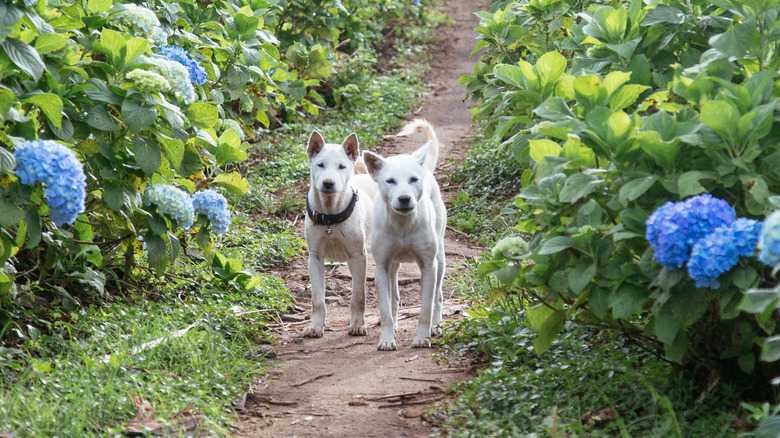
DogsDog HealthA Popular Flowering Garden Shrub Is Toxic To Your DogByCynthia AnayaMarch 9, 2025 1:25 pm ESTA Rey/Getty ImagesIf there's one behavioral no-no you can usually bank on with dogs, it's that they'll eventually chew on something they shouldn't, especially if they're young. Some chew holes through socks, while others shred sofa cushions or leather shoes. Other dogs prefer to eat plants, both in the house and outdoors, but this can be a bad idea due to the toxicity risk of many species. One plant, in particular, that should be kept away from dogs is a popular garden shrub: hydrangeas.Known for their large, showy flower clusters and color varieties, hydrangeas adorn many front porches, yards, and gardens. They're hard to miss, especially if they're blue or purple, and although animals don't see the same way humans do, these shrubs could get the attention of canines, too. Unfortunately, though, despite their alluring appearance, hydrangeas can be harmful to dogs if ingested due to a toxin in them called amygdalin.Every part of the hydrangea plant is toxic to dogs, but the leaves and flowers are the most dangerous because they contain the highest amount of amygdalin. When this toxin is ingested by a dog, it metabolizes in the body until it produces cyanide, a poisonous chemical compound that can make your canine companion ill.Symptoms of hydrangea toxicity in dogsUwe Krejci/Getty ImagesMany plants, foods, and other substances pose a toxicity threat to dogs, but "toxic" doesn't always equate to "deadly." In fact, hydrangeas are only mildly toxic, and the risk depends on the amount consumed and the size of the dog. This means a small dog that weighs under 10 pounds that chomps down on a few petals could experience symptoms, while a 120-pound dog that eats the same amount might exhibit none. The good news is that dogs getting cyanide poisoning from hydrangea ingestion isn't common at all — in fact, it's so rare that the actual amount required to generally cause acute toxicity symptoms in canines hasn't been determined.If your dog were to consume enough hydrangea to show symptoms, it might experience vomiting, diarrhea, lethargy, and stomach pain. You may also notice a loss of appetite or depression. If the amount of hydrangea ingestion is large enough to lead to cyanide poisoning, the symptoms can manifest within 20 minutes and include rapid breathing, muscle spasms, an increased heart rate, excitement, and fever, among others.With these risks in mind, avoid planting hydrangeas in any portion of your yard that your dog uses, create a barrier in front of the flowers, or just keep an eye on your pet. You could also consider planting flowers that won't harm your dog. If you believe your pet has consumed a toxic substance and you can't reach your veterinarian or an emergency clinic, please contact theASPCA 24/7 Poison Control Hotlineat 888-426-4435 or thePet Poison Helplineat 855-764-7661.
Shelter Surrender Is Worse For A Dog Than You Thought. Here's What You Can Do Instead
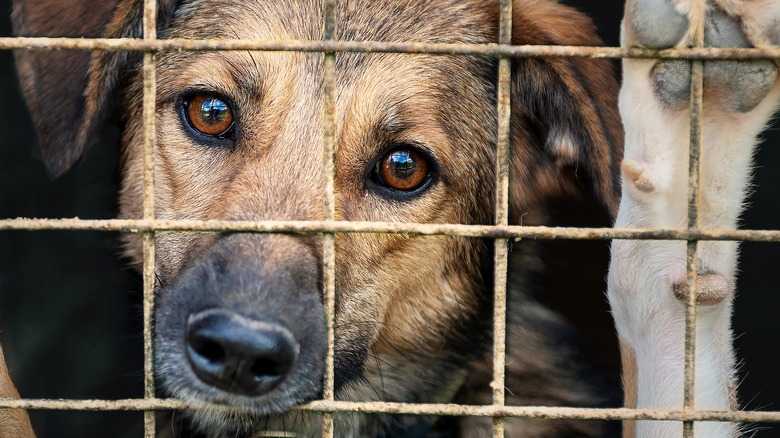
DogsDog HealthShelter Surrender Is Worse For A Dog Than You Thought. Here's What You Can Do InsteadBySanaphay RattanavongFeb. 10, 2025 1:25 pm ESTandysavchenko/ShutterstockAccording to the American Society for the Prevention of Cruelty to Animals, more than 6.3 million pets enter shelters across the United States each year, with dogs making up nearly half of this number. For many of these pets, the transition from a loving home to a crowded kennel is a traumatic experience, marked by fear, confusion, and emotional distress. Imagine your dog, who once greeted you at the door with a wagging tail and boundless joy, suddenly finding itself in a loud, unfamiliar environment surrounded by strangers. For some dogs, this process leaves lasting scars, making it harder for them to find new owners or adjust to life outside the shelter.Surrendering a pet, such as by giving your dog to a humane society, is an impossible choice, one many have trouble with — often on top of other significant struggles. But here's the thing: lots of these surrenders are avoidable. Whether you face financial strain, behavioral challenges, or housing restrictions, there are often solutions that can help keep pets with their families. By casting the net wider and deeper, you can equip yourself with what you need to protect your furry friend's well-being while lightening the burden on overcrowded shelters.Why do owners surrender their dogs to shelters?Ascent/pks Media Inc./Getty ImagesIt can be a slow build-up or an acute break, but life happens to us all, for better or worse. When it's the latter, dedicated pet parents don't arrive at the decision to surrender their dog easily. Understanding the common reasons for this is crucial — not to place blame, but to identify opportunities for solutions.For some, the hidden costs of caring for a pet add up, leaving them unable to afford essentials like food or veterinary care. In recent years, inflation has driven the prices of food and veterinary services higher, stretching household budgets to the breaking point. Housing restrictions also play a significant role, particularly for renters. Pet-friendly accommodations can be hard to find, and landlords often impose high fees or breed restrictions. For owners unable to make alternative living arrangements, surrendering their pet can feel like a necessity.Behavioral problems, such as incessant barking, destructiveness, or aggression, also commonly lead to surrender. Without access to affordable training or support, overwhelmed owners may believe they have no other choice. Additionally, unexpected life events like health issues, family crises, or the arrival of a new baby can force owners into difficult decisions. In many cases, multiple factors compound the problem, making surrender seem inevitable.The emotional and behavioral toll of surrender on dogsandysavchenko/ShutterstockFor a species that has coevolved with humans for over 40,000 years,surrender to a shelter can feel like the ultimate betrayal. Accustomed to the comfort of a home and the companionship of their family, many dogs experience intense fear and confusion upon arrival at a shelter. The abrupt change in environment — from a familiar home to a noisy kennel surrounded by unfamiliar animals — can overwhelm even the most adaptable pets.The emotional impact of surrender is particularly harsh for senior dogs, who often struggle to find new homes. For instance, Dax, a 20-year-old Weimaraner, experienced this firsthand when he was surrendered after almost two decades with his owner. Dax's story went viral, sparking widespread support. This attention ultimately led to his adoption by a loving new family, highlighting both the challenges and profound rewards of adopting older dogs.The stress of surrender often exacerbates behavioral issues, making it harder for dogs to find new homes. Behaviors like excessive barking, destruction, or anxiety — which may have been minor issues at home — can escalate in a shelter environment. These behaviors are frequently misunderstood by potential adopters, prolonging a dog's stay or even leading to euthanasia in overcrowded shelters.Alternatives to surrendering your doga katz/ShutterstockOrganizations and community resources are increasingly stepping in to provide support tailored to pet owners' needs. Programs like Human Animal Support Services (HASS) offer solutions to local shelters and social service providers to assist with keeping pets and their people together. HASS promotes services such as pet retention counseling, which helps owners identify and resolve the root causes of their struggles, whether financial, behavioral, or logistical. Another option is emergency foster care, which provides short-term placements for pets while their families navigate crises like medical issues or temporary housing challenges.For financial struggles, pet food banks and low-cost veterinary clinics can relieve the burden of care. Some shelters even offer assistance directly, covering medical expenses or providing free pet supplies. For example, KC Pet Project's Keep 'Em Together initiative has helped hundreds of families avoid surrender by addressing specific needs. For housing restrictions, resources like pet-friendly housing directories and programs that facilitate direct rehoming, such as Home to Home, provide solutions that minimize stress for pets and owners.Behavioral problems can often find relief through training and education. Many shelters and nonprofits offer free or low-cost classes to address common issues like barking or anxiety. Positive reinforcement training techniques, widely regarded as the gold standard in behavior management, can be particularly effective in transforming a dog's habits and keeping them at home.Navigating resources and community support to avoid surrendering your dogFg Trade/Getty ImagesEach person's situation is unique, leaving many with the daunting task of even knowing where to start when it comes to avoiding pet surrender. With so many programs available to assist pet owners, it's important to know how to effectively navigate these resources and tap into community support. Combining organizational help with local aid can be the difference between keeping your dog safe and happy with you and giving them up.Local shelters and rescue groups are often the first line of support for pet owners in need. Organizations like KC Pet Project and Austin Pets Alive! offer resources such as pet food banks, low-cost veterinary care, and training programs, providing tailored solutions for a variety of challenges. Beyond these formal programs, local communities can be powerful allies. Neighbors, friends, and family members may assist with temporary fostering or sharing pet supplies, while platforms like Facebook groups or Nextdoor connect pet owners to individuals eager to help during tough times.For broader support, national organizations like Human Animal Support Services (HASS) and Home to Home maintain directories linking pet owners to services such as emergency foster care, direct rehoming platforms, and financial assistance. These programs are designed to address diverse needs, including housing challenges and behavioral training.Celebrating success storiesBluecinema/Getty ImagesThe numbers may be daunting, but behind every statistic is a potential happy outcome. Across the country, non-profit programs and grassroots communities are making a difference, keeping pets and their families together against the crush of larger forces.For example,At KC Pet Project, a man named Larry faced the decision of surrendering his beloved dog, Trover, due to financial strain. Through the Keep 'Em Together KC program, Larry received help with pet food and veterinary care, allowing him to keep Trover at home. This intervention not only saved Trover from the trauma of shelter life but also preserved the deep bond between owner and pet. In another case, a family needed to rehome their dog due to an unforeseen move. Through the Home to Home platform, they found a new loving family directly, bypassing the shelter system entirely. Stories like this highlight how rehoming services can create smooth transitions and reduce stress for pets and their owners. With alternative solutions, community support, and a commitment to keeping families together, your furry best friend can stay safe by your side — right where they belong.
Why Dogs Lick Their Paws: What It Means And When To Worry
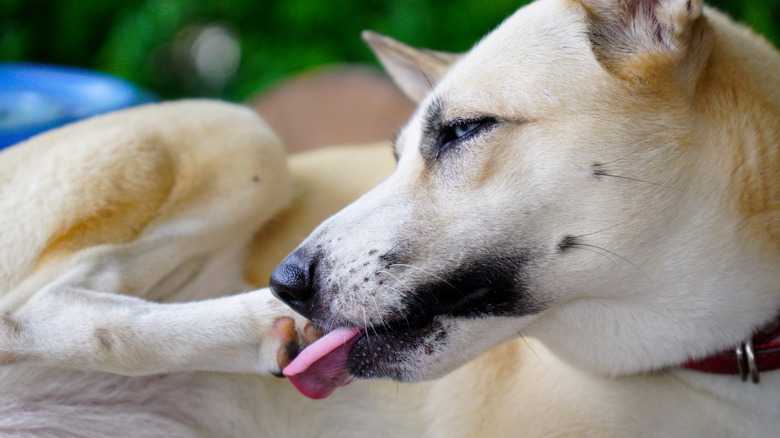
DogsDog HealthWhy Dogs Lick Their Paws: What It Means And When To WorryByAdam SymchukApril 15, 2025 9:25 am ESTKPhrom/ShutterstockWe may receive a commission on purchases made from links.Dog paws are remarkable, with significant variance between breeds. Webbed toes can indicate a good swimmer, and different breeds have different grips and paw prints. However, when a dog licks its paws excessively, it's a sign that something might be wrong.Speaking exclusively with Cuteness, Dr. Gary Richter, founder of Ultimate Pet Nutrition, highlighted several common causes behind a dog licking its paws, including allergies, injury, or foreign material. However, Dr. Richter advises that licking a paw is often a natural part of grooming. Since the causes vary, it is not always easy to know when to worry. Dr. Richter outlined when excessive licking should be a cause for concern, stating, "If it seems excessive to the owner... or if the foot/feet the dog is licking seem more sensitive than normal or if the skin looks irritated, that is an indication something may be wrong." For dogs with lighter-colored fur, there is another tell. Dr. Richter adds, "When a dog licks a lot, the fur can become stained by saliva. The staining is typically rust/reddish in color." Often, foreign objects or allergies are the reason behind a lick-obsessed pooch. However, pet parents should check their dog's paws for cuts, discoloration or swelling, missing skin or blisters from burns on hot pavement, abscesses, or broken nails, all of which can cause discomfort. Pay attention to when paw-licking behavior becomes excessive or comes with signs of pain — if a dog refuses to walk, you should listen to it — as it can help you protect those cute little feet year-round.Dealing with foreign objects causing excessive paw lickingAl Grey/ShutterstockA dog's paws are sensitive, and having anything lodged in there can lead to discomfort and a desire for a pooch to over-lick. Dr. Gary Richter explains that when it comes to foreign objects, there are plenty of plants and debris that can become a thorn in a pup's paw, such as "a piece of foreign material (plant awn, burr, etc.) between the toes or trapped in the fur, or there could be a piece of foreign material penetrating the foot (thorn, cactus spine, foxtail, etc)."Removing everyday foreign objects, like burrs, can be done at home. Get ready with a bag of treats and another pair of hands to keep your pup calm. Burrs can be carefully combed out; but be sure crush down big ones with pliers first. Burrs are common to find on a curious dog, but other debris caught in the paw requires a different approach. YouTube channel First Aid for Life shows how you can remove a thorn or splinter. However, if you are ever uncertain or uncomfortable removing debris, ask a veterinarian or professional groomer for help.A veterinarian should treat paw pad injuries, as even minor cuts can be slow to heal and lead to infection. However, first aid measures can be taken. Clean up the wound while looking for and removing the lodged object (if there is one), and then wrap the wound with fresh gauze until you can take your dog to a vet. A deeply lodged object should be left to be handled by a veterinarian, and if the bleeding is excessive and lasts over 10 minutes, an emergency trip is vital.Tackling allergies to help alleviate excessive paw lickingCavan-Images/ShutterstockLicking of paws is one of many warning signs for canine allergies; a runny nose, sneezing, ear infections, and change in behavior can all point to an allergy-irritated pup. Still, when it comes to paws, Dr. Gary Richter clarifies, "Allergies that cause paw licking can be contact allergies, inhaled allergens, or related to food." Here, a multifaceted approach works best. This can be as simple as switching to vet-recommended food or making your own for your allergy-affected pooch. Introducing a supplement like Dog Allergy Relief Chews can further help manage symptoms.A potentially simple fix for irritated paws is to keep them clean. For dogs with sensitive paws, a stress-free option like Dandylion Clean Paws is a one-and-done wipe-down without drying afterward. Fragrance-free Epsom salts can also relieve paw allergies; use ¼ cups of salt per liter of warm water three times daily for 10 minutes per paw, drying thoroughly afterward.The reasons behind a paw-fixated canine can vary. Thankfully, most causes behind a paw-licking obsessed canine can be addressed at home by treating allergies or checking for debris. Watching out for potential hazards and issues will ensure happy feet and travels.
Rescue Dog Grieving The Loss Of Her Puppies Finds Happiness With New Best Friend
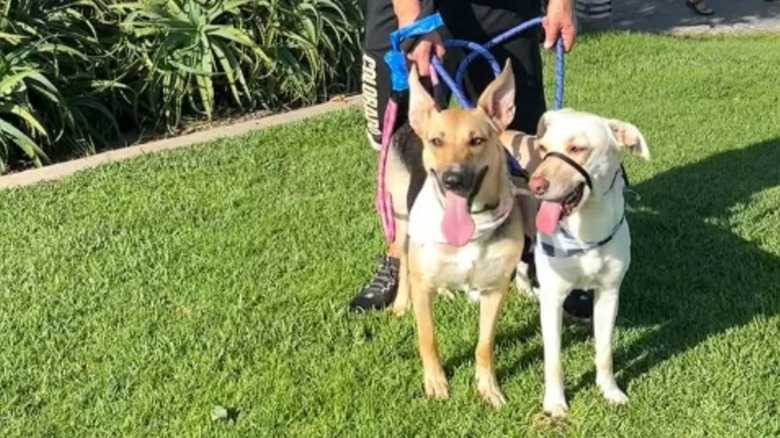
DogsRescue Dog Grieving The Loss Of Her Puppies Finds Happiness With New Best FriendByCynthia AnayaNov. 24, 2025 9:25 am ESTmessydirtyhair / InstagramEvery day, a dog is rescued from dangerous or unhealthy conditions somewhere in the world. Living like this often means not getting enough nutrients, experiencing stress on a daily basis, or developing health problems. All three of these factors can negatively affect unborn puppies just as much as they affect their mother, if not more. In fact, some puppies are born stillborn or don't survive beyond their first day of life. The latter was the case with a rescue named Pip, who lost her litter, but her grief was replaced with joy when she met another dog named Finn.Pregnant Pip was one of dozens of feral dogs that were abandoned in the Mojave Desert in May 2025. They were later saved by a team of volunteers and placed into foster homes. The team started driving the dogs to Los Angeles, and along the way, Pip went into labor prematurely. She gave birth to five puppies over a three-day period, but sadly, none survived, leaving her searching for them in the weeks that followed.Her foster mom posted her tragic story on social media in June, which led to her adoption a few weeks later. But in August, Pip unexpectedly returned to her foster home after an emergency involving her adopters, leading to another social media request for a forever home. Kelly and Ryan Tyson saw the post and later adopted Pip as a companion for their dog, Finn, after he'd lost his former canine BFF. It ended up being a perfect match.How Pip is doing todaymessydirtyhair / InstagramIn addition to walking, playing, and lounging around with Finn, Pip now enjoys day trips with her humans, including going pumpkin shopping. She even enjoys a cup of "Puppy Crack" (whipped cream with a Beggin' strip) from Coffee Dos Cafe in Costa Mesa every now and then. Surrounded by dogs her entire life (she's believed to be about a year old), being around Finn and any other dog likely feels normal for Pip. She's come a long way from the desert junkyard to a cozy, loving home.As if her story weren't heartwarming and inspirational enough, Pip inspired a fundraiser orchestrated by The SPAY(CE) Project on November 3 called Pip's Legacy Clinic. The volunteer-powered organization aims to raise awareness about dog overpopulation in California and provides free spay and neuter services to underserved communities. As part of the project, 50 dogs were spayed and neutered at BARC Barstow in Barstow, California, so that fewer dogs have to experience what poor Pip did.Interested in other heartwarming stories like these? Check out the woman who rescued a lost dog from a gas station, or this dog that waited 900 days in a shelter only for something sadder to happen.
Is Peat Moss Toxic To Dogs?
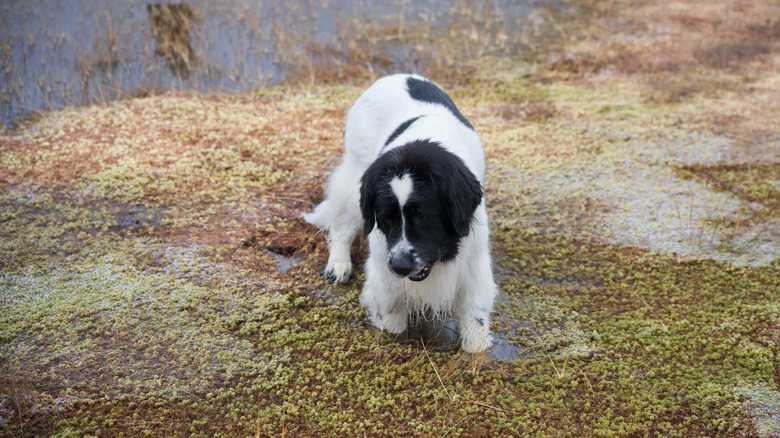
DogsDog HealthIs Peat Moss Toxic To Dogs?ByKatherine MaloneUpdated: Dec. 10, 2024 5:33 pm ESTIngrid Pakats/ShutterstockPeat moss is a common soil additive used by gardeners around the country, and it is also found in some commercial potting mixes. While peat moss is not considered toxic to dogs, your canine may experience an upset stomach or vomiting if he ingests it.What is peat moss?Peat moss is a plant material that has decomposed in bogs in areas throughout the world, including Canada, Russia, and northern Europe. Sphagnum moss is the most common source of peat, and the live moss grows on top of the bogs. Peat is harvested and dried and is formed into bales, pellets, or pots to be sold.Gardeners amend the soil with peat moss to increase soil quality and aeration. It is also useful in making the soil more acidic. Soilless potting mixes frequently contain a large amount of peat moss.Peat moss toxicity considerationsPeat moss is not toxic to dogs nor is the live plant, sphagnum moss, listed on the American Society for the Prevention of Cruelty to Animals list of toxic plants for cats and dogs. This does not mean that your dog will suffer no ill effects from ingesting peat moss, however. Any plant material, even nontoxic materials, can cause mild digestive upset and vomiting.Live sphagnum moss, while not toxic, may carry the fungal skin disease cutaneous sporotrichosis, so it is best to ensure your pup doesn't get into this live plant material. Peat moss, on the other hand, has not been found to carry the fungus and is generally considered sterile. While it is not sterilized after it is harvested, the bogs where the moss is produced tend to be highly acidic with few minerals, making it inhospitable to many harmful bacterial and fungi.Common garden dangersPeat moss may be safe for your dog, but there are many dangers of which to be aware in your home garden. Some mulches and soil additives, such as cocoa mulch, are toxic to pets. When adding plants to your landscape or home, be sure to check with your veterinarian or the ASPCA's toxic and nontoxic plants list to ensure that they are safe for your dog. Some popular plants, such as lilies and daffodils, are extremely toxic to dogs.In addition, many gardeners use a variety of chemicals that can be extremely toxic to their pets. Some examples include fertilizers, insecticides, and herbicides. If you have a bird feeder, be aware that any seeds that fall on the ground can quickly become moldy, which can cause serious problems for your pup. Other potential hazards include mushrooms, toads, snails, and slugs.When to consult a veterinarianIf you know or suspect your pup has eaten a toxic substance, contact your veterinarian, the ASPCA's Poison Control Center, or the Pet Poison Helpline right away. The longer you wait, the more poison your pup's system will absorb, so the sooner you get treatment the better. If your pup is having trouble breathing, take her to an emergency clinic right away.If possible, take a sample of the plant that your pup has ingested so that your vet can confirm the cause of the poisoning and determine the best treatments. Do not attempt to induce vomiting or administer any home remedies unless advised to do so by a veterinarian.
Abandoned Senior Dog's Complete Turnaround After Finding New Family Is Tear-Jerking
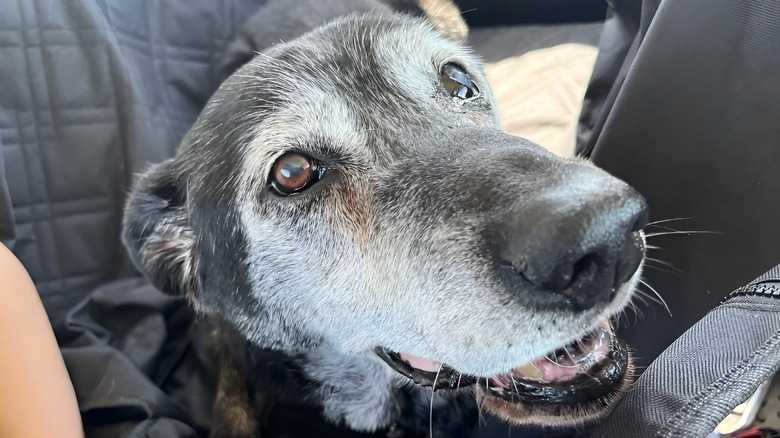
DogsDog HealthAbandoned Senior Dog's Complete Turnaround After Finding New Family Is Tear-JerkingBySheri RadfordJan. 4, 2026 9:25 am ESTseniordoghenry / InstagramIt was the late comedian George Carlin who famously said, "When you buy a pet, you know it's going to end badly. You just bought a small tragedy." Indeed, a common lament among animal lovers is that pets' lives are too short compared to humans' lives. But that fact didn't stop one man from bringing home a sweet senior dog with cancer, deafness, and blindness in one eye, believed to have mere days or weeks left to live.In a YouTube video published by The Dodo that's been viewed more than 753,000 times, Zach Skow, co-founder of Marley's Mutts Dog Rescue in Tehachapi, California, is shown bringing home shelter dog Henry to live out the remainder of his days in peace and surrounded by love. "I saw them bringing him out of his kennel, and he didn't want to walk. He couldn't hear. He couldn't see out of one eye," Skow says in the video voiceover. "You could just tell he was really confused. I remember the expression on his face. You could just feel his pain."After spending time with Skow's loving family, and after an operation to remove the cancerous growths, something unexpected happens. Henry starts to perk up and walk — then gallop — around the yard, acting excited whenever he sees Skow. Weeks pass, and Henry keeps getting livelier. "He was just totally reborn," Skow adds. When it becomes obvious that Henry doesn't require hospice care but instead needs a new forever home, Skow begins to accept adoption applications for the senior doggo.A forever family for Henryseniordoghenry / InstagramSenior dog Henry's story is not only one of resilience but also one of pure acceptance. "He's going to go out of this world surrounded by love, which is all we could ever ask for. He has made our lives richer while we've had him. And he's going to make the lives of those who adopt him richer," Zach Skow says in the voiceover at the end of The Dodo's YouTube video."He had much life to live and so much love to give...he just needed someone who cared about him," one viewer wrote in the video's comments. Many commenters criticized Henry's original owner for abandoning the elderly dog to a shelter, but others questioned whether the owner had passed away, become too sick to care for Henry properly, or been unable to afford Henry's cancer treatment. Veterinary care is one of the hidden costs of caring for a pet that many people forget about when trying to find the right dog or cat, and a cancer diagnosis is definitely one of the most expensive vet bills you can get if you own a pet. Some owners, when faced with a vet bill they can't afford, have to make the heartbreaking decision to surrender their beloved animal.Henry's new family took him home in March 2021, and he died in June 2022. One viewer of The Dodo's video succinctly captured all of our feelings about this outcome for Henry: "I'm happy to know that he had over a year of love and joy before he passed away."
If You Discover An Abandoned Litter Of Puppies, Take These Steps Immediately
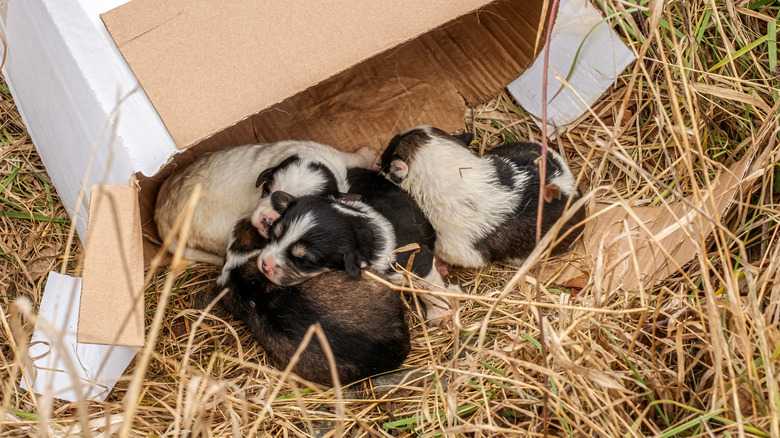
DogsDog HealthIf You Discover An Abandoned Litter Of Puppies, Take These Steps ImmediatelyByAdam SymchukJan. 21, 2025 9:25 am ESTRoberto Sorin/ShutterstockThe idea of coming across an abandoned litter of puppies will likely pull at the heartstrings of and cause a fair amount of anxiety for compassionate animal lovers. Unfortunately, the chance of encountering abandoned dogs has only risen. Speaking to CBS News, Stephanie Filer, executive director of Shelter Animals Count, highlighted an increase of 250,000 pets surrendered to shelters at the end of 2023 compared to the previous year based on data her organization collected from almost 7,000 shelters.While people abandon cats and dogs for a variety of reason, financial strain often plays a key role. Pets in the most expensive U.S. cities face escalating abandonment rates. New York City was one of many such metropolitan areas that reported a larger number of surrenders in 2023. The overburdened shelter system raises the question of what to do if you discover an unhoused puppy litter. As much as you may want to bring new pets home, you may not be ready to adopt a dog, let alone a litter. Thankfully, there are steps you can take immediately. After the initial shock of finding a litter of puppies, the dogs' safety should be the first thing you attend to. Ensure the puppies are not in immediate danger, such as from incoming traffic or other hazards. You should not move them yourself to avoid accidentally harming them unless a threat outweighs the concerns of improper handling. You can provide cover if you are worried about the cold or heat.Reach out for professional helpKagami Kagami / 500px/Getty ImagesStay with the abandoned puppies, but seek help from those better suited to handle the situation. Your local animal center or humane society may have records of missing dogs reported to them already, and they will also be able to guide you on what to do next or send someone who can help. If wait times for assistance from a shelter are long, try reaching out to local rescues that can provide advice or additional resources. You can find a list of animal shelters and rescues through Petfinder.While some people may assume that a neglectful owner abandoned the puppies, there is a chance that the mother had her pups outside and is currently away from them. If the mother dog returns, you must proceed with cuation; call animal control if she shows signs of aggression towards people. While the newborns likely won't have any ID, a tag or chip on a mother can help you reunite her with her owner.Initial considerations if you take the puppies homeJim Craigmyle/Getty ImagesIf you can't locate the owner or find a spot for the puppies at a shelter or rescue, you may see little choice but to take them into your home if you can do so safely. Learning how to take care of a puppy can be daunting, even for a short period. Taking them to a vet for a check-up is required ASAP to ensure there are no immediate health concerns that need to be addressed; this should be your first call before or as soon as you get home.Once you get the puppies inside, providing a safe space is vital, but keeping them separate from any pets you have is also important. This will help protect the puppies from potentially dangerous interactions and keep your pets safe from any illnesses the pups may carry. Children should also not be left to handle puppies to safeguard the health of both.Taking in an abandoned dog, let alone a pile of puppies, is a labor of love. However, this interaction comes with many considerations past the initial rescue, including legal responsibilities, continued healthcare, and setting them up for adoption. Reaching out to a vet or rescue will help you get the tools to house the little fluffballs until you can find them proper accommodations.
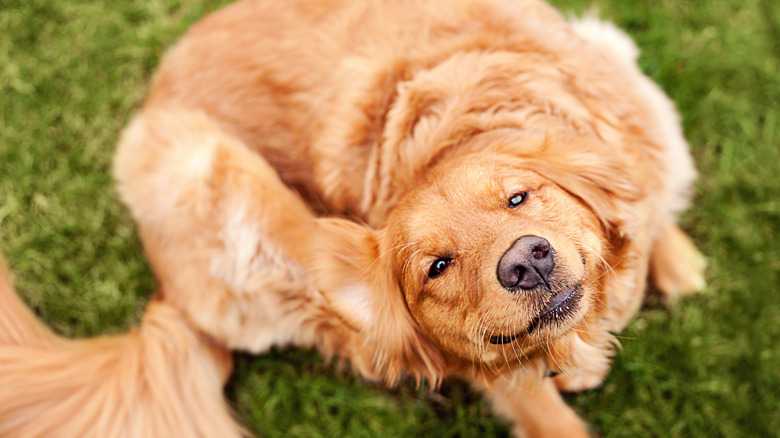
The One Ingredient Your Dog's Food Should Have To Avoid Unpleasant Skin Issues
DogsDog HealthThe One Ingredient Your Dog's Food Should Have To Avoid Unpleasant Skin IssuesByCori ChapmanFeb. 24, 2025 9:25 am ESTMore Than Words Photography By Alisa Brouwer/Getty ImagesWe may receive a commission on purchases made from links.If your dog's skin is itchy or overall unwell, it's time to consider incorporating fatty acids into your dog's diet. Fatty acids — namely, omega-3s and Omega-6s — have anti-inflammatory properties that help with wound healing and general skin health in all stages of life. Of course, there are over-the-counter anti-inflammatory medications for dogs, but our loving fidos may also be able to feel some relief from simply incorporating fatty acids into their diets.There are three main types of omega-3 fatty acids: alpha-linolenic acid (ALA), eicosapentaenoic acid (EPA), and docosahexaenoic acid (DHA). ALA is found in plants but isn't super beneficial to dogs because their bodies don't break it down well; therefore, DHAs and EPAs deserve all of your attention, as they're far more equipped to protect the skin from any problems. As an example, DHAs and EPAs are known to reduce swelling in inflammatory skin diseases. Similarly, omega-6s are absolutely essential, as a dog lacking them can experience myriad issues with their skin or coat, including excessive shedding due to its fur having turned brittle.How to incorporate fatty acids into your dog's dietYaraslau Saulevich/Getty ImagesFortunately, there are many different ways to boost omega-3 and omega-6 levels in dogs. Fish oil is commonly taken by humans, and there are also supplements to help give fish oil to dogs, including the PetHonesty Omega-3 Fish Oil, a liquid supplement that can be added to your dog's meals. When it comes to choosing a fish oil, look for natural triglyceride oil for its ease of absorption or ethyl ester oil. What's more, certain foods that are safe for dogs naturally contain these essential fatty acids. Most of these foods are, unsurprisingly, fish. A few examples include salmon with skin, cod with skin, and canned sardines. As with any supplement or new diet, though, don't give anything to your dog without first consulting a veterinarian, even if you can find an answer online. You need to not only consider what dose to give your dog but also other factors, including the size of your dog. This is where a veterinarian is essential as a guide to correctly dosing your dog with any fish oil supplement.Now, if your dog is experiencing skin problems, check out how to diagnose its condition.Always consult your veterinarian before making changes to your pet's diet, exercise, or care. To find an accredited veterinarian in your area, you can search theAmerican Animal Hospital Association's online database.
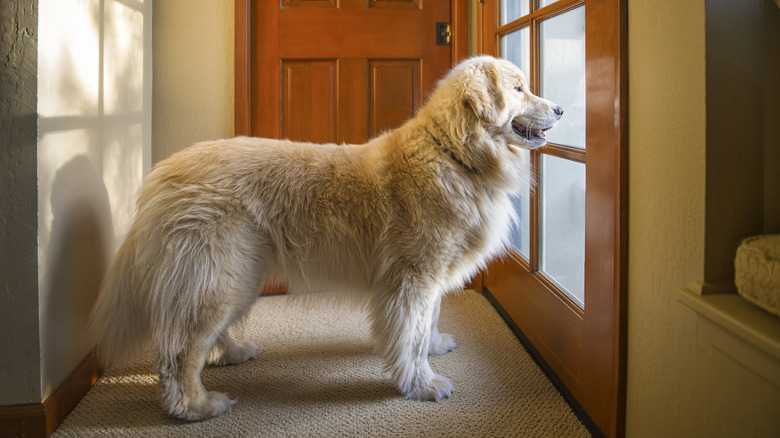
Should You Always Pet Your Dog Before Going Out? What To Know
DogsDog HealthShould You Always Pet Your Dog Before Going Out? What To KnowByJessica DesrosiersDec. 17, 2024 9:25 am ESTBarbara Brady-smith/Getty ImagesLeaving the house for work or errands can be a sad situation for you and your pup. As you head out the front door, you may notice your dog following behind you. Do you stop and say goodbye, or simply leave? Does it even matter to your canine companion? A 2018 study in the Journal of Veterinary Behavior suggests petting your dog before heading out could be the best approach for your pup — it may even reduce anxiety for some canines.The study examined a sample size of 10 dogs who did not have a history of experiencing separation anxiety. Researchers placed each dog into two trials; one where their owner petted them before leaving, and one where they didn't. Afterward, the researchers measured changes in the canines' heart rates and the stress hormone cortisol. They discovered that petting prior to leaving decreased the dogs' heart rates and lowered stress levels for a short period after their owners' departures.This research could play a role in furthering knowledge on how the human-animal bond affects our pets — especially dogs. It could also be useful for figuring out how being away from us affects anxiety and stress in dogs. However, there are some caveats to bear in mind. The research on whether owners should pet their canines before leaving the house remains limited, and the sample size of the dogs tested in this particular instance was very small. This is due to the fact that the research was a pilot, a type of study used to potentially pave the way for larger, more in-depth follow-up research — not to determine whether a particular approach actually works.How petting your dog reinforces the human-animal bondRoberto Machado Noa/Getty ImagesWhen your dog comes up to you and wags their tail or places their head in your lap, you may wonder if they truly enjoy the attention. While not all canines like being petted, it is rewarding to most. Actions such as pressing their head against your hands or showing you their belly are known as solicitation behaviors — meaning your dog is seeking out your touch and attention. These signs that your dog has bonded with you are good indicators that this is a beneficial experience for canines as well.Dogs are social animals. A human's bond with their pup can also have a positive effect on a canine's health and welfare. However, this can also mean an increase in anxiety for some dogs that can lead to behaviors such as separation anxiety — especially when leaving the house. By setting up the 2018 petting study to examine canine's without separation anxiety, researchers were trying to see how this human-animal bond impacts dogs — and if taking measures to soothe a canine through an enjoyable behavior had any effect.It's already been shown that petting a dog can have a beneficial effect on humans. This act lowers cortisol and increases oxytocin — the bonding hormone. The fact that the tested dogs had a measurable decrease in heart rate may indicate that petting has a positive effect on stress and anxiety for them as well; however, the results are by no means conclusive due to the limitations of the study.What to consider before petting your dog when leaving the houseMgstudyo/Getty ImagesWhile the study is promising, it's not a complete picture, as it only examined a small pool of non-anxious dogs. It also noted that more research is needed to test if petting before leaving has any benefit on canines with true separation anxiety. Further, it focused on testing non-visible measures of stress, heart rate and cortisol, rather than behavioral responses more commonly seen in separation anxiety, such as vocalization or destruction. Future testing of behavioral responses in addition to physical ones may be important.The study also challenges some common training techniques and advice used for treating separation anxiety in dogs — namely, not making a big deal out of leaving or coming home. "If you think your dog has separation anxiety, you should talk to your vet, and potentially a veterinary behaviorist, about how to help your dog." Dr. Katherine Cronin, who explored the information in the 2018 study, stated. "For dogs without separation anxiety, petting dogs goodbye might actually keep them calmer while you're away."Ultimately, the best course of action is to do what is best for you and your dog. If your non-anxious pup seems to respond well to having a few snacks and a pet goodbye, then there may be no harm in doing it. However, if your canine experiences separation anxiety, it may be best to forgo this ritual. Consider choosing a qualified dog trainer to help address any issues and keep your pooch comfortable instead.
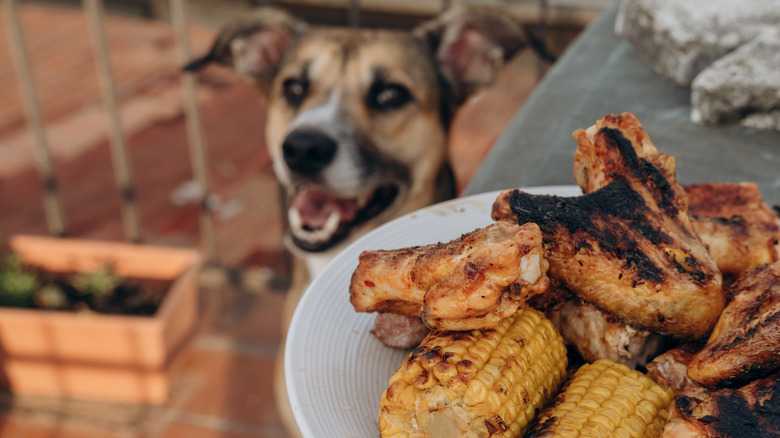
The One Thing You Should Never Do If Your Dog Eats A Chicken Bone
DogsDog HealthThe One Thing You Should Never Do If Your Dog Eats A Chicken BoneByPaige MountainOct. 4, 2024 9:25 am ESTElena Noviello/Getty ImagesAlthough many dogs enjoy gnawing on bones, chicken bones are a different story and can be extremely dangerous to your pup. While you should never give your dog a chicken bone and always keep a close eye on them while you're cooking or eating, they may still get their paws on a forbidden item. However, even if your pooch eats a chicken bone, there's one thing you should absolutely never do: induce vomiting.Though you might be tempted to try and get the bone out of your dog's system, causing them to throw up can lead to even more issues. Cooked chicken bones are prone to breaking and splintering, and if your canine vomits, they may harm the esophagus or even get stuck. Instead, there are safer measures you can take if you find yourself in this situation.Potential problems caused by chicken bone consumptionAnna_Belova/Shutterstock"A lot of dogs are perfectly capable of eating chicken bones without having any issues whatsoever," veterinarian Dr. Jo Myers, DVM, advised Pawp. However, they can still cause major problems. Aside from the choking danger and splintered edges, swallowing chicken bones may lead to internal bleeding. Signs that your dog may be experiencing internal bleeding include bloody stools, lethargy, constipation, bloating, vomiting, and loss of appetite. If your pup displays any of these symptoms, get veterinary help immediately.Often, puppies and smaller dogs are more likely to have issues with chicken bones due to their more compact digestive systems, which can lead to the bones getting stuck more easily and causing increased damage. Along with internal bleeding, chicken bones can also result in intestinal obstructions that require surgery, as well as mouth problems and a ruptured stomach. Raw chicken bones could also make your pup sick if they are contaminated with salmonella, which typically produces gastrointestinal issues in dogs, such as throwing up and diarrhea.What to do if your dog eats a chicken bonePrimeimages/Getty ImagesIf you catch your dog stealing chicken bones, try to safely take them away. If you aren't quick enough and your pooch devours the bones, ensure they aren't choking and contact a veterinarian right away to determine what to do from there. If your dog shows signs of choking, such as coughing, pawing at the mouth, gagging, or difficulty breathing, you will need to help them get the object out of their throat without delay. "If their dog is actively choking, perform the Heimlich maneuver to remove the bone from their pet's airway and immediately go to a veterinary emergency hospital," Dr. Aliya McCullough told The Dig.Other steps you can take include feeding your dog a soft food, such as slices of white bread, which can potentially help shield the sharp edges of the bone and block it from causing any damage. Even if your pup appears fine after eating a chicken bone, it's best to monitor them closely and take them to a vet to make sure the bones aren't stuck anywhere in their body, especially if you still don't see the bone fragments in their stool after 72 hours. Depending on how your dog got access to the bone in the first place, you will want to take steps to ensure they stay safe in the future.
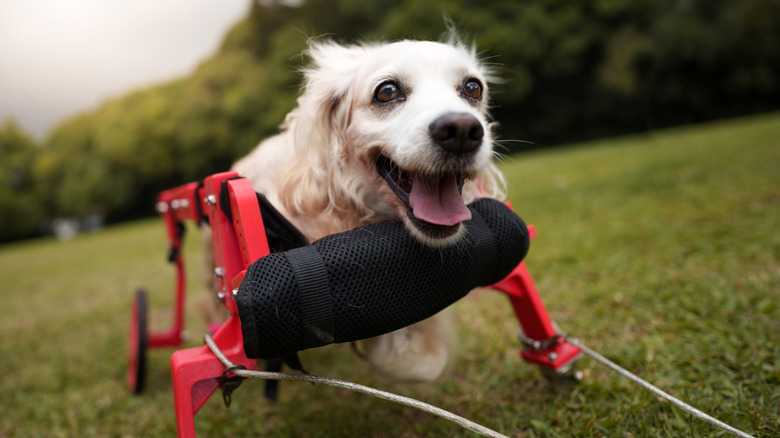
15 Dogs That Couldn't Be Cuter In Their Wheelchairs
Dogs15 Dogs That Couldn't Be Cuter In Their WheelchairsByAsia MayfieldJan. 25, 2026 9:05 am ESTCapuski/Getty ImagesWhat has four legs, a few extra wheels, and an endless supply of fur? The internet's cutest dogs in wheelchairs. These pups move a little differently, but they've figured out something important: a wheelchair can give a dog its life back. The first dog wheelchair was patented in 1961 by Dr. Lincoln Parkes. His original design was a heavy steel cart that helped injured or disabled dogs regain mobility.Over time, canine wheelchairs evolved into today's lightweight, custom-fit creations. As the technology improved, so did outcomes for dogs. With the right wheels and a little encouragement, a dog can quickly recapture the wonder of moving freely. The dogs on our list have mobility issues ranging from reduced coordination to total paralysis. What they have in common is a visible spark that returns the moment their wheels come out. For these dogs, wheelchairs mean freedom to run, play, and explore sidewalks again — and they're pretty cute in them, too.Tyrion understands joy on wheelsdiggydagg / TikTokTyrion was bouncing through life as a middle-aged pup when an autoimmune disease attacked his spinal cord. Within hours, the once-active creature lost feeling in his back legs. Physical therapy, consistent training, and medication got Tyrion back to a healthy, pain-free state, while learning to use a wheelchair let him find joy in running again. His human family posted a TikTok video showing him getting strapped into his wheels and zooming away like an excited puppy.Millions of viewers fell in love with Tyrion's happy show. Many commenters said they couldn't get enough of his "wheelchair zoomies" and cute and varied expressions. Even YouTube noticed Tyrion's charm, with the account writing, "the way he's smiling so big." It often takes days for dogs to get used to wheelchairs, but the TikTok video's caption explains that Tyrion started zooming around instantly. It's as though the pleasure of moving outweighed any initial discomfort.Pigeon's anticipation fuels plenty of happy hopspigeonpupper / YouTubeIf you need a quick pick-me-up, spend a few seconds watching Pigeon. Her playful personality and boundless enthusiasm are impossible to ignore. One of her most viral YouTube videos shows her wriggling and hopping in excitement as her human prepares her wheelchair. She can barely contain her energy. She's next to a decked-out Christmas tree, so the scene is reminiscent of an eager child prancing near unopened presents. Pigeon knows something good is happening when the wheels come out, and her giddy expression has helped to make her a social media star.Pigeon was partially paralyzed after a car accident when she was a puppy. In a comment on the video, Pigeon's owner revealed that her family adopted the pup after the accident. They knew that she was paralyzed and that she had a bright spirit. "She's always been this happy," they said. Other content featuring Pigeon supports this description. She has an exuberant energy that shines through every movement.Scooty now runs with no hesitationsuper_scooty / TikTokSweet Scooty glides like a pro in her wheelchair. The senior golden retriever was hit by a car when she was a few months old and got her wheels as a puppy. Now, having the contraption strapped to her back might be the best part of the day. A viral video shared on TikTok lets you see just how much Scooty loves her wheels.The video starts with Scooty in her front yard, bouncing happily as her human approaches with a green-and-pink wheelchair. After she's properly hooked up, she maneuvers past a gate and sprints full speed (as fast as a dog can run) down a sidewalk, her canine sibling at her side. For a moment, she becomes a blur of pastel colors and flying fur. "So, so sweet!" one commenter gushed. "The joy in her when she got on the sidewalk was amazing." Others marveled at how adorable Scooty looks in her wheelchair.Walks are longer and more controlled with Rocco's wheelswobbly_rocco / TikTokGoing for a walk with Rocco means listening to the most endearing music: the steady clip-clop of her little boots as she moves across the sidewalk. Boots can protect a disabled pet's paws and give them more traction on slippery floors. A TikTok video posted by Rocco's "pawrents" captures her first walk in her wheelchair. The booted dog looks a bit ungainly at first, but she quickly gets the hang of it and starts moving with confidence. A text overlay at the end of the video reveals that she walked for a full three blocks.Rocco's disability stems from a neurological disorder that affects her balance and coordination. She can go on walks without her wheelchair, but she needs to wear a special harness and can't move very fast. Rocco's wheelchair gives her speed and greater control over her movements. Many TikTok commenters point out that she also looks especially cute in her wheelchair, with her long ears flapping in the wind as she runs.Belle rediscovered her wild zestvonchilds / TikTokWhen Belle tried her wheelchair for the first time, it was love at first roll. She adapted at once and immediately clamored for a run. A heartwarming TikTok video shows Belle sprinting outside in her wheelchair. She moves so fast that you almost don't notice her wheels at first. She's just a normal dog having fun in the sun. Belle became paralyzed later in life, so regaining the ability to run was a real joy to her.One commenter who watched Belle's joyous run said, "What an absolute legend," while another added, "You go, Belle!" People love seeing an animal maintain its curiosity and zest for life after an accident. It's proof that the spirit is indomitable. Even a fibrocartilaginous embolism (FCE) — a stroke that causes part of the spinal cord to die — wasn't enough to darken Belle's bright mood. Another commenter suggested that getting a wheelchair is what gave Belle her spark back. The wheels provided an outlet for all of her zany energy.Sakumaru has a blast on his outdoor runs.sakumaru1213 / InstagramTiny Sakumaru looks like a bouncing fluffball when he runs in his wheelchair. An Instagram video showing the spirited trot has earned thousands of likes, with many viewers commenting on his adorable appearance. He has golden poodle curls, bright eyes, and a cheery little smile. In the running video, he exudes happiness. He's clearly comfortable with his wheelchair and has no problem exploring the world.Pet parents sometimes worry that canine wheelchairs will make their pups lazy and overweight. Sakumaru's video shows how unfounded these qualms are. His wheelchair is key to his getting ample exercise. He couldn't move so fast without it. A dedicated person can use a sling to hoist up their pup's middle and help them walk, but they would likely find it hard to match the speed that's possible with a well-constructed wheelchair. For paralyzed dogs, the fastest zoomies happen on wheels.Noel kicking dirt signals pure canine pleasureNoel the Bipawd Shorkie / FacebookSenior pup Noel is another wheelchair veteran. She was injured as a puppy and had to have her two front legs amputated. Despite her serious injury, she adapted wonderfully and showed off the determination that's carried her through the years. For the past decade, she's depended on her wheels to get around outside. She doesn't need the help when she's indoors, as her strong back legs can bounce her around the smoother paths. Charming Facebook videos posted by @Noel the Bipawd Shorkie highlight her little moves.Noel is surprisingly nimble on her own, but she's fastest with her wheelchair. The setup allows her to fly. One of her cutest Facebook clips is a glimpse into what happens when she slips into her wheels. Instead of immediately zooming away, she kicks her legs back into the dirt as though she's revving an engine. "I love her personality, drive, and enthusiasm," one commenter said, "kick it, cutie." In another comment, Noel's owner explained that the extra kicking has nothing to do with the chair and is just a sign of a pleased pup.Age means nothing to calm and dignified Frankieclearlypolished / TikTokFor Frankie, a new wheelchair means freedom! The sausage dog lost mobility after surgery and needed a little help getting around. He tried physical therapy and riding on a small cart before he got his new wheelchair. The shining metal and thick rubber wheels are large enough to overwhelm him, yet the tiny ween is extremely confident. A TikTok video depicts some of his happy, assured steps. He patters across a wood floor with his tail wagging furiously and a light in his eyes.It's a common myth that older dogs can't learn to use wheelchairs. People worry that the experience is too new or jarring for seasoned dogs to enjoy. However, Frankie demonstrates that when it comes to wheelchairs, age is just a number. Riding on wheels is a trick that old canines can pick up. Frankie was moving like a natural on the first day he got into his wheelchair.Beach sprints in wheels beat any strollmr.jrocket / TikTokForget about long walks on the beach. Jay wants to take you on a wild run through sand — in his wheels, of course. Many TikTokers fell in love with Jay via videos of him sprinting near the surf in California. In one of the most popular TikTok videos, Jay wears a blue shirt decorated with marine creatures and races across the beach like he's chasing a treat. "Look at him run...so cute," one commenter wrote.Jay becomes even cuter at the end of the video when he pauses his run for a quick game of nibble the finger with the person filming him. Games can't distract him for too long, however, and the sprint resumes after a few light chomps. One commenter cheered, "I love this. Go baby, go!" Jay is one of those toy dogs that are so compact and sweet, they'll always look like puppies.Kimber never broke her spiritmaryyyywilliams / TikTokKimber's transition to a wheelchair was gradual. A TikTok video shows her owner using slings to help her move before ultimately getting Kimber her own wheels. He explained in a comment that Kimber actually broke her back when she was five years old, but re-learned how to walk after the accident. She then returned to being an active, muscular pup until she was 14 years old, and her mobility declined.Now, Kimber's embracing her wheelchair and her renewed ability to run. Getting a wheelchair is actually one of the best ways to support a senior dog's weakening legs. The TikTok video shows Kimber playing in the grass and jogging alongside her black-furred sibling. Watching her can be very satisfying, as that kind of canine joy is infectious. Kimber looks like a contented creature, whether she has a sling looped around her middle or a wheelchair strapped to her back. However, for human eyes, the wheelchair has an extra attraction in the shape of a personalized license plate reading, "Nukl Head."Hamish has sidewalk swagger with silvery accentsthe_wee_ones_ / InstagramYou can imagine a successful businessman walking to the office with the same debonair energy that Hamish displays in this TikTok video. The pooch is even wearing a classy fitted jacket. Hamish's caretakers commented, "Wee Hamish: a man about town." The video was filmed at night, so Hamish's upscale look is complemented by the glinting silvery accents of his wheelchair harness and leash. One commenter praised his great vibe while another said, "He is so dang cute."The cheeky text visible at the start of the clip says Hamish is coming home after a night at the pub. The joke's writer may have been inspired by Hamish's crooked course over the sidewalk. The camera captured him following the leash but occasionally veering slightly left or right. Like most of the dogs on this list, Hamish is quite adept with his wheelchair. The minor directional changes seem to have been influenced by conditions of the sidewalk rather than problems with the wheels.Walking helped Wally rebuild strengthfarmersuru / TikTokWally was a real head turner. He was so cute that he could make your eyes linger if you saw him on a walk. He had pure white fur, a lean body, and a dark blue wheelchair. The combination created a postcard-worthy scene when he went for walks on snowy days, with the sheen of the fluffy white snow making his fur look even brighter. In one snowy TikTok video, he slowly jogged on a road with snow shoveled on both sides.Wally's mobility challenges sprang from disc surgery, and he was never completely paralyzed. The blue wheelchair served as a rehabilitation tool that helped him regain leg function. As he rolls past the snow in his wheelchair, you can see his legs wiggling and moving with purpose. His journey toward regaining strength inspired countless struggling pet parents, with one writing on Instagram after his passing, "You are such an inspiration to me."Balance issues can't stop Maverick's grass explorationmaverickthe_ween / TikTokMaverick seems convinced that running in his wheelchair is the greatest thing he's ever done. A TikTok video showing the miniature dachshund's assisted sprint could be included in a documentary on canine bliss. It's hard to picture a happier or cuter dog than Maverick in his wheelchair. He roams over broad grassy areas and sniffs the ground like his hunting forbears.A physical injury didn't cause Maverick's disability. Instead, he was diagnosed with cerebellar abiotrophy, a condition that erodes the dog's balance and coordination over time. Currently, he can still walk, but he's wobbly and prone to falling. The wheelchair keeps his little legs steady as he walks. Maverick's adventures attracted the notice of several dachshund-focused social media accounts. Pennie the Ween (@pennietheween) commented on Maverick's grass running video, "lightening speed! sick wheels," while Tipsy_the_Doxie (@tipsy_the_doxie) said that Maverick's wheels turned him into a speedster.Stylish outfits complement Oscar's cheerful cartwheeliecutedog / TikTokOscar's wheelchair story is a familiar one. He was a perfectly healthy pup until he turned six and lost sensation in his back legs. Luckily, his adoring family stuck by his side and created a new routine that included extra care, plenty of diapers, and a wheelchair. Their love did its work, and Oscar thrived. A short TikTok video provides a taste of his cheerful spirit. Oscar runs toward the camera with his mouth open in a huge smile and half his body resting in a cart.Part of Oscar's charm springs from the cute clothes he often wears. His humans love dressing him up, and most of the videos featuring his furry face also include a bit of style. He wears classic tartans around his hips, as well as the occasional sweater and long shirt. His latest wheelchair cart is covered in white fabric so it won't clash with these fashions.Nova's steady improvements bring hope for recoverylynn_and_us / TikTokJoining our troupe of dogs that were born healthy is Nova, a bully breed that was the picture of muscular strength before he was afflicted with intervertebral disc disease (IVDD). Lynn, Nova's owner, explained in an emotional yet inspiring TikTok that her and Nova's daily routine had changed drastically since the diagnosis. The running, jumping dog suddenly needed help with basic movements.However, this story isn't over. There are many ways to help dogs with IVDD and herniated discs, and many recover full function. It's possible that Nova will too. Lynn filmed Nova walking in his wheelchair, and the short TikTok clip lets you see Nova's hind legs at work. He's not back to his normal strut, which is why he still needs the wheelchair, but he's making big improvements. His affected legs move like baby limbs that are just learning how to walk. The video's caption says he's "finally stepping into every new day." Many commenters are invested in Nova's progress, too. One said, "This makes me happy. Go Nova!"
Are My Halloween Decorations Safe For My Pets?
DogsDog HealthAre My Halloween Decorations Safe For My Pets?ByMila RingoUpdated Sep 27, 2023Iva Vagnerova/iStock/GettyImagesIn This ArticlePotential dangersPet-safe Halloween decorationsPet Halloween costumesHalloween night safetyThe bottom lineIt's officially that time of year! Halloween decorations are hitting the shelves and people are gearing up for the spooky season. As you start to make a wish list of new decorations, be sure to choose ones that are safe to display in homes with pets.Potential dangers of Halloween decorationsPotential dangers of Halloween decorationsHalloween decorations can be downright scary — and not in a fun way — for pets. Decorations that light up, move, and make noise can frighten pets. Dogs may be spooked by inflatable yard decorations. You might even find your pup avoiding them on neighborhood walks. With their sensitive eyesight and hearing, cats can also be frightened by both indoor and outdoor decorations. This can especially be the case with ones that use movement, light, or sound.Pets may also be intrigued by Halloween decorations, not realizing they aren't awesome new toys you brought home just for them. Pets could burn an inquisitive paw or nose on the candles inside jack-o-lanterns, and can accidentally start fires if they knock one over. If carving pumpkins is one of your traditions, keep them outside and away from pets. Keep lit candles out of your pet's reach. Never leave a pet unattended with a burning candle. Battery-powered LED candles are a safer option and come in a variety of styles to suit your spooky decor needs.More Like ThisDogsHow to Introduce a Dog to a Halloween CostumeDogsHow to Care for Cuts on a Dog's NoseDogsCan Dogs Eat Popcorn?Stringy cobwebs, light strands, and electrical cords also pose a hazard to pets. Cats may be drawn to lights and can become entangled in them. Puppies and kittens might see an electrical cord as a chew toy and can injure themselves chewing through wires. Keep stringy decorations, cords, and wires out of reach of your pets, or move the decorations outdoors.Ekaterina Fedulyeva/iStock/GettyImagesChoosing pet-safe Halloween decorationsChoosing pet-safe Halloween decorationsConsider your pet's safety and comfort when choosing Halloween decorations. Assume that pets won't get used to a scary decoration during the short time you have it displayed. Decorations that use motion, light, or sound may scare pets too much to have indoors.A frightening object in a pet's environment can create fearful behavior that extends beyond Halloween. Both cats and dogs may make associations between the scary object and the part of the house they are displayed in. This could lead to anxious behaviors like hiding, refusing to eat, avoiding certain parts of the house, or refusing to go outside.Use lights and flameless candles to create a spooky atmosphere indoors.Pumpkins and gourds, while not scary, are festive and safe for pets.Fabrics and laces can be used to create a fun haunted house atmosphere.Get creative with window projections or projection mapping! Companies like AtmosFX offer "digital decorations" that are fun, easy to set up, and unlikely to scare pets.In general, try to follow the same guidelines you would use if you had a toddler in your home! If it's too scary or dangerous for a toddler, it's probably not pet-safe.Iva Vagnerova/iStock/GettyImagesHalloween pet costumesHalloween pet costumesIt's a fact: few things are cuter than a pet wearing a Halloween costume. While some pets are comfortable wearing clothes, it can be stressful for others.A pet's comfort level in a costume will depend on their individual personality. If you have an outfit in mind for your pet, introduce them to it slowly while giving treats and praise. Avoid costumes with decorations or accessories that could be a choking hazard. Watch your pet for signs of discomfort or anxiety, and remove the costume if they seem stressed. Never leave a pet in a costume unattended.Ирина Мещерякова/iStock/GettyImagesStaying safe on Halloween nightStaying safe on Halloween nightWhatever your plans for Halloween night, set your pet up for comfort and safety. Cats and dogs may be scared by parties, people in costumes, trick-or-treaters, knocking at the front door, and the doorbell ringing.Keep pets safe by putting them in a quiet room away from any festivities. Make sure your pet has an up-to-date microchip and ID tag in the event of an escape.Keep tricks and treats away from pets. Candy wrappers and choking hazards like lollipop sticks can cause an intestinal blockage if swallowed by pets. Sugar-free candy, and xylitol sweetener in Halloween candy, are toxic to cats and dogs in small quantities. Glow sticks present a nasty-tasting choking hazard. The oily liquid inside, while not toxic, can cause drooling and vomiting if ingested by cats or dogs.FamVeld/iStock/GettyImagesThe bottom lineThe bottom lineChoose Halloween decorations that don't pose a danger to your pet's safety or comfort. They can get tangled in lights or cobwebs and be scared by large outdoor decorations. Pets can burn themselves on lit candles or accidentally start fires. Halloween candy is toxic to pets. On Halloween night, keep pets indoors and in a quiet area away from festivities and candy. Have a fun and safe Halloween!ReferencesVCA Hospitals: Xylitol Toxicity in DogsPet Poison Helpline: Glow JewelryAtmosFX
How Often Do Dogs Need Their Nails Trimmed?
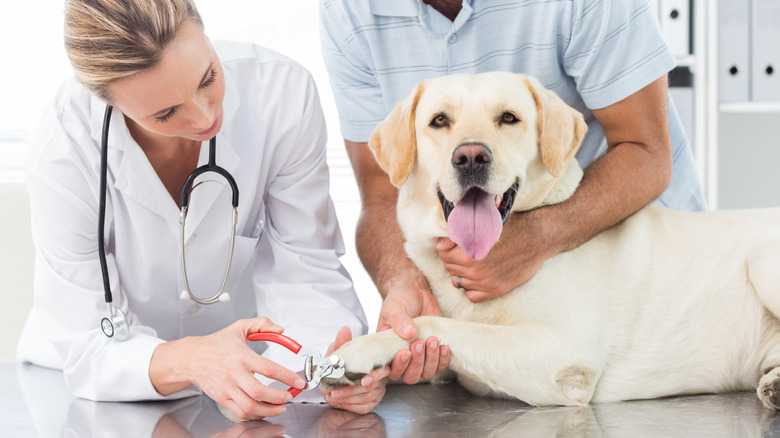
DogsDog GroomingHow Often Do Dogs Need Their Nails Trimmed?ByCynthia AnayaUpdated: Dec. 16, 2024 10:13 am ESTwavebreakmedia/ShutterstockBeing a responsible dog parent means performing regular nail maintenance on their paws. This isn't just for aesthetic purposes. For dogs, overgrown nails can be particularly painful, especially if they make contact with their paw pads. They can also can trap infection-causing bacteria. You may be wondering how often does your dog need a manicure? The answer varies depending on breed, size, age, and activity level. Generally speaking, most dogs need their nails cut once or twice a month. According to Dr. Jo Myers, a veterinarian at Vetster, large adult dogs, like labs, can go four to six weeks before they need a trim (via Rover). This same timeline applies to any other dog that spends time outdoors on pavement on a regular basis, since the pavement can wear down a dog's nail and function as a nail file. Meanwhile, dogs that don't do much walking on hard pavement (or who don't do much walking) typically need a trim about every two to four weeks. Puppies need their nails cut the most frequently – every one to two weeks – since this life stage is usually when nails grow at the fastest rate.How to determine if your dog is due for a nail trimJena Ardell/Getty ImagesDog nails eventually start to curve toward the paw pads as they grow, so if you see them forming a crescent shape, it indicates overgrowth. For some dogs, overgrown nails can affect mobility and cause an irregular gait, so if your pooch's walk looks off, it may be time to break out the clippers.If you're still not sure about the visual, you can easily determine if your dog's nails are ready for a trim by judging how they sound. One tell-tale sign that your dog's nails are too long is if they make a clicking noise against your floors as they walk. At the ideal length, a dog's nails should not touch the ground when they walk or stand.When you start to notice these visible and audible signs, make note of the date and keep track of how much time passes before you notice them again. That way, you can be more proactive and start trimming them before they get too long, since it can be difficult to trim overgrown dog nails if they're significantly overgrown. Just be sure you don't cut below the quick, if you plan to trim the nails yourself. You can use a standard pair of nail trimmers. You can also shorten your dog's nails with a Dremel tool or manual file instead of clippers, if your dog will cooperate. If it's too difficult to trim them on your own, you can have a professional groomer do it for you.
3 Ways To Get A Dog To Drink Water If It Isn't Thirsty
DogsDog Nutrition3 Ways To Get A Dog To Drink Water If It Isn't ThirstyBySheri RadfordDec. 3, 2025 9:25 am ESTFlystock/ShutterstockEveryone needs water to live, and it can be worrisome and stressful when your dog refuses to drink water. After a quick trip to the vet to rule out any medical or dental issues that could be causing the problem, it's time for you to get creative if your pup still refuses to drink enough. Here are some steps to start with, such as changing bowls, making the water more flavorful, or adding things to it.The first thing to try changing is your dog's water bowl. If you have just a single bowl, add a few water dishes in different locations throughout your home. Try different sizes and shapes of bowl, along with ones made from different materials (metal, glass, ceramic, etc.). Your dog might find a coffee mug or teacup more appealing than a regular bowl. If your dog has a condition such as arthritis, test if an elevated bowl makes drinking easier. Whatever receptacle you decide upon, be sure to wash it frequently and change the water in it regularly. If your dog ignores all bowls and cups, consider adding a water fountain, as the sound and constant movement of the running water can be very appealing.More ways to increase your dog's water intakePencil Case/ShutterstockThe next thing to try is to make your dog's water more interesting and flavorful. Add a splash of a tasty liquid such as unsalted, unseasoned chicken or beef broth; plain juice, including carrot or apple, with no sugars or artificial sweeteners added; or the liquid from a can of dog food. Be careful never to give your dog any liquid that might hurt them. Ingredients like alcohol, caffeine, chocolate, grapes, and artificial sweeteners can be harmful and even toxic. Also, avoid giving your pooch sweetened beverages or cow's milk, which can sometimes cause vomiting or diarrhea.A third way to get your dog to drink more water is to put ice cubes in the bowl. Especially on hot afternoons during the dog days of summer, ice cubes can add pizzazz to plain water, and some dogs enjoy crunching on the cubes. For an extra enticement, make the ice cubes out of bone broth. You can also increase the amount of moisture in your dog's diet overall by adding more canned food to the menu and by offering your dog healthy fruit and veggie treats, including cucumber or seedless, rindless watermelon, both of which have a high water content. One last tip: Always keep toilet lids closed. It's possible your pooch pal actually is drinking water regularly — just out of the toilet.

Vet Reveals The Truth About Foster Puppy & Everyone Learns What He Really Is
DogsDog NutritionVet Reveals The Truth About Foster Puppy & Everyone Learns What He Really IsBySheri RadfordNov. 22, 2025 9:25 am ESTmythologicaldogs/TikTokWhen Laurel Lingenfelter agreed to foster a puppy named Bruce, she thought she was getting a malnourished bully mix aged somewhere between four and six months. But after Lingenfelter got Bruce home, she started to suspect he was something different. A trip to the vet confirmed her hunch about the sickly but happy pup."Bruce is only 12 weeks old and he's definitely part Great Dane, made extremely obvious from his long legs, build, and tail that is the same length as the rest of him," she said in a TikTok video. "Big breeds like this need a special diet to grow correctly." But sweet little Bruce clearly hadn't been receiving the right type of food, or anywhere near enough of it. "He was found already emaciated, full of worms, and then not given the correct nutrients for his size," Lingenfelter said.Fixing Bruce's dire health situation required Lingenfelter to respond swiftly, but cautiously. She gave Bruce another round of deworming medication and the vaccines he needed, and began feeding him an appropriate type of dog food for his breed. She also started Bruce on a slow refeeding plan. "[Y'all] are doing GREAT!!! There's gonna be some days where it's hard but in the end trust me it's so worth it ... I'm sure he's in very very great hands," commented a TikTok user.What's the best way to help a malnourished dog?Djavan Rodriguez/Getty Images"Bruce is a two out of nine on the Body Condition Score, which is heartbreaking," Laurel Lingenfelter said in the TikTok video. Two Body Condition Score scales are commonly used to express how thin or heavy a dog is. One of the scales assigns a numerical score out of five, while the other uses a nine-point system. Bruce's score indicates an extremely underweight animal.Symptoms of malnutrition in dogs – lethargy, weakness, a dull coat, and visible ribs — can be frightening to witness, and it takes patience to treat a malnourished dog. The reality is that helping a skinny dog gain weight isn't as simple as drastically increasing the amount of food the animal receives. "If a dog this malnourished gets fed too much too quickly, they can die because their body isn't used to the amount of nutrients, so you have to slowly work them up to the correct amount of food," Lingenfelter explained.A slow refeeding plan involves gradually introducing more food in small meals throughout the day and carefully monitoring the effects, to make sure the animal's body is metabolizing nutrients again and to prevent the potentially deadly refeeding syndrome. "It is so hard to foster a malnourished dog and not give them all the food. It's for the best, but it's so hard," a TikTok user commented on Lingenfelter's video. Fortunately for Bruce, he ended up with an experienced foster, and his perpetually wagging tail gives reassurance that he'll be just fine.
Why Does My Dog Keep Shaking Its Head? Common Causes & How To Help
DogsDog HealthWhy Does My Dog Keep Shaking Its Head? Common Causes & How To HelpByAdam SymchukApril 21, 2025 1:25 pm ESTIrene Miller/ShutterstockWe may receive a commission on purchases made from links.From a wagging tail to an inquisitive nose, dogs are expressive creatures with many ways to communicate with body language. Many of these canine gestures are adorable, like your dog showing they love you, but their body language can also indicate potential problems. One of the more common issues that pet parents will encounter is head shaking.A single head shake is often a reaction to experiencing discomfort in the ear canal, which can be caused by water buildup or debris. A casual shake here or there is natural, but when it becomes constant, it can indicate more serious issues. The most common causes of excessive head shaking are ear infections, allergies, or foreign objects like dirt, grass, or pests — the appearance of any of these will irritate a dog's ear canal, leading to the worrisome behavior. Since the reason for head shaking can vary and be difficult for a pet parent to determine on their own, having a veterinarian properly assess the situation is essential for treatment.While a trip to the vet should be the first step, an owner's way to help with excessive head shaking can be to address and prevent potential issues before they happen. This includes regular ear cleaning with vet-approved products like VetWELL Ear Cleaner. Pests like ticks, mites, and fleas can be addressed with proper preventative medicine from a veterinarian and deterrents like the Seresto Flea & Tick Treatment & Prevention Collar. Seasonal allergies can also be managed through bathing with a hypoallergenic pet shampoo, keeping feet clean after outdoor play, and introducing a supplement like PetLab Co. Allergy & Immune Probiotics.Other reasons why a dog may keep shaking its headThedogphotographer/Getty ImagesWhile infections, allergies, or pests are common reasons behind head shaking, other causes can be more concerning to an owner, including autoimmune disorders, neurological conditions, or cancers. An autoimmune disorder can lead to inflammation of the ears and discomfort, similar to allergies. However, if not addressed early, a compromised immune system can lead to more severe problems throughout the body, including skin infections and damaged organs. Neurological conditions can cause involuntary head tremors or trembling that appear in a more bobbing movement than a shake; canine distemper is an example of a neurological condition that can cause this reaction.Brain tumors can result in irregular behavior/movement, seizures, and excessive head tilting, while a common symptom of ear tumors— including benign ear polyps — is head shaking. However, cancer comes with other signs that will make it apparent to a pet parent beyond constant head shaking, such as lumps, bumps, lameness, or lethargy. All these medical conditions require examination by a veterinarian who will be able to advise them on the best treatment at their office and home. A vet visit remains the critical first step in addressing constant head shaking at home before worrying about the best ways to help alleviate discomfort.Always consult your veterinarian before making changes to your pet's diet, exercise, or care. To find an accredited veterinarian in your area, you can search theAmerican Animal Hospital Association's online database.
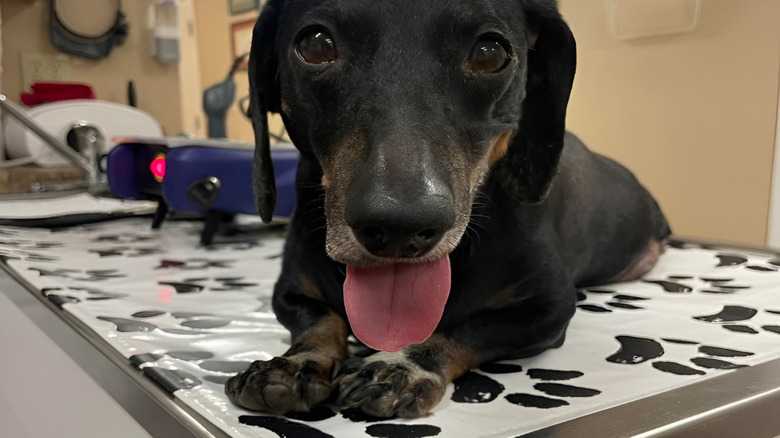
Nervous 2-Legged Dachshund Makes His Runway Debut And We're His Biggest Fans
DogsDog HealthNervous 2-Legged Dachshund Makes His Runway Debut And We're His Biggest FansBySheri RadfordDec. 9, 2025 9:25 am ESToldsoulsanimalrescue / InstagramIt's hard to imagine anything cuter than a doggy fashion show — unless it's a shy senior dog in a wheelchair appearing in his very first doggy fashion show. That was the situation in October 2025, when a 10-year-old dachshund named Gibbs strutted his stuff in the Dogs n Denim show at the University of Arizona. Gibbs had to overcome a bit of stage fright first, but eventually he made his triumphant runway debut. A TikTok video of the event shows how charmed the audience was to see the wiener dog on the makeshift catwalk sporting an adorable little heart-adorned denim outfit.Immediately after Gibbs came Vinny, a 1-year-old dog who managed to survive distemper. Cornell's College of Veterinary Medicine states that up to 80% of puppies who get the disease ultimately die from it, but Vinny survived with just a bit of neurological damage. "Gibbs and Vinny are two very handsome runway models, how adorable!! So heartwarming ❤️🐶," commented one viewer of the video. "They looked so fashionable and adorable! ❤," wrote another.Adopting a dog with special needsoldsoulsanimalres / TikTokGibbs and Vinny are just two of many animals at Old Souls Animal Rescue and Retirement Home in Tucson, Arizona, ready to be fostered or adopted. This nonprofit cares for elderly, special needs, and hospice animals. The organization also takes in the animals of elderly people who can no longer care for their pets. Gibbs arrived at Old Souls in 2021, not long after becoming paralyzed. The Old Souls adoption page describes him as a playful and affectionate doggo who likes to play fetch and chase lizards, never letting his wheelchair slow him down. Vinny is described as a loving pup who enjoys running around and receiving belly rubs. If you're ready to adopt a dog, consider choosing one with special needs, like Gibbs and Vinny. These animals have a ton of love to give, but they often have a hard time finding forever homes, and they'll teach you a lot about the wealth of empathy and patience you possess. However, it's best to be prepared for the unique needs these dogs may have, such as extra medications, vet visits, or equipment costs.Looking for more heartwarming stories about sweet dogs getting adopted? Check out this rescue dog who found a family after being returned to the shelter, and this senior golden retriever who found his forever home with a man who came to the shelter to adopt a different dog.

The Stages Of Pregnancy In A Bulldog
DogsDog HealthThe Stages Of Pregnancy In A BulldogByCasey Palmer, CVT CTDIUpdated: Dec. 10, 2024 1:54 pm ESTJulia Vedeneeva / 500px/Getty ImagesThe privilege of caring for a mother dog as she gets ready to birth her litter can be one of the most rewarding things to witness as a pet owner. Whether you've bred your dog on purpose or you've just found yourself the caretaker of an expectant mother, certain measures should be taken in order to give your dog and her puppies the best birth experience. If you are caring for a pregnant English bulldog, you'll want to be in close touch with your veterinarian throughout the process, as special measures may need to be taken at the time of delivery.Dog pregnancy timelineRegardless of the breed, dogs are pregnant for about two months, or 62 to 64 days. Dogs have three trimesters, each of which lasts about 21 days. At about 15 to 18 days, the fertilized eggs travel to embed themselves in the lining of the uterine horn. A puppy's heartbeat can be detected within the first month of pregnancy, and by day 34, recognizable puppies have begun to form. Puppies will be ready to be delivered between days 62 and 64, at which point preparations should be made to ensure a safe and successful birth.Pregnant English bulldog symptoms by trimesterMost dogs will display the same or similar dog pregnancy symptoms week by week. During the first few weeks, you likely won't notice anything different about your dog other than possible weight gain, as most dogs rarely display pregnancy symptoms so early. By week three or four, hormonal changes may make some dogs experience morning sickness.If your dog is sick and vomiting in the mornings, it is suggested that you offer her smaller bland meals, like boiled chicken breast and white rice, more frequently throughout the day rather than all at once. Around 28 days, a veterinarian can locate the puppies either through an ultrasound or by feeling her belly, the latter of which must be done with care because mishandling can lead to birth defects or miscarriage.As your dog enters her third trimester, her belly will become noticeably larger, and her nipples will take on a darker color and begin to protrude. Her breasts will become bigger as her due date approaches and may leak a small amount of milk from time to time.Between weeks six and eight, you may be able to see your dog's puppies moving inside her as they prepare to be birthed. A veterinarian will then assess whether her birth canal is large enough to pass the litter. If it isn't, a C-section procedure should be scheduled to assist with the birth.Some dogs may not want to eat as labor begins. A good sign that puppies are on their way is when the dog's rectal temperature drops below 99 degrees Fahrenheit for two consecutive readings. This signals that puppies should arrive within the next 36 hours but more likely 12 to 24 hours.Iryna Melnyk/iStock/GettyImagesPregnant English bulldog careCaring for a pregnant bulldog is a big responsibility and one that should be taken on with insight, planning, and preparation. The first thing you'll want to do is consult with your veterinarian to discuss the proper diet for your specific dog, which will ensure a healthy mother and puppies throughout the pregnancy. Adequate exercise is another important measure to take, which may help prepare her physically for the trauma that's about to come.Like other dogs, a pregnant English bulldog will sometimes become restless and scratch at her surroundings, preparing a nest for her babies. To help her along, you may want to provide blankets or towels on which she can rest.At least two weeks prior to your dog's due date, create a denlike space in a quiet part of the house where she will whelp her puppies. Common whelping boxes include kiddie pools lined with sheets or towels or a large cardboard box lined and padded with washable blankets. Make sure that your whelping box is secure enough that the puppies cannot accidentally roll out but that your bulldog can easily get in and out of it.
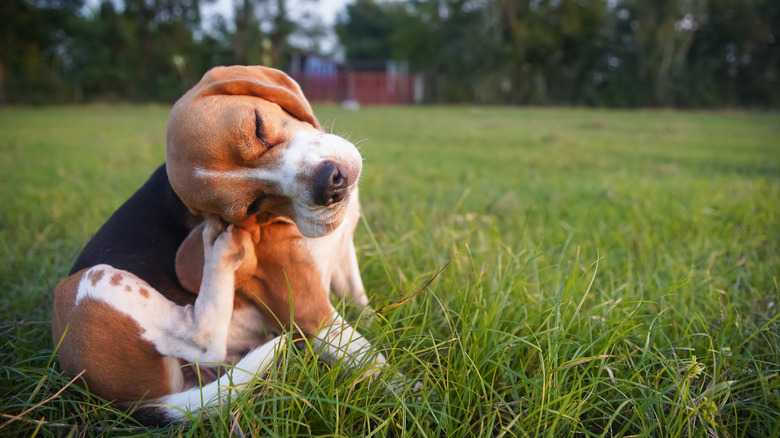
The Home Remedy That Alleviates Your Dog's Itchy Skin
DogsDog HealthThe Home Remedy That Alleviates Your Dog's Itchy SkinByCynthia AnayaNov. 24, 2024 9:25 am ESTKobkik/Getty ImagesMany owners have witnessed their pup lifting their leg to go in for a good scratch. Although not necessarily a cause for concern, you don't want to ignore itching. Plus, no one wants to see their dog in an uncomfortable state. In many cases, the culprits are environmental allergens or flea allergy dermatitis (F.A.D), a condition caused by flea bites. A prescription medication or corticosteroid can help, but there other less expensive treatment methods that don't require chewables or needles may also be effective. According to pet parents, you may be able to provide your dog with some itch relief using an ingredient found in your kitchen: a mixture of apple cider vinegar (ACV) and water.Apple cider vinegar is widely known for its antimicrobial and anti-inflammatory properties, so it makes sense why this works. A small body of research into its use as a topical skincare agent suggests that its acidic nature creates an unwelcome environment for itch-causing fungi and bacteria to thrive. Indeed, some studies have found it helpful with managing symptoms of fungal infections, like eczema, in humans. On top of that, its strong odor and acidic component also makes it a natural flea repellant, per WebMD. Plus, its relatively inexpensive and easy to access. Apple cider vinegar can relieve your dog's itchy skinMadeleine Steinbach/ShutterstockAlthough scientific research remains limited, many pet parents who have tried using ACV on their dog to alleviate their itchiness have found helpful. One Reddit user who said they tried the spray method for their flea-ridden dog claimed they saw immediate results. "He was instantly relieved," the post read, adding that their dog stopped scratching ever since they applied it to their fur. Another pet parent added that they had a similar experience using ACV on their dog, and pointed out that it made their coat shinier.Other owners mixed ACV with their dog's food or water, instead of spraying it. One posted about their experience in a Basset Hound forum, stating that they noticed a reduction in itching within two weeks after mixing it in their water bowl. However, in another pet forum, a dog parent claimed their dog refused to drink the water with ACV in it, so they poured it on their food instead. The results? "It worked brilliantly on the terrier who was prone to itchiness," the post read.Outcomes may vary from pet to pet, depending on the severity of the condition and the ACV to water ratio. Keep in mind that ACV is not a one-size-fits-all treatment method and may not be suitable for every dog with itchy skin. But if your vet approves the use of this home remedy, you can expect to save money.How to apply apple cider vinegar on your dogSergii Kolesnikov/Getty ImagesAccording to the Animal Health Foundation (AHF), creating a simple concoction that's 50% organic, raw, unfiltered apple cider vinegar and 50% water is all you need to provide your dog with itch relief. After receiving your veterinarian's approval, you can apply apple cider to your dog with a spray bottle. Spritz the mixture over the areas of your dog's fur where you've seen them scratching. Be careful to avoid applying to places like open wounds or scrapes, as this can cause a burning sensation.You can also apply apple cider vinegar to your pup's fur during bath time. This is a great option if you don't want your dog's coat to have that strong, vinegary stench. Wag! recommends mixing a 1 part ACV to 5-parts water ratio into a bowl or cup. After shampooing your canine, slowly pour the ACV mixture over them, gently massaging it into their fur and skin. Finally, rinse your pup using warm water, ensuring that no soap or ACV residue remains. Store any leftover mixture in the refrigerator for up to two weeks. You can safely repeat this process once or twice a month; you don't want to overdo it, as too much ACV can have the opposite effect.
Crayola's 2025 Christmas Commercial Will Make Dog Lovers Cry 'Happy Tears'
NewsCrayola's 2025 Christmas Commercial Will Make Dog Lovers Cry 'Happy Tears'ByCynthia AnayaDec. 17, 2025 9:28 am ESTCrayolaEvery devoted dog owner wants to include their canine kids in the Christmas fun. Some dress them up in cozy sweaters or silly costumes, whip up homemade dog treats, or share a few pet-safe scraps with them at dinner time. Others buy them new chew toys as gifts or just give them a few extra head scratches and belly rubs to remind them they're loved. Crayola tapped into this universal dog parent response in a recent 60-second commercial entitled "Blue Christmas."In the ad, a young girl flips through a book moments before locking eyes with her blue heeler lying in front of her. Her eyes then drift to the decorations hanging from the windows. As if channeling her inner Grinch, she strips the house of every red and green decoration she can find; piles them on a blanket; and drags them across the room. She then grabs a storage bin filled with craft items and finds a spot at the living room table.With her dog again by her side, she starts coloring and cutting with the help of her sibling and parents. Together, they all hang their creations around the house. Her grandmother enters the home moments later and immediately notices that all the decorations are blue. "Dogs can't see red and green," the girl says. "But they can see blue," her grandma responds. "Now you can see Christmas, too," the girl says to her dog. Many viewers on YouTube loved the commercial, with some crowning it "the best ad ever."How dogs see colorsCrayolaThe commercial highlights one of the things to know about dog eyesight and dispels common misconceptions. So, what colors can dogs see? Not nearly as many as we can. A dog's world isn't just blue, black, and white, but the palette looks very different from ours. Canine eyes contain only two types of color-detecting cones, referred to as dichromatic vision. Humans have three. This means dogs can distinguish blues and yellows well, but shades of red and green don't pop the same way. Instead, those hues tend to blend into muted browns or grays in a dog's view.This visual world resembles that of a human with red-green color blindness: colorful to a point, but with fewer vivid tones on the spectrum. Although the commercial focuses on blue as the replacement color for the red and green decorations, adding some yellow would have also been a great choice.With that in mind, the next time you choose a new toy for your pup, go for a blue or yellow one to add a little more excitement to playtime. Of course, if your dog loves toys, it won't care about the color, but at least you'll know you picked something it can actually see well. Just like the girl in the Crayola commercial, choosing colors that stand out in your dog's world offers a small, thoughtful way to include them in the fun, whether it's holiday decor or a simple game of fetch on the living room floor.
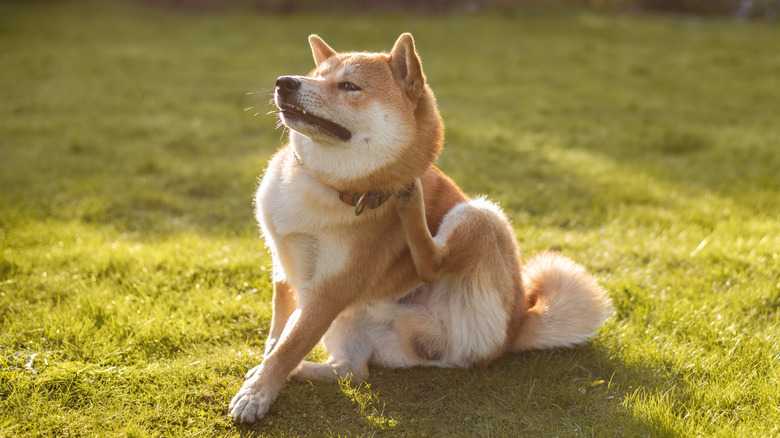
Simple Remedies For Treating Mosquito Bites On Dogs
DogsDog HealthSimple Remedies For Treating Mosquito Bites On DogsByCori ChapmanFeb. 24, 2025 3:25 pm ESTJulija Kumpinovica/ShutterstockWe may receive a commission on purchases made from links.Pesky mosquito bites are the bane of human existence, and they are just as bad for dogs. In fact, they're one of the pests that can pose the biggest risks to your pet. Luckily, there are multiple home remedies to help heal the bite and stop your dog from itching. These remedies can help relieve some of the swelling, redness, and irritation that these pests can cause. However, if you notice signs that the bite may be infected, such as excessive itching, redness, or pain, it's always best to stop home treatments and consult with your veterinarian.If you've noticed a new bite on your dog, a cold compress can be used to reduce swelling before applying any medications. Then, a topical can be applied, such as a soothing aloe vera gel. You can also try a homemade solution of baking soda and water to help reduce itchiness and swelling. Make a thick paste, then apply it directly to the affected part of your dog's skin. It's best to avoid any over-the-counter anti-itch medications, such as hydrocortisone, as these can cause adverse reactions in pets. If you do need to use one, speak with your vet first. It's also a good idea to apply these pastes in spots your dog can't easily lick off, or use an Elizabethan collar or T-shirt to protect the spot from your dog's tongue.A special bath can provide relief for dogs with itchy mosquito bitesJaromir Chalabala/ShutterstockA bath can be another great way to relieve itching on your dog — especially if they've been bitten by mosquitoes in more than one location. An oatmeal bath is a top choice because oatmeal has anti-inflammatory properties. Soak your pup in a soothing oatmeal and water solution for about 10 minutes for maximum benefit. If you don't have an oatmeal shampoo on hand, you can try a homemade oatmeal shampoo for dogs. First, blend up about a half cup of unflavored oatmeal. Then, pour it in a bath with warm water, and be sure to rub the oatmeal gently over any itchy bites.Other commercial shampoos can help with itching caused by mosquito bites. Look for one that contains a mix of aloe vera and oatmeal to help relieve itching. Vetroquinol Aloe and Oatmeal Shampoo comes in a comforting coconut scent to help your dog feel better quickly. Espree Oatmeal Baking Soda Shampoo also contains baking soda for an extra soothing bonus. Using these shampoos may be more convenient than blending up oatmeal in a pinch, and they will work to relieve the itch while also making sure the area is cleaned and disinfected.Of course, a pet-safe mosquito preventive is the best way to keep mosquitoes from biting — but it may not protect your pup fully. Whether you're applying homemade pastes or dousing your pup in a bath, you can be rest assured your dog will feel a bit of relief after dealing with these pesky flying pests.Always consult your veterinarian before making changes to your pet's diet, exercise, or care. To find an accredited veterinarian in your area, you can search theAmerican Animal Hospital Association's online database.
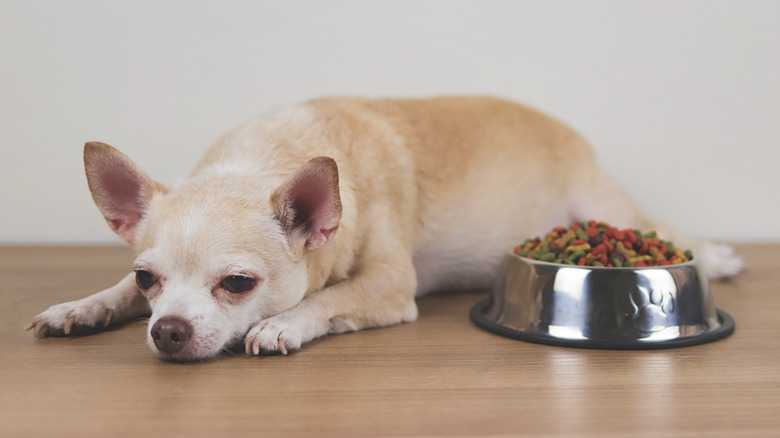
The Worst Dog Food Recall Ever Recorded In US History
DogsDog HealthThe Worst Dog Food Recall Ever Recorded In US HistoryByCynthia AnayaAug. 28, 2025 11:50 pm ESTPhuttharak/ShutterstockEvery loving dog owner wants to keep their companions safe and healthy, but sometimes accidents happen. When those accidents occur in manufacturing plants, they can lead to pet-food recalls that will make you consider vet-approved homemade dog food instead, such as the Viva Raw recall. In August 2025, this North Carolina-based company pulled six of its raw food products from store shelves due to potential salmonella and listeria contamination. But the worst dog food recall in U.S. history, based on volumeandthe number of affected pets, was the infamous 2007 Menu Foods incident.Menu Foods, a Canadian manufacturer, once sold pet food across the U.S. and Canada, mostly under private-label and store brands for major retailers. The company removed approximately 60 million cans and pouches of wet dog and cat food from stores after the recall announcement, affecting about 100 different brands. Reports of pets in the U.S. suffering from sudden kidney failure triggered the decision. Investigators later traced the cause to melamine contamination in ingredients that were imported from China. While the FDA reported only 10 pet deaths in its March 2007 press release, veterinarians and pet owners claimed the number was actually in the thousands, according to later analysis cited by EBSCO. The scale of the crisis sparked public outrage, congressional hearings, and scrutiny of FDA oversight, especially regarding imported ingredients. To this day, the Menu Foods recall stands out as one of the biggest cases in U.S. pet-food history.What happened to Menu Foods after the recall?Wera Rodsawang/Getty ImagesAfter the incident, Menu Foods took a serious hit, both financially and legally. Over 100 class-action lawsuits came pouring in, and the company lost $62.1 million in 2007 (via The Globe and Mail). Pet owners accused the company of negligence and emotional harm after their pets got sick or died. Although Menu Foods started to bounce back a bit in 2008, with losses shrinking, the damage had already changed the company's future.In May of the same year, Menu Foods agreed to a $24 million settlement to resolve the lawsuits and began paying pet owners back for vet bills. The once-popular pet food manufacturer continued to decline after that; in 2010, Arkansas-based Simmons Pet Food bought it for $239 million. Within the years that followed, Simmons added new distribution facilities as part of a $500 million growth plan, including one in Kansas and Iowa.Simmons Pet Food's official company website describes itself as "the leading North American private-label and contract manufacturer of wet pet food," and no recalls have been reported since acquiring Menu Foods. You can get the latest updates on pet food recalls by visiting the FDA or DogFoodAdvisor websites. Interested in learning more about pet food recalls? Read about the pet food brand with the most recalled food by far (based on volume alone) or the pet kibble company with the most recalls of all time.
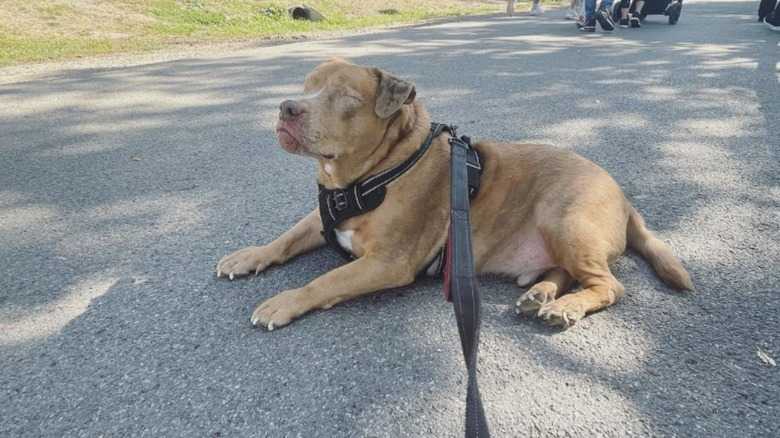
Blind Rescue Dog Is One Smart Cookie With A Genius Trick To Get Treats
DogsDog HealthBlind Rescue Dog Is One Smart Cookie With A Genius Trick To Get TreatsByCynthia AnayaNov. 15, 2025 9:25 am ESTstevie_wondie / InstagramDogs are amazingly resilient creatures, even when losing a leg or one of their most important senses. A three-legged dog can adapt and run around after an amputation, seemingly oblivious of the missing limb. A blind dog can rely on its other senses to navigate its home and surroundings outdoors, just like Stevie, a mixed-breed rescue. His owner gave the world a glimpse into his everyday life, including his trick to get treats, in a YouTube video shared by The Dodo in September 2025.His genius trick? Simply waiting in front of the kitchen pantry, where he usually gets his snacks. When his human, Erin, first brought him home in the winter of 2021, he was bumping into walls and fences, but he eventually learned his way around. Named after the "Isn't She Lovely" Grammy-winning blind singer Stevie Wonder, Stevie began losing his vision due to glaucoma and had his eyes removed in November of the same year.Now, four years later, he goes on leashed walks, jumps up on the sofa, plays with super tough toys for dogs who destroy everything, hangs out with his canine friends, and snuggles with his humans. He behaves just like any other dog without vision loss, and fans are loving it. In the comments, many applaud both Erin and Stevie, with many thanking her for rescuing him, loving him, and giving him a good life. Others call him lucky and offer blessings to both of them.What to expect when adopting a blind dogstevie_wondie / InstagramAdopting a rescue can be a rewarding experience. You're either saving a pet from euthanasia or giving it a better life — far better than whatever circumstances it was rescued from. Choosing to adopt a blind rescue can be even more rewarding, but it comes with some added challenges. Some are apparent from day one. Others surface later, so it's important to know what you're getting yourself into before signing the paperwork.For example, a dog that's losing its vision due to disease may require medication or surgery, which was the case with Stevie. If it's already lost its eyes before adoption, the main thing you'll have to worry about is helping it around the house. This should include ensuring a clutter-free, easy furniture layout and blocking off stairs or other potentially dangerous areas. You may also want to purchase a halo harness to prevent head bumping.If you have young children or other dogs at home, introduce the blind dog to them slowly and under strict supervision. You may also need to keep your blind dog separate from the other dogs beyond the first month. Stevie "isn't a fan of close contact," according to Erin's Instagram for him, so she keeps him separated from his brother at times. Despite the challenges and extra adjustments you'll have to make, a blind dog can make a wonderful companion, just like Stevie, and they all deserve a chance to prove it. Interested in more stories about dogs with special needs? Check out what to expect when adopting a three-legged dog or how to care for a blind and deaf dog.
What It Means If Your Dog's Nose Is Dry (And How To Fix It)
DogsDog HealthWhat It Means If Your Dog's Nose Is Dry (And How To Fix It)ByPaige MountainNov. 3, 2024 11:25 am ESTMur-al/Getty ImagesYou may have noticed when your pup gives you a big ol' kiss on the face, their nose is cold and wet. Typically, this is a sign of a healthy dog. A wet nose helps our pups regulate their body temperature and enhances their sense of smell. So what if you notice that your dog's snout is drier than usual?While you might be concerned if your dog's nose isn't the sloppy, wet one you're used to, a dry nose isn't necessarily a cause for concern. Sometimes a dry nose is the result of something as harmless as a long nap. Since dogs aren't licking their noses while they sleep, their little sniffers aren't going to be as wet as when they're awake. Other times, a dry nose can be explained by external factors like the weather conditions or allergies. In some cases, it's simply the result of their genetics.The good news is that in most cases, a dry dog nose can be easily cured with moisturizer. However, there are certain circumstances that might require some additional treatment. Once you figure out what is causing your pooch's dry nose, you can figure out the best approach to fixing it. Your dog is dehydratedFaba-photograhpy/Getty ImagesDogs usually do a good job keeping their own noses moisturized by constantly licking them. However, if they become dehydrated, they won't produce as much saliva, and as a result, will either stop licking their snout entirely or hit their nostrils with a dry tongue.Dehydration in dogs can happen for a number of reasons, such as spending time outside in the hot weather, not drinking enough water, or gastrointestinal issues like vomiting or diarrhea.Regardless of the cause, If your dog appears dehydrated, you need to get them hydrated as soon as possible. Aside from a dry nose, signs of dehydration include panting, vomiting, and dry gums, as well as a loss of appetite and skin elasticity. At this point, it could be considered a medical emergency. If your dog is showing any of these symptoms (especially after giving them water), you may need to take them to the vet to replenish lost fluids and electrolytes. Your dog has been exposed to hot or cold weatherLipatova Maryna/ShutterstockIn the same way that human nostrils can dry out during the winter months, our fur babies' noses can also become dry and irritated after they spend time outside in extreme weather.During the winter, dogs who live in frigid temperatures can develop windburn on their noses. Thankfully, this usually isn't cause for alarm. To provide your dog with relief, consider using bag balm on your dog's nose for extra moisture and protection.By the same token, when it's hot out, dogs' noses can become sunburnt. If you notice your pup's snout is dry and flaky after a day in the sun, there's a chance they could have gotten burned. Along with dryness, redness and blisters on the nose are some other signs of sunburn. The good news is this is totally treatable. Applying a cold compress to the snout can help your dog deal with the discomfort.However, if the sunburn appears severe, or your pup seems to be in a lot of pain, you may want to take them to the vet to make sure they aren't suffering from a more serious condition like heat stroke. Some signs of heatstroke include excessive drooling, elevated heart rate, heavy panting, and lethargy. This can become fatal if left untreated, so if your pup is showing these symptoms, seek veterinary care immediately.Your dog has allergiesCarol Yepes/Getty ImagesWhen your pup is dealing with environmental allergies, it can lead to a variety of symptoms, including itchiness and a dry nose. Just like with humans, allergies in dogs can be triggered by exposure to certain environmental elements like pollen or ragweed. However, it's not always the outdoors that's the culprit. Certain household cleaners may contain chemicals that set off allergic reactions in your pup. It's important to take stock of any potential irritants around your home to see if they could be causing a reaction or dry nose in your dog. Keep in mind that it may not be obvious. For instance, natural products like essential oils can be considered toxic to dogs.Along with a dry nose, some key signs your dog may be dealing with allergies include frequent sneezing, scratching, and skin inflammation. Taking them to the vet can rule out if allergies are the culprit and if they're severe enough to warrant medication. In milder cases, you may be able to turn to home remedies to help your dog's allergies. However, some cases may require medication to manage their symptoms. Your dog is a breed prone to dry nosesPurple Collar Pet Photography/Getty ImagesSometimes a dry nose isn't due to an external cause. Some breeds are simply more prone to having drier noses than others, and this doesn't necessarily mean they're sick or that something is wrong.Brachycephalic breeds (a.k.a flat-faced dogs), such as pugs, bulldogs, and shih tzus, frequently have dry noses because they struggle to lick and keep them moisturized.If you have one of these pups, you'll likely need to apply nose balm or another form of moisturizer on your their nose frequently to prevent dryness. If you prefer a natural route, you can safely use cocoa butter to moisturize your dog's snout.Another condition that can lead to dry noses that certain breeds are prone to is hyperkeratosis. Hyperkeratosis happens when your dog's body is producing more keratin than they need. Hyperkeratosis isn't a major concern, but it can lead to calluses on your dog's paws pads as well as a dry nose. Brachycephalic breeds are often prone to this condition, as well as certain others like Labrador retrievers, Irish terriers, and cocker spaniels. Applying nose balm regularly can help your dog with hyperkeratosis stay moisturized.
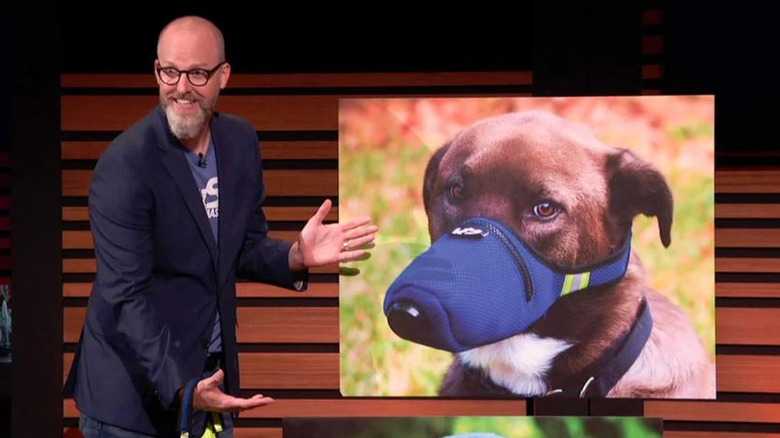
Is The K9 Mask From Shark Tank Actually Worth It?
DogsDog HealthIs The K9 Mask From Shark Tank Actually Worth It?ByCynthia AnayaApril 18, 2025 9:25 am ESTABCSince its first episode in 2009, "Shark Tank" has intrigued investors, entrepreneurs, and consumers alike. The series has seen its share of pet inventions, including BarkEm's To Go and the Woof Pet Rescue app. Dog parents who watch the show may also recall the 2020 episode featuring the K9 Mask. Described as "the world's first air filter mask specifically designed for dogs," the mask filters air pollutants like smoke, pollen, dust, and volcanic ash to protect a dog's respiratory system. Shark Daymond John made a deal with the businessmen for the mask, which retails for $49-59, but is it worth the price? Some consumers say it is. Others disagree.The N95 mask features an activated carbon air filter that's removable and replaceable, allowing the mask to be washed. With four layers of filtration, the air filter purifies the air that a dog inhales while wearing the mask. The company also states that the carbon filter layer prevents toxins from entering a dog's bloodstream. You can purchase the mask directly from the K9 Mask website and on Amazon in one of four sizes.The K9 mask gives dog parents peace of mindDigital David / YouTubeThe manufacturer's website shows reviews from dozens of happy customers. One dog owner bought the mask for their allergy-sensitive German shepherd while another purchased one for their asthmatic pup. Both gave it five-star ratings, with one commenting on the dog's apparent comfort. Many others praised the product for its fit and ability to provide peace of mind. A frequent California visitor felt at ease knowing their dog would be protected in areas with poor air quality caused by wildfires.As the mask gained popularity and garnered mixed reviews after appearing on "Shark Tank," YouTuber Digital David decided to test it for himself and share a list of pros and cons. His dog, Doug, served as the test subject. The YouTuber confirmed what other shoppers stated about the fit. Also, although it took Doug some time to adjust to the mask, he showed no signs of distress or breathing difficulties. The YouTuber highlighted the convenient adjustable straps as well as the replaceable filters and removable exhaust filter.The product also surfaced in a "Shark Tank" Reddit thread, where viewers gave their two cents. One mentioned their own discomfort in inhaling polluted air and said, "I'm sure [it] doesn't feel great for animals [either] ... I can understand why people would purchase one." Another with experience living in an area with annual wildfires said, "I don't have a dog, but if I had one that needs lots of outdoor exercise, I'd buy one."Some consumers say the K9 Mask can be dangerous, uncomfortable, or ineffectivek9_mask/InstagramDespite the positive reviews, the K9 Mask received a great deal of criticism online. It hasn't been much of a hit on Amazon; only six buyers rated it, and the only reviews are based on 1-star ratings. Although the product received three 5-star ratings, none of them included details about any noteworthy features that led to the high rating. One customer said their Chihuahua couldn't breathe in it while another called the mask a form of punishment for a dog. The third reviewer described it as "a flimsy piece of fabric" that failed to help their dog."Shark Tank" viewers also shared their thoughts about the K9 Mask in an episode discussion thread on Reddit, where most comments were critical. One person called the mask "an all-time pointless product." Another found it too costly, a product for "really rich people." However, none of the negative comments appear to be from people who actually used the mask on their dogs.In any case, it's important to note that the K9 Mask manufacturer recommends removing the filter every 10-30 minutes, depending on which filter you have, in order to monitor your dog's breathing — which could be inconvenient for some owners. It also implies that some dogs may experience distress while wearing it. Since reviews are mixed on the K9 mask, deciding if the product is worth the price is ultimately up to you. Luckily, the manufacturer offers a 30-day return window, so you can return the product if your dog says no to wearing it or experiences discomfort.
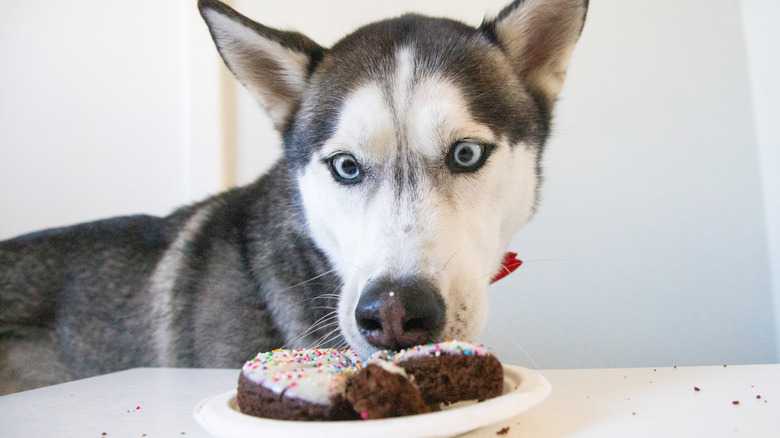
Symptoms Of Chocolate Toxicity In Dogs You Shouldn't Ignore
DogsDog HealthSymptoms Of Chocolate Toxicity In Dogs You Shouldn't IgnoreByCynthia AnayaMarch 27, 2025 9:25 am ESTMeaghanbrowning/Getty ImagesIf dogs understood every word their humans spoke, they would know to stay away from chocolate. Then again, they would probably disregard the warning and eat it anyway. Dogs shouldn't eat chocolate because it contains an alkaloid called theobromine that can be dangerous if ingested, making it one of the most common foods dogs can't eat. Some common chocolate toxicity symptoms in dogs include vomiting, diarrhea, excessive urination and thirst, a rapid heart rate, and panting. In more severe cases, seizures can follow.All chocolate contains theobromine, but some types contain more than others. Baking chocolate, dark chocolate, and cocoa are among the types with the highest amounts of the bitter alkaloid. Chocolate poisoning in dogs tops the list of most common toxicity cases, but the good news is, it's rarely fatal. Most dogs just require veterinary treatment or close at-home monitoring.In general, darker chocolates pose a greater threat for dogs than lighter ones, like milk chocolate, and the danger risk increases as the theobromine amount increases. You should still avoid allowing your pup to eat any type of chocolate in any amount though, and if they happen to ingest some accidentally, don't ignore these toxicity symptoms.Your dog may experience vomiting after consuming chocolatefelixmontana/ShutterstockTheobromine acts as a mild stimulant in the body. Humans can easily and quickly metabolize it, so they can safely enjoy a couple slices of dark chocolate cake in one sitting without getting sick. Dogs, on the other hand, metabolize this stimulant at a significantly slower rate, causing it to accumulate in their gastrointestinal system. They might respond to this buildup by vomiting.Nobody wants to see their dog retch and upchuck their last meal because it often means they ate something they shouldn't have. However, vomiting after chocolate ingestion is actually a symptom you want to happen, since it helps rid your dog's body of the toxin. Vomiting typically occurs within two to 12 hours after ingestion. Just be sure to clean it up immediately since many dogs re-ingest their vomit, and give your vet a call. If you catch your dog eating chocolate and bring them to the vet for emergency care, the vet will likely induce vomiting. They might also give your dog activated charcoal, a product used to prevent the body from absorbing toxins.Diarrhea can befall your dog, tooKobkik/Getty ImagesRemember, when theobromine builds up in a dog's system, the body might respond by vomiting, but diarrhea is another possibility. Some dogs develop diarrhea, with or without vomiting. If the latter is the case for your dog, you may not even be aware that they're having a problem with their stool. They may alert you to their need to go outside, as usual, and you'll likely let them out into the backyard, as usual, without giving it a second thought.If you suspect that your dog helped himself or herself to a piece of chocolate in your home, it's important to look out for toxicity symptoms. Dogs are more likely to vomit indoors than have a bowel movement indoors, so when you let your dog out to handle their business, go out with them. It won't be pleasant, but take a look at their stool to determine if it's soft or watery, which are tell-tale signs of diarrhea.Another way to determine if your dog has diarrhea before seeing the stool is with frequent potty breaks. Dogs typically have to relieve themselves every several hours, assuming they ingested a normal amount of food and water beforehand. If you notice your pup nudging you to let them out far more frequently than that, it could be an indicator that something is wrong.Your dog could have excessive urination and thirstKrasula/ShutterstockTheobromine is the primary culprit involved in chocolate poisoning, but it's not the only dangerous component in this sweet treat. Most chocolate also contains caffeine. Together, both of these ingredients create a diuretic effect in a dog's body, which means they cause the kidneys to generate more urine than usual.Healthy adult dogs normally urinate three to five times per day, on average, while a dog experiencing chocolate poisoning might go twice as often. They might even be more likely to have an accident in the home because of the increased frequency, so be mindful of these possibilities if you have chocolate in your home within your dog's reach. Since urinating frequently results in fluid loss, your dog could become more thirsty as a result of the diuretic effect. If you notice them making repeated visits to their drinking bowl in a short period of time, or you notice it empty much sooner than usual, this could be a sign of chocolate toxicity.Rapid heart rate and panting may come with a dog consuming chocolateGradyreese/Getty ImagesAn additional side effect associated with the diuretic effect of theobromine (and caffeine) that your dog may experience after snacking on chocolate is an accelerated heart rate. If you enjoy a cup of caffeinated Joe or black tea every morning, you already know what it does to a human body. After all, they don't call coffee a "pick-me-up" for nothing. These alkaloids have the same effect on a dog's body; they stimulate the heart, causing it to beat faster.Of course, you can't see your dog's heart beating, but panting is a good indicator that there's an increase. When a dog's heart rate accelerates, their body temperature rises, just as it does for humans. Dogs pant to cool their bodies down, so unless your home temperature is over 81 degrees, and there are no new exciting stimuli nearby, your dog's accelerated heart rate and panting could be signs of chocolate poisoning.Sadly, seizures may also result from a dog consuming chocolateSolstock/Getty ImagesVomiting, diarrhea, and diuretic effects are considered mild clinical signs of chocolate poisoning. However, if a dog were to consume a large amount of chocolate/theobromine relative to their size, they could have a seizure. How much is a "large amount"? A dose greater than or equal to 60 mg/kg, or 2.2 pounds of body weight. A regular-sized bar of dark chocolate can have up to 1,000 mg of theobromine in it. This means that smaller dogs are more at risk for toxicity symptoms than larger ones.If your dog has a seizure, you'll notice several changes in their body. If it's a generalized seizure, the most common type, you'll see a series of involuntary movements. They may first stiffen up before falling over to their side. Then, they may lose consciousness and begin kicking or paddling their legs, foaming at the mouth, and urinating. Watching a dog have a seizure can obviously be a scary time, but it's important to stay calm and keep your pet safe, since they'll be completely unaware of their surroundings. Some generalized seizures end after only a few seconds, but others can last several minutes. Chocolate toxicity can be serious for dogs, so, if you see any of the above symptoms, seeking veterinary care is best — and keep those candy bars out of reach.If you believe your pet has consumed a toxic substance and you can't reach your veterinarian or an emergency clinic, please contact theASPCA 24/7 Poison Control Hotlineat 888-426-4435 or thePet Poison Helplineat 855-764-7661.

How Old Does A Dog Need To Be To Get Pregnant? It's Younger Than You Think
DogsDog HealthHow Old Does A Dog Need To Be To Get Pregnant? It's Younger Than You ThinkByCori ChapmanMarch 7, 2025 9:25 am ESTNikaletto/ShutterstockThat adorable puppy sure grows up fast! Dogs mature much faster than people, and as a result, the doggy reproductive cycle activates much younger. The timing of this first cycle can differ depending on the breed, but overall, dogs can become pregnant by about six months of age. This knowledge comes in handy if you are trying to determine if your dog is showing their first signs of going into heat. It can also be useful when trying to figure out the best time to have your dog spayed.Female dogs go into heat when they first reach puberty, also known as an estrous cycle. Smaller breeds tend to reach puberty earlier, while bigger breeds may not reach puberty until between 18 months to 2 years old. Once in heat, the cycle typically lasts between 10-14 days. However, just because it's your dog's first cycle doesn't mean they can't get pregnant — they can still become pregnant even if not fully physically matured. This is important to remember, especially for larger breeds that have a longer growth time.Knowing the best time to breed or spay your dogHanna Dymytrova-kaihila/ShutterstockIf you're interested in breeding your dog, you should still wait until they're physically mature enough to handle their first litter. It is not recommended to have a litter with the first estrus, and instead shouldn't happen until they've had two or three. This will help your pup reach physical maturity, helping prevent any physical or behavioral issues an early pregnancy may cause. Waiting until later can also help you rule out any genetic issues in your dog that you may not want to pass on to puppies.While it is best to wait until a dog reaches physical maturity before her first litter, that is not the case if you choose to spay. Knowing when to spay is also dependent on the estrous cycle. Spaying dogs before their first estrus can prevent some issues, such as breast, uterine, and ovarian cancer. However, this creates a very limited window of opportunity considering how young dogs experience their first heat. Some veterinarians are also moving away from spaying before a dog's first heat cycle to prevent issues such as urinary incontinence and orthopedic problems in larger breeds that aren't fully grown. Waiting may also help you save up for the cost of spaying. It's always best to speak with your veterinarian to determine when the best time to spay your dog is. Whether you're looking forward to a future litter of puppies, or hoping to prevent it entirely, knowing when, and just how early, your dog can get pregnant is important. Always consult your veterinarian before making changes to your pet's diet, exercise, or care. To find an accredited veterinarian in your area, you can search theAmerican Animal Hospital Association's online database.

Can Your Dog Actually Get Sunburned? Details To Know
DogsDog HealthCan Your Dog Actually Get Sunburned? Details To KnowByPaige MountainOct. 22, 2024 1:25 pm ESTJustin Paget/Getty ImagesIf you've ever spent too much time out in the sun without protection, chances are you came out of that situation with a nasty sunburn. Just like us humans, dogs are not invincible to the power of the sun. If your dog is spending time outside on a hot day without protection, they too will come away sunburnt.Sunburn in dogs is more likely in the summertime when the sun is hot and strong; however, they can burn whenever they're outside and the UV is high. Some signs of sunburn on dogs include red or pink skin, hair loss, rash, and scaliness. It's possible for dogs to get burnt on any area of their body, but certain spots are more prone to sun damage. Anywhere your dog's fur is thin or there isn't any fur at all will be the areas most at risk, such as the nose, belly, and ear flaps. Not only do sunburns have uncomfortable short-term effects for your pup, but just like humans, too much sun damage over time can put your pup at risk for skin cancer.It's extremely important to keep your dog protected when they're spending time outside to prevent sunburns while still allowing them to have some fun in the sun.How to prevent your dog from getting sunburnedMaiteali/Getty ImagesOne of the best ways to protect your dog from sunburn is by using dog-formulated sunscreen. Never use human sunscreen on dogs, as it contains chemicals that could be toxic if your pup happens to lick it off. Apply dog sunscreen on all parts of your pup's body where they are likely to get burnt and where their fur is thinner. Focus on the nose, groin area, inner thighs, tips of the ears, and anywhere else your dog is lightly-colored or short of hair. Make sure to reapply sunscreen throughout the day if your pup is spending a lot of time outdoors, and any time after they get wet.Along with sunscreen, you can also prevent your pup from getting burnt by using sun-protective clothing and accessories. Consider buying a dog sunsuit to protect your dog's body from the harsh rays of the sun. Give them a pair of doggy goggles to act as sunglasses and protect their eyes. Similar to you putting on a big, floppy hat before heading to the beach, there are also dog sun hats out there to protect your precious pooch from getting burnt.Breeds most prone to sunburnsAnastasiia Cherniavskaia/ShutterstockWhile sunburns can affect every dog and every pup should use sun protection, there are certain dogs who are more prone to sunburns than others. Ifyour dog loves laying in the sun, they could be more at risk for sunburn, especially if they enjoy sunbathing on a concrete driveway. Certain dog breeds are also more prone to sunburns. Since dogs are more likely to get burnt on parts of their body that don't have fur, this means hairless pups, such as the Chinese Crested, are more at risk of getting sunburnt than a dog who has a thick coat.Dogs with white on their ears and dogs with light noses and eyelids are also more prone to getting sunburnt, with breeds such as bulldogs and Dalmatians being some who are more at risk. Dogs with white fur are also going to be more prone to getting burnt. Dogs with thin, short fur, such as pit bulls and greyhounds, will typically be in more trouble out in the sun than dogs with thicker fur, such as Bernese Mountain dogs and Newfoundlands. However, it's still possible for a thick-coated dog to get sunburnt in thinner areas where fur has shedded,so sun protection is key for all breeds.
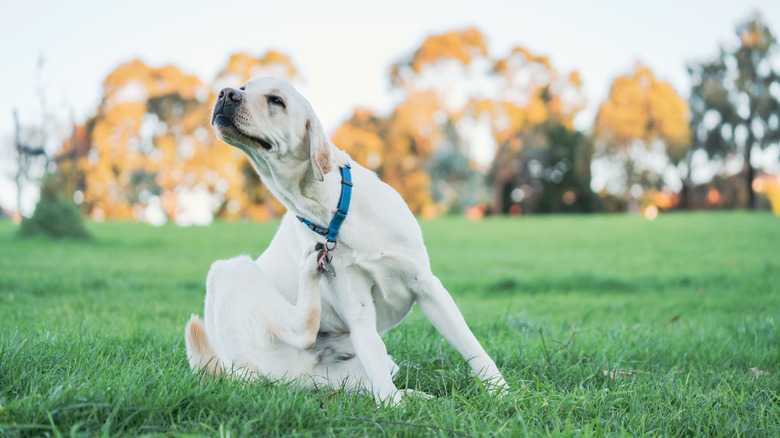
Can You Treat Dog Mange With Home Remedies?
DogsDog HealthCan You Treat Dog Mange With Home Remedies?ByCuteness StaffUpdated: Dec. 11, 2024 3:22 pm ESTWirestock Creators/ShutterstockMange is a skin condition caused by mites in dogs. The two main types of mange affecting dogs are demodectic mange and sarcoptic mange. Demodectic mites live naturally on dogs and only become a problem if their immune system is compromised and the mites gain the upper hand. Sarcoptic mange, also called scabies, is a contagious skin disease spread by direct host-to-host contact.A dog experiencing mange may exhibit multiple symptoms, including severe itching, hair loss, and crusty skin, per PetMD. The discomfort of these problems could produce additional issues, such as weight loss, lethargy, and even depression. While it's understandable to want to provide your beloved canine with relief, mange requires veterinary attention and cannot be treated with homes remedies such as lemon juice or aloe vera.DIY approaches will not resolve the problem and may cause more harm than good, especially since attempting to manage mange yourself could expose you to scabies. Mange requires careful monitoring by a professional and a custom treatment plan designed to address your dog's particular situation.How veterinarians treat mange in dogsMonty Rakusen/Getty ImagesIf a veterinarian suspects that a dog has mange, they will collect a skin scraping to get a better idea of what they might be dealing with. The presence of an abnormal amount of Demodex mites may lead to a demodectic mange diagnosis. In contrast, due to their habit of burrowing deep into the skin, sarcoptic mites not be visible in this sample. If an excess of Demodex mites isn't present, the vet may settle on a presumptive sarcoptic mange diagnosis based on clinical symptoms.Depending on the type of mange detected and the severity of the condition, your veterinarian could prescribe topical, oral, or injectable medications. Dips, such as lime-sulfur, are also a possibility, though this approach has fallen out of favor due to the potential side effects and discovery of more effective treatments. Additionally, in the case of sarcoptic mange, you might need to treat any other dogs in your household and replace their bedding to stop reinfection. Your veterinarian will advise you on the best strategies for treating your canine's mange.
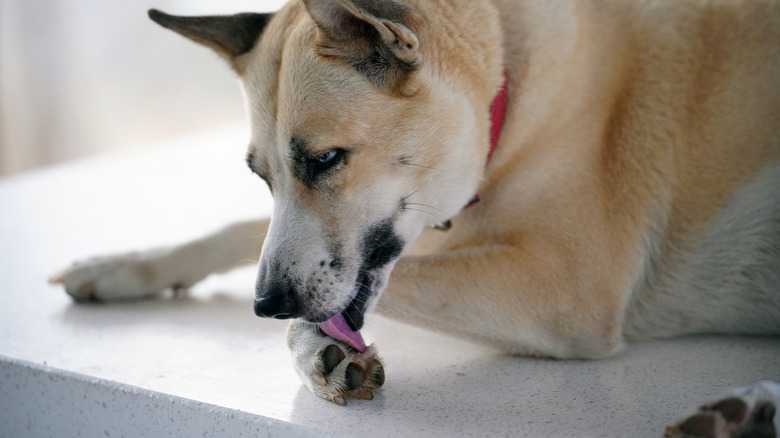
What Does It Mean When Dogs' Feet Smell Like Corn Chips? Here's When To Worry
DogsDog HealthWhat Does It Mean When Dogs' Feet Smell Like Corn Chips? Here's When To WorryByRosie GovinUpdated: Oct. 7, 2024 2:06 pm ESTKPhrom/ShutterstockFrito feet (also known as corn chip feet or popcorn paws) is just one of the many aromas that emanate from dogs, all of which can have different meanings. Two types of bacteria are responsible for the corn chip odor, pseudomonas and proteus, and they are both normal. Because they don't sweat in the same way humans do, "The only place dogs have to cool down is on the bottom of their feet," Dr. Amy Attas, VMD, explained to the American Kennel Club (AKC). Bacteria thrives in moist environments, so a dog's paws are the ultimate habitat.The level of corn chip smell often depends on the type of canine. "Certain breeds of dogs are more prone to this smell than others," Dr. Audrey Wystrach told People. "For example, breeds with excessive skin folds, such as bulldogs, pugs, and Shar Peis, are more likely to develop this smell ... Additionally, breeds with heavy coats, such as golden retrievers, Labrador retrievers, and Saint Bernards, are also more likely to develop this smell as the fur can trap moisture and bacteria."So, don't worry if your pups' paws remind you of Tostitos. It's pretty standard (and it's also okay for you to purposely take a whiff anytime you want). That said, you'll want to seek medical help if you notice redness, swelling, bumps, discharge, hair loss in the footpad area, excessive licking, or a different smell coming from their paw. Any of those symptoms can indicate a more serious issue, like a doggy yeast infection, that requires treatment.Can you get rid of corn chip feet?KaryB/ShutterstockMaybe you don't love the smell of bacteria in your face and you're wondering how to get rid of Frito feet. Well, there's good news and bad news. The bad news is, as Dr. Attas laid out for AKC, "Dogs want to smell like dogs. You don't want to mask the odor or add something to it." You really don't want to mess with your pup's natural scents too much.The good news is there are a few things you can do to control corn chip feet a bit, such as using unscented wipes made especially for dogs that can help mitigate some of the smell and keep your pooch's paws squeaky clean. If it's really overwhelming, you can also talk to your vet about medicated wipes or other topical treatments. Dr. Lori Teller assured Houston Public Media, "It's definitely something that can be addressed and dealt with."How to promote healthy pawsO_Lypa/ShutterstockEven though dogs should smell like dogs, it's always a good idea to make sure they are properly bathed and groomed. This can help with corn chip feet, but it's also important for their overall health. Giving your pup a little extra pampering when it comes to their paws may lessen the Frito smell, but it will also keep your dog's feet in good shape.To do this, you have to make sure your pup is comfortable with you handling their paws. It's best to get them used to you rubbing their footpads, spreading their toes, and trimming their nails when they're as young as possible, so they don't give you a hard time. Then, Dr. Dwight Alleyne told the AKC that he suggests washing their paws with a shampoo made for dogs and trimming any excess fur between their toes.It's also important to keep your dogs nails short and dry their paws thoroughly after bath time is over to prevent bacteria from growing. It's not necessary to wash your pup's paws after every walk, but it's a good idea to give the them some love during their regular baths, and use those unscented wipes if you come back from a particularly muddy or dusty trip outside.
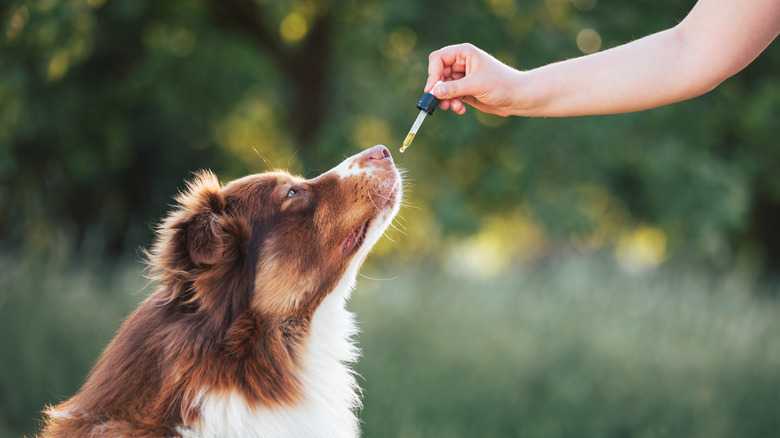
Sneaky Ways To Give Dogs Liquid Medicine
DogsDog HealthSneaky Ways To Give Dogs Liquid MedicineByRosie GovinOct. 28, 2024 11:25 am EST24k-production/Getty ImagesNo one, human or canine, enjoys swallowing liquid medicine. Since you can't explain to your dog that it's just a momentary icky taste, it will be over super quickly, and it will make them feel better, giving your pup a dose of medication is often a struggle. Not to mention, it's hard enough trying to convince yourself of this.While you may be able to hide a pill in a soft treat or pill pocket, successfully administering a dose of liquid medicine to your reluctant, scared pup can seem an impossible task. But we are here with some sneaky tips and tricks to hopefully help make the medicine go down easier.Mix it with wet food or their favorite snackIlona Shorokhova/Getty ImagesYou can mix their dose of liquid medicine with a bit of wet food or their go-to lickable snack, like peanut butter or puréed pumpkin. There is one catch with this hack, though: You have to be certain that they will eat all of it. If they don't, they won't get the full dose of medicine, and that could throw off their recovery. Depending on the taste of the medicine, you may be setting yourself up for a messy and tough time trying to get your pup the whole dose.When mixing liquid medicine with something like peanut butter, veterinarian Dr. Shannon Barrett suggests using a small amount, per Rover. If your dog isn't fooled by the flavor, and they spit it out, resist the urge to give them more of the medicine. "You have no idea how much of it they actually ingested vs. how much they spit out," Dr. Barrett says. "Therefore giving them more may result in an overdose."Give your pup their medication right before mealtimePixelcatchers/Getty ImagesAs long as there's no time of day your dog's specific medication needs to be administered and no directions about giving the medication on an empty stomach, try giving your pup their medicine right before a meal. If they're hungry, they're more likely to gobble up some pumpkin, even if it's mixed with their medication.Refrain from mixing the medicine with their whole meal — again, you need to make sure they ingest all of it, so it's best to add the medicine to a small treat or portion of wet food and then serve them their regular meal afterward.Point the syringe into the pocket of their monthSergey Dudikov/ShutterstockMaybe treats aren't working for you, and you have to resort to giving the medicine via a syringe. This will likely be provided with the medication, but what won't be provided are tips to make sure the medicine in the syringe actually gets into your dog's mouth and that they swallow it. It can be physically difficult to achieve and emotionally taxing, too, if you have a pup who cries and flails.In order to successfully administer a syringe, Dr. Malcolm Weir and Dr. Ernest Ward suggest putting the tip of the syringe in your pup's mouth right behind their canine teeth, angling it to deposit the medicine on their tongue, and squeezing the syringe slowly to make sure they have time to swallow the liquid, per VCA Animal Hospitals. Dr. Barrett calls this corner of their mouth the "pocket." "Liquid medication should ideally hit the back of your dog's tongue towards the throat to be swallowed properly," she says. "It allows your dog to swallow naturally and minimizes the chances of them spitting out the medication."As long as the medication can be taken with food, Dr. Barrett suggests that you have a treat at the ready, which may encourage them to swallow what's in their mouth. You don't want to tilt their head back to get them to swallow, as that can cause choking.Enlist a second person to helpXavierarnau/Getty ImagesThe syringe method is not easy, and if it's available to you, a second pair of hands could be a real help. Another person can distract and comfort your pup while you hold their muzzle and insert the syringe into their mouth. This may have the convenient dual effect of making your pup calm and keeping them stabilized in one position.It might be difficult, but anyone taking part in this process needs to stay calm. Dogs can sense your mood — if you and/or the person helping you are anxious and unsure, your pup will pick up on that, and their nervousness may escalate. It might be difficult, but it's important to approach the giving of medication with confidence and as much positivity and encouragement as possible, which brings us to our next tip.Give treats and praise before, during, and afterStefania Pelfini, La Waziya Photography/Getty ImagesTaking medicine is no fun, and your dog deserves to be praised and rewarded throughout the entire process. If you start by getting super excited and giving them a treat or two, you may be able to sneak the dose of medicine in by maintaining that positive attitude and behaving like it's another treat.Whether that method works or not, give your pup treats, cuddles, and extra play time after they take their medicine to lower their stress and restore their comfort. Of course, only shower your pup with treats if their medication can be taken with food. If it can't, you can still try to distract them with playful pets and their favorite toy, and treat the medicine as if it's a special goodie.
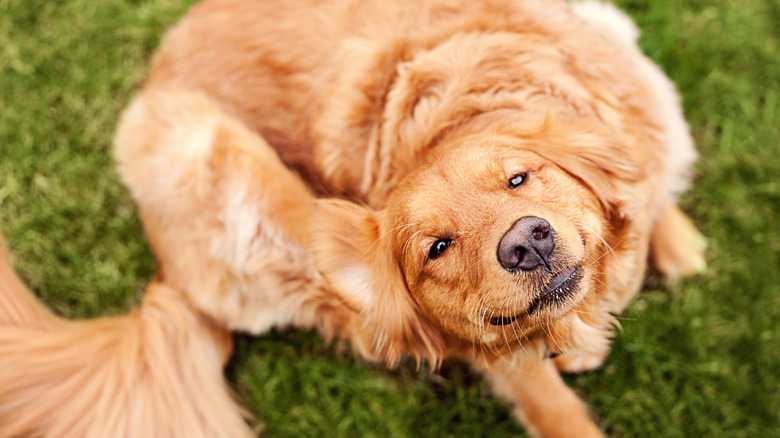
Can Food Help A Dog With A Yeast Infection?
DogsDog NutritionCan Food Help A Dog With A Yeast Infection?ByPaige MountainUpdated: Oct. 24, 2024 11:35 am ESTMore Than Words Photography By Alisa Brouwer/Getty ImagesSome pet parents hold a belief that changing your dog's diet can help treat or prevent yeast infections.While yeast infections in dogs can sometimes be caused by food sensitivities, there is no proof that shows feeding your pooch a certain diet will help treat a yeast infection.If your pup happens to have undiagnosed food allergies, it is possible that a new allergen-free diet could help prevent your them from getting as many yeast infections, but it won't do anything to treat any current ones they may have.Yeast infections are caused by an underlying condition or because a dog's skin barrier is damaged and has thus allowed a large amount of yeast to permeate and become infected, rather than having anything to do with the food they consume. Yeast infections are a common issue many canines experience, and some may be more prone to them than others. The inside of a dog's ear is especially prone to yeast infections, although they can happen on any part of the body. While a pup's diet doesn't play any role in the development of yeast infections, there are other potential causes that could explain why they may get them.Yeast infections in dogs: causes and symptomsAnita Kot/Getty ImagesThe causes of a dog getting a yeast infection can vary.Sometimes, they can result from an underlying health condition. If your pup is dealing with an autoimmune or hormonal disorder, there's a chance this could be what is causing their yeast infections. If they are dealing with some sort of bacterial infection, this can also cause the skin to react and might allow for yeast infections to occur.Since yeast infections happen when a dog's skin barrier is damaged, if your pup is dealing with allergies or some other type of skin condition, they could be more likely to get yeast infections. If your dog mainly deals with yeast infections in their ears, a likely cause could be that they have debris or water stuck there. Eardrum damage can also cause a dog to contract in-ear yeast infections. Some dog breeds also just happen to be more prone to yeast infections, including dachshunds, Chihuahuas, and poodles, amongst many others. Breeds with wrinkly skin, such as basset hounds and bulldogs, are also going to be more prone to developing yeast infections because of their wrinkles. If your pup enjoys going for a swim, they will likely be more susceptible to getting yeast infections in the ear.Signs of a yeast infection can vary, but they usually involve itching and redness. If your dog is frequently shaking their head and their ear appears to be bothering them, they could have a yeast infection in it, especially if accompanied by other symptoms such as crusty skin and discharge. If your pup is dealing with a yeast infection on their skin, some signs to look out for include flakiness, inflammation, hair loss, and a musty scent, alongside excessive itchiness.How to properly treat and prevent yeast infections in dogsM_a_y_a/Getty ImagesIf your dog ever gets a yeast infection, there are ways to go about treating it that truly work and don't involve changing their diet.If you suspect your pooch has a yeast infection, bring them to the vet, where they will likely prescribe some sort of antifungal medication.Depending on the infection and where it is, you may have to use antifungal wipes or cream on the area in order to cure the yeast infection, or you possibly may need to give your dog an oral antifungal medicine if the infection is more severe.To prevent yeast infections in the ears, the most important thing is going to be to keep them clean and dry. Be sure to keep water out of your dog's ears to prevent it from settling and causing an infection and dry out your dog's ears after they go for a swim or take a bath. When it comes to preventing yeast infections on the skin, if you have a wrinkly dog, regularly clean their skin folds. Also, use flea protection year round, as fleas can cause allergies in dogs which can then lead to yeast infections. If your dog is especially prone to yeast infections, a vet might recommend using an antifungal shampoo when bathing them. If you think your dog has a yeast infection, it's important to see a vet to rule out any underlying conditions or to diagnose any skin problems that could be causing it.
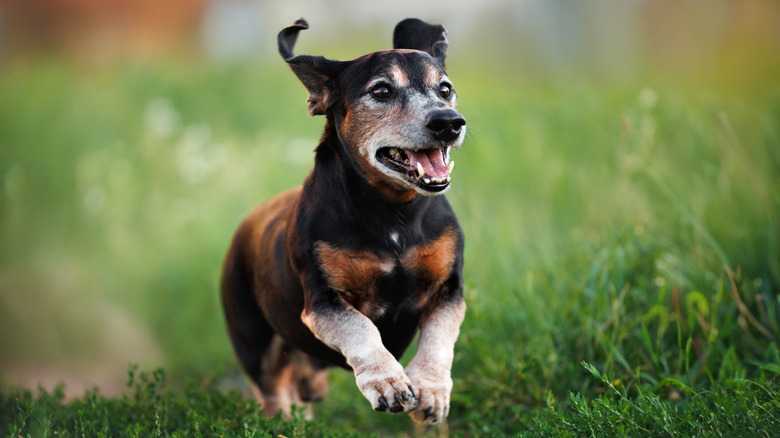
Dogs Hit 'Old Age' When They Reach One Big Milestone
DogsDog HealthDogs Hit 'Old Age' When They Reach One Big MilestoneByJessica DesrosiersJan. 7, 2025 9:25 am ESTotsphoto/ShutterstockWe may receive a commission on purchases made from links.What makes a dog "old"? Is it when they start slowing down and become less active? When they hit a certain age? One 2024 study in the Journal of Small Animal Practice tried to figure out just that. The study set out to determine at exactly what age dogs hit "old age". Understandably, it can be tricky to pinpoint the stages of a dog's life cycle, as there's some variation from breed to breed. Researchers used over 1,000 veterinary medical records from over 500 vet clinics to try to find any correlation that determined when a dog was officially considered old. The study based its findings on whether the vet described a dog on record with terms like aging, senior, geriatric, elderly, or old, and compared it to their numerical age. In the end, researchers determined that most vets believed a dog must be a minimum of seven-years-old to be considered senior. However, the study also found the median age vets reported a dog as officially "old" was around 12.5 years. Some small dog breeds, such as Jack Russell Terriers, skewed this upward; being considered old at around age 14. The study did note a conflict of interest — it was partly funded by pet food companies. This is important to note as many pet food companies often recommend special foods for "senior" pets. In most cases, these companies suggest a swap when a dog is around the age of 7. Nevertheless, having a rough benchmark for when a dog is considered elderly can help pet parents and vets be better prepared for what to expect as their dog ages. This can better facilitate aging-related healthcare and improve senior pet welfare.Factors that affect a dog's agingChris Mcloughlin/Getty ImagesIn addition to your dog's breed and size, the health problems they are likely to experience can influence how quickly they age. The aforementioned 2024 study found that weight-related issues such as being over or underweight, musculoskeletal conditions like pain and arthritis, and dental disease were more common in older dogs than younger ones. Other prominent health conditions reported among elderly dogs included skin problems such as lumps and growths, as well as digestive issues like vomiting or diarrhea. This may help vets to better adjust veterinary care according to a senior dog's needs.The research can also be used to apply more preventive care methods to help senior pets. The study led to the creation of the Aging Canine Toolkit — a program designed to help vets and pet owners determine when a dog may need more care. It includes a checklist that is updated every 6 months to track and monitor progress. Since breed and size can play a big role in when a dog is considered old, it's best to take your own dog's unique traits into consideration when determining this, too.How you can help your senior dogTimbicus/Getty ImagesRegardless of what age your dog starts to slow down, there's a lot you can do to help them live a happy life during their golden years. A top priority is finding the right vet, such as one at an AAHA-accredited practice to ensure your pup gets the best care. Additionally, the American Kennel Club recommends engaging your dog with stimulating activities that help keep their mind and body sharp, such as hikes and snuffle mats. Adjusting your dog's diet can also help to prevent and manage conditions such as obesity.If your dog suffers from issues like arthritis, setting up your house to be more accessible with ramps and orthopedic dog beds can help. Some ramps, like the IPETBA Adjustable Dog Ramp can be easily folded and stored away when not in use. Pet insurance can also be beneficial for senior dogs that are prone to health-related issues as they age. Knowing how much pet insurance costs and using it wisely as your pup reaches an old age milestone can help bring down costs later on.Ultimately, the answer to when an individual dog enters old age is "it depends". However, knowing the factors that go into play, such as a dog's size and breed, can help you keep track of any aging-related issues more easily.
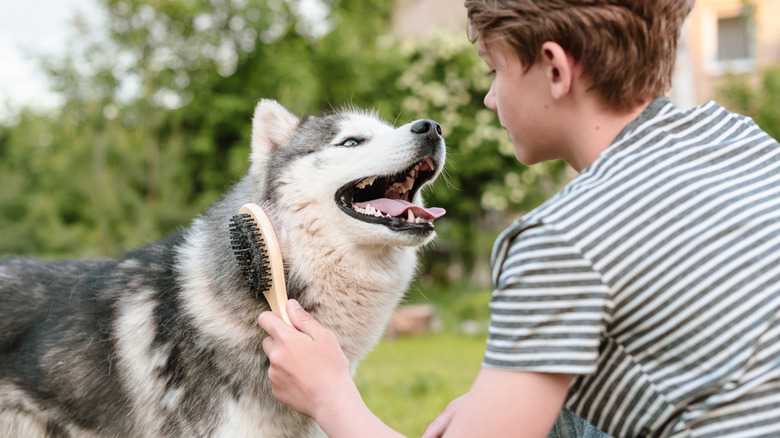
How To Groom Your Dog For Summer (And The Biggest Mistakes To Avoid)
DogsDog GroomingHow To Groom Your Dog For Summer (And The Biggest Mistakes To Avoid)ByAdam SymchukApril 4, 2025 9:25 am ESTRodica Vasiliev/ShutterstockWe may receive a commission on purchases made from links.Summertime has unique challenges for pet owners, such as monitoring a dog's temperature against their excitement of adventuring on sunny days, seasonal outdoor pests looking to latch on, and messes from rolling around in the ground. Thankfully, many of these concerns can be dealt with through proper grooming, from ensuring your dog's coat is ready for the season to knowing how and where to check for any debris or insects that like to attach themselves to a dog.At the same time, the grooming process is not always straightforward, with different breeds having different challenges getting them summer-ready. A furry friend's unique personality is part of their charm, but sometimes they can be stubborn about being on the same page as you when implementing a regular grooming routine. Still, following the dos and don'ts of summertime grooming and considering your pet's needs can make for a fun and (mostly) mess-free summer.Keep ears clean and dryAtikinka2/Getty ImagesSome dogs love going for a cool dip in the summer, and popular breeds like the Newfoundland and golden retriever are particularly adept at swimming. While swimming is an excellent way for dogs to exercise and can benefit older dogs with joint issues, it poses risks to canines. Water allows bacteria or yeast to build up in the ears, possibly leading to a painful ear infection. For dogs with long hair around their ears, trimming can also be part of the summertime routine to help avoid water getting trapped in the ear canal.Keeping a dog's ears dry is key to avoiding a painful and potentially costly ear infection. Cleaning should start by drying the hair around the ears with a towel to ensure no more moisture remains. Cotton balls can then soak up moisture as you extend their ears and wipe them clean. Depending on the size of a dog, this may take several cotton balls — just never use Q-tips, as you may inadvertently damage a dog's ear canal or push debris further down. You can then use a veterinary-approved ear cleaner, like Veterinary Formula Clinical Care Ear Therapy, afterward to remove any debris, repeating the same drying process.Care for paws in summerGlasshouse Images/Getty ImagesNot all dogs will vocalize if they have sore or hot paws, but it is essential to note that surfaces like pavement and sand can be too much for a canine to handle in the summer heat. Outside temperatures over 85 degrees Fahrenheit can make certain terrains dangerous for a dog, causing blisters and sunburn. It is always good to exercise caution in such heat, but grooming can help alleviate some of the potential hazards.Trimming a dog's nails to ensure they're walking correctly on their feet will help manage any discomfort it may experience on hotter surfaces. Longer nails are also more likely to pick up bacteria that can lead to infections. There are preventive products you can get to protect them from heat, like shoes; but ensure they are breathable as dogs sweat through their feet. Paw wax, like Musher's Secret Dog Paw Wax, can also help with hotter temperatures but won't necessarily protect from thermal burns on the hottest days.Summer brings seasonal allergies, so keeping your dog's pads clean can also help make the season go more smoothly. Rinsing a pet's feet after every walk can be a real relief for a canine. Dandylion Clean Paws is an easy product for fussy pups who struggle with their owner touching their paws. Ultimately, keeping the paws clean and cool during summer is one of the most critical considerations for summertime grooming.Check for summer pests regularlyLittlecitylifestylephotography/Getty ImagesYour dog is not the only creature active in the summer, and the season comes with pests like mites, fleas, and ticks. Each of these can cause separate health issues, ranging from Lyme disease to mange, so it is essential to check your pet regularly as part of the grooming process. Examining areas like ears for mites, warm spots like under armpits for ticks, and the underbelly for fleas after walks can ensure you catch these pests as soon as possible. Flea, tick, and mite prevention can also help ensure these critters stay away from your dog. A veterinarian can recommend a mix of oral and topical solutions that best suit your pet's needs.Mosquitos can also be an issue for dogs. While they may not always be spotted during grooming, small bumps, similar to those people get, can indicate a dog has been bitten. It is vital to monitor these spots for irritation or an allergic reaction; the transmission of diseases like malaria and West Nile are as concerning for pets as for their human caretakers. Mosquitos also carry heartworm, so pet parents should ensure they are current on preventive measures. Spraying a dog-tailored product like Vet's Best Mosquito Repellent can also be part of a pre-outside grooming ritual to help keep the insect away.Haircuts can help keep some dogs cool in the summertimeRabizo Anatolii/ShutterstockCutting a dog's hair at home can be a bonding experience and a chance to check the ears and skin for potential issues. Yet, before even getting to this point, an owner needs to build trust with their pet to ensure they are comfortable with the process. This can involve establishing an early grooming routine, such as just brushing at home, with rewards in the form of treats or attention. Getting your dog used to having their ears, paws, and other sensitive areas touched will also ensure a home haircut goes more smoothly.A set of trimmers like Oneisall Dog Clipper Low Noise Trimmers can provide a pet parent with the tools needed for a trim, including various clip-ons for different hair lengths, a comb, and scissors. A clean cut can help keep some breeds cool in the summertime, specifically single-coat dogs like Yorkshire terriers or poodles.Single-coat breeds still require protection from the sun with their coat, so never shave down to the skin — leave at least an inch — to avoid sunburn. Applying EBPP Dog Sunscreen Sun Skin Protector Spray before a walk can also help combat skin damage from the sun. If shaving a dog at home is a daunting process or you are unsure of the best approach for the breed of dog, don't hesitate to choose a professional groomer instead.Biggest mistakes you can make when grooming your dog during the summerLwa/dann Tardif/Getty ImagesWhile grooming your dog during the summer is a great way to help them beat the heat and keep them clean and free of debris and pests, there are challenges that pet parents may face. Knowing your breed will ensure proper grooming, as dogs with double coats require brushing and should not be shaved. For breeds like Siberian huskies and Labrador retrievers, their extra layer helps them trap in the cool air and shaving disrupts this process, which can result in hair growing back improperly. When grooming a dog, it is essential not to overlook brushing them first to help remove mats. The shaving of matted hair can pull on a dog and be uncomfortable. Baths should also be limited, despite how dirty some breeds can get when enjoying summer play. Too many baths remove essential oils that protect a dog and can cause skin irritation and dryness; every other week or monthly is sufficient unless advised otherwise by your veterinarian. Using a dog-formulated shampoo, like Veterinary Formula Smart Coat Complex Ultra Oatmeal Moisturizing Shampoo for Dogs, can ensure the ingredients are pet-friendly and won't cause irritation.Sticking to best practices, avoiding common pitfalls, or asking a professional groomer or veterinarian for help until you develop a home routine can help ensure your furry friend stays cool, clean, and healthy throughout the summer.Always consult your veterinarian before making changes to your pet's diet, exercise, or care. To find an accredited veterinarian in your area, you can search theAmerican Animal Hospital Association's online database.

Female Puppies & Nipple Development
DogsDog HealthFemale Puppies & Nipple DevelopmentByJane MeggittUpdated: Dec. 9, 2024 3:39 pm ESTgolfyinterlude/iStock/GettyImagesWhen sexing newborn puppies, you won't look at the nipples to determine gender. Male and female puppies both have nipples, but as with other male mammals, nipples won't serve as a food source for future offspring. Nipple color is either pink or dark, depending on your dog's coloring. While a female puppy's nipples are an afterthought at this stage of her life, as she ages you should take stock of her mammary glands regularly to make sure she isn't experiencing any problems in that area.Dog nipple numbersWhile female humans have two breasts, the number of mammary glands on dogs isn't necessarily uniform. As Dogster points out, canines have eight to 10 nipples on average, and some dogs may have an odd number rather than a symmetrical nipple row on each side. Even more surprising, nipples may show up in areas other than the abdomen.The first heat cycleIf your puppy isn't spayed before her first heat cycle, which normally takes place about the age of six months, you will notice that her mammary glands swell at that time. The swelling usually occurs in the few days before and after the heat cycle. While the swelling is normal, any type of discharge from the nipples is not. Keep your puppy indoors except for walks during her heat cycle, as male dogs are known to climb over or dig under fences to mate with unsupervised females in heat.Nipples and pregnancyWhen your dog is bred, enlarged nipples are one of the first signs that the pregnancy "took." That initial enlargement is followed by continued swelling as the birth approaches. Often, a milk discharge is one of the signs that a dog will give birth within a day or so.Nipples while nursingOnce the puppies arrive, nipples perform the function for which they were designed. Nursing takes a lot out of a dog, and inflammation from constant suckling may affect the nipples. Once the puppies are weaned, the nipples will shrink somewhat but will stay larger than they were before her giving birth. For most dogs, permanent nipple stretching results.Some dogs may develop mastitis, a breast infection, while nursing. Not only are the nipples inflamed, but pus is discharged through the nipple. The condition is very painful, and your dog requires immediate veterinary attention.Nipple issuesAs your puppy grows, she may become vulnerable to various nipple issues. If you notice any discharge or swelling coming from your dog's nipples, take her to the veterinarian for an examination. While some of these issues may arise during lactation, others have little to do with reproduction or nursing.Intact females are more likely to develop mammary gland cancer, as are female dogs who were over the age of two years when spayed. Symptoms of canine mammary gland cancer include lumps beneath the skin. If you're lucky, these lumps will turn out to be cysts, but it's crucial to have your dog examined by a vet as soon as possible. As with any cancer, early detection may save your dog's life.If a dog is not spayed and not bred, she may develop false pregnancy symptoms. Such a dog develops all of the signs of pregnancy, including swollen nipples, without actually carrying any fetuses.Always check with your veterinarian before changing your pet's diet, medication, or physical activity routines. This information is not a substitute for a vet's opinion.
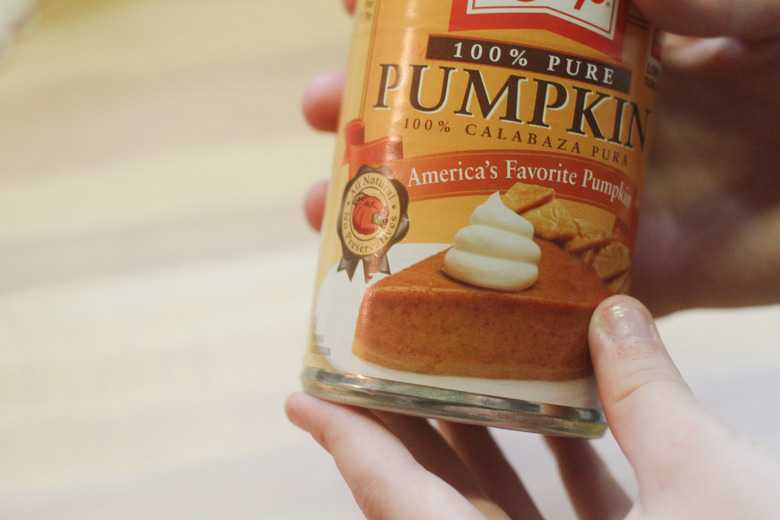
Dog Diarrhea & Pumpkin: A Natural Remedy That Works
DogsDog HealthDog Diarrhea & Pumpkin: A Natural Remedy That WorksBySherri TelenkoUpdated Aug 26, 2023Reviewed by Jordan KautzWe may receive a commission on purchases made from links.WarningDo not give your dog the whole can of pumpkin at one time.Disclosure: At Cuteness, we are committed to being the go-to resource for pet owners and animal lovers. We only recommend products we think our audience will love. If you purchase something by clicking on one of these links, we may receive a small commission of the sale and the retailer might receive some data for accounting purposes.Pumpkin is a natural and inexpensive food that can help your dog recover from diarrhea. Canned pumpkin without any additives or spices will firm up your dog's stool.One of the easiest ways to treat dog diarrhea is combining the fiber in pumpkin and probiotic qualities in specially-formulated commercial treats. Zesty Paws Probiotic Bites serve up 3 billion cfu of probiotics, prebiotics and digestive enzymes in a tasty pumpkin soft chew. If your dog prefers crunch, Brutus and Barnaby sweet potato dog treats taste like pumpkin and cinnamon and have anti-diarrheal properties to set your dog's digestion right.If you don't have time to wait for an Amazon order to show up at your door, head to your local grocery store and pick up a can of plain, unflavored pumpkin.How to use pumpkin to treat dog diarrheaStep 1Purchase plain canned pumpkin from a grocery store. Do not get pumpkin pie filling or anything with spices.Step 2Serve the canned pumpkin to your dog with meals. Add one tablespoon of canned pumpkin to her regular dog food if she's a fifty-pound dog and one teaspoon if she's a small dog, such as a chihuahua.Step 3Plain boiled rice is another option for a dog with an upset digestive tract. You can mix the canned pumpkin in with the rice.Step 4Continue the pumpkin regimen every day until you notice a firmer stool.Step 5Contact your vet if your dog still has digestive problems after a week of eating canned pumpkin.Always check with your veterinarian before changing your pet's diet, medication, or physical activity routines. This information is not a substitute for a vet's opinion.ReferencesHome remedies for your pets
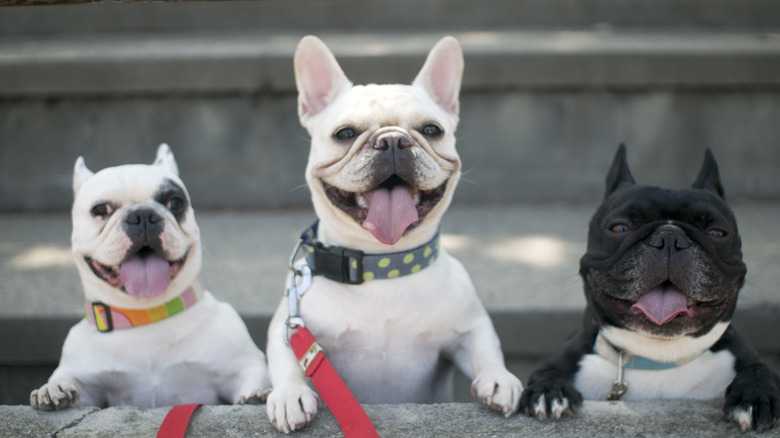
Dog Breeds That Have The Shortest Lifespans
DogsDog BreedsDog Breeds That Have The Shortest LifespansByPaige MountainOct. 5, 2024 11:25 am ESTTokoro/Getty ImagesWe all want nothing more than for our beloved pups to live forever, but the unfortunate truth is that this simply isn't possible. Some types of canines, such as those bigger in size or prone to health issues often don't have the same lifespan as some of the smaller and healthier varieties. However, no matter the breed, there are measures you can take to ensure your precious pup lives the happiest and healthiest life possible.One way to potentially help your pup live longer is by feeding them a healthy diet and keeping them active to assist in maintaining a healthy weight. And don't forget to go to the vet regularly. Of course, even if you take steps to improve your dog's quality of life, some factors are out of your control, such as their size and breed, and may limit them to a shorter existence.Big dogsJill Lehmann Photography/Getty ImagesWhile smaller pups tend to be the longest living dog breeds, such as chihuahuas who live for 15-17 years, large breeds typically have a shorter life expectancy. Scientists haven't completely figured out why this is, however there are some theories that possibly explain why our big canines tend to live for less time. One prediction is that since larger dogs grow much faster than their tiny friends, they can contract illnesses related to old age earlier. With large dogs growing at a faster pace, it means their cells are also divide more quickly, which can increase their susceptibility to cancer.Large breeds, such as golden retrievers, rottweilers and German shepherds, tend to live an average of 10 to 12 years. Giant dog breeds, such as great Danes, mastiffs, and Saint Bernards have life expectancies of only eight to 10 years. With cancer being a concern in larger dogs, some of the breeds most prone to the disease include Bernese mountain dogs, golden retrievers, great Danes, Rottweilers, and Labrador retrievers.Brachycephalic breedsSameh Wassef/Getty ImagesAlong with larger dogs, brachycephalic breeds tend to have shorter lives. They have flat faces and short noses and, because of their physical structure, are more prone to health issues. Some of the popular brachycephalic breeds include bulldogs, pugs, boxers, and shih tzus. Some of the health problems they face include eye issues, breathing problems that may require home treatment, and joint issues, among a variety of others. The life expectancy of an English bulldog is around eight to 10 years, whereas the smaller shih tzus have a wider lifespan range of approximately 10 to 18 years.Despite their smaller size, pugs and French bulldogs are prone to some of the shortest life spans due to a condition called brachycephalic obstructive airway syndrome caused by their flat facial structure that can lead to health issues such as upper respiratory illnesses. The lifespan of a dog with this condition is only around 8.6 years, a stark contrast to the average dog's lifespan of 12.7 years. This syndrome especially impacts pug and French bulldog lifespans, with the Humane Society of the United States stating that approximately 50% of pugs and French bulldogs show signs of brachycephalic obstructive airway syndrome. When compared to their non-brachycephalic small dog pals, which have an average lifespan of 10 to 15 years, these two breeds have a much shorter life expectancy.
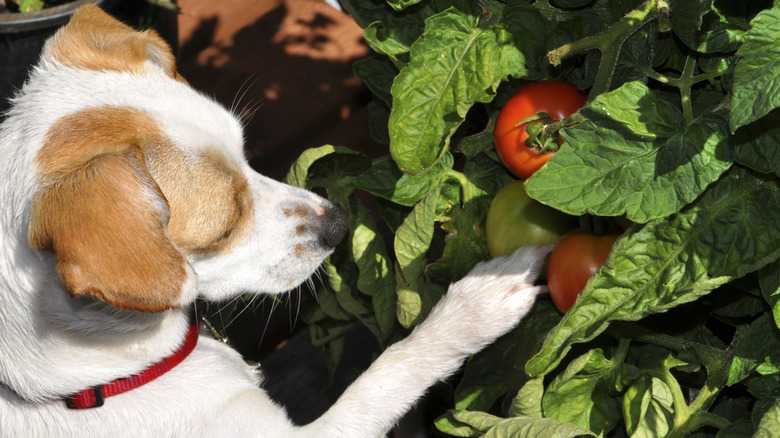
You Want To Keep Dogs Away From Your Garden Tomatoes - Here's Why
DogsDog NutritionYou Want To Keep Dogs Away From Your Garden Tomatoes - Here's WhyByCynthia AnayaFeb. 11, 2025 1:25 pm ESTJbosley58/Getty ImagesIf you like sharing your food with your pup, you'll find many fruits and vegetables that are safe for dogs to eat. Tomatoes make the list, but only if certain conditions are met first. Dogs can benefit from the vitamins and minerals that this fruit (or veggie, if you're a nutritionist or chef) provides. If you have tomatoes growing in your garden, however, keep your dog away from them. Unripe tomatoes and portions of the plant can poison your canine companion if ingested.The green portions of the tomato plant (the stem, leaves, etc.) contain toxins called solanine and tomatine that can cause a number of symptoms for your dog. These include muscle weakness, loss of coordination, diarrhea, vomiting, arrhythmia, and pupil dilation. Unripe (green) tomatoes contain these same toxins and are, therefore, equally as dangerous as the stems and leaves.The good news is that a dog would have to consume a large amount of these toxins to experience these effects, which is unlikely. If you have a small breed, however, they could be more at risk for poisoning due to their size, so it's best to be on the safe side. Keep your pup away from your garden tomatoes, regardless of their breed.How to feed your dog tomatoes safelyWestend61/Getty ImagesIf your tomatoes are ripe and ready to pick, you can safely share them with your dog after removing them from the branches and preparing them. Ripe tomatoes are glossy and slightly soft when you squeeze them. Most tomato varieties turn red-orange when they ripen, so be sure yours have reached this color before pulling them.To prepare your tomatoes for yourself and your dog, remove all the stems and leaves. Rinse them under cool running water and gently rub them to remove any dirt. Cut them into small bite-size pieces, with consideration to your dog's size. You should also base the quantity on your dog's size. Small dogs that weigh under 10 pounds or up to 20 should eat no more than about two ½-inch cubes. Extra-large breeds over 91 pounds can handle five or six.Ripe tomatoes in small portions are generally considered safe for dogs. However, if your canine exhibits any symptoms of illness after consuming tomato bits, such as vomiting, you may want to find a different fruit for your pup to snack on. For example, you can feed your dog apples if you cut them into small bites and remove the core and seeds first.
Senior German Shepherd With The Biggest Heart Loves Being Grandma's Little Helper
DogsDog HealthSenior German Shepherd With The Biggest Heart Loves Being Grandma's Little HelperBySheri RadfordJan. 21, 2026 9:25 am ESTmeetthechows / InstagramIt's not every dog that gets to eat homemade soup regularly, but Rambo the German shepherd isn't just any dog. When this handsome pup joined the Chow family 10 years ago, he filled an "emptiness in the house," shared owner Anny Chow in a YouTube video published by The Dodo. The adorable doggo is shown being doted on by Chow and her parents, and Rambo, in return, seems utterly devoted to his family. In the video, he also helps his grandma by pulling off her socks and fetching her slippers.Chow often posts videos of her mother's Cantonese cooking. "Any time we make soup, my mom always makes a mini pot for him," Chow says in a video on Instagram. Rambo, whose nickname is Soup Baby because he loves the food so much, eagerly slurps up everything his grandma cooks for him, then he carries his empty dish back to her."What a lovely, gentle boy! The most caring grandchild any grandparents could ask for," one viewer of the YouTube video commented. Another wrote, "It is clear that Rambo is much loved and is very happy. It is so cute seeing him take care of Grandmother."The importance of caring for a senior petmeetthechows / InstagramTaking care of a senior pup can be challenging, especially when that older dog has weakening legs, arthritis, vision or hearing loss, breathing problems, dental disease, or cognitive conditions such as sundowner's syndrome. Now that Rambo is a senior dog, Chow gives him plenty of extra pampering, including daily massages, stretching, and exercises to ease his joint pain. "I'm doing everything I can to make sure he's comfortable in his senior years," she shared in The Dodo video. "I have the opportunity and privilege to take care of my animal that is aging." She encourages others to take good care of their older pets and to spend quality time with them, striving to create what she calls "meaningful moments.""Dogs give everything they can to you. Unconditional love, devotion, and protection from the boogeyman and scary squirrels. The least we can do is love and care for them when they start getting older, and slower," one viewer wrote. Another commented, "Pets like Rambo and their amazing owners prove that there's still good to be found in this crazy world."

Dachshund Puppy Who Lost Her Legs Tries Out New Wheelchair And We Can't Handle It
DogsDog HealthDachshund Puppy Who Lost Her Legs Tries Out New Wheelchair And We Can't Handle ItByCynthia AnayaNov. 27, 2025 9:25 am ESTcrurescue / InstagramDogs can be born without limbs or lose them later in life, just like humans can. In either case, they can live long, happy, healthy lives, thanks to carts (wheelchairs), prosthetics, and other mobility devices. Meet Matilda, a mini, one-legged dachshund rescued by the Cleft Rescue Unit (CRU) in Rochester, New York. This precious pup lost her legs shortly after she was born in early September 2025, so CRU shared a request on social media for assistance in creating a 3D cart for her. Within a few days, they received a response, and by October 8, 2025, Matilda tried it for the first time.CRU shared the video on Instagram and TikTok. "Tillie is a bit small for her cart and we have some tweaking to do, but she will get there," the Instagram caption reads. In response to CRU's request, the rescue organization received a file for a cart that they 3D printed. However, the file was designed for Turbo Roo, the famous Chihuahua born with two legs. Because his legs are longer than Matilda's, the cart wasn't quite the right size for her. The wheels were a bit too high, so unfortunately, it didn't help Matilda move around independently like her rescuers hoped it would.Unlike Turbo Roo, Matilda was born with all four of her legs. However, her mother experienced such intense distress after giving birth and spending most of her life in a puppy mill cage that she tragically started chewing them off. Thanks to CRU's intervention, she was able to have two surgeries, leaving her with one whole leg and one half leg.How Matilda is doing todaycrurescue / InstagramDespite being unable to independently use her first set of wheels, Matilda is adjusting well to her condition. She likely doesn't even realize that she's different. She's learned how to scoot and hobble to get around and can even hop on her leg. Nothing stops her from loving her favorite toys or even jumping up and rolling on Walter, another special needs puppy in CRU's care. She also hasn't had any issues with chewing on treats, even though she has no front paws to hold them.On November 4, Matilda met with the Penfield Robotics Team to get measured for a new customized cart to match her current size. CRU and all her social media fans are eagerly awaiting the arrival, with hopes that it will be the perfect fit to help her get around more efficiently and comfortably. She's also now making appearances at events in her Rochester, New York, community, including at yoga studios and floral shops.The next step for Matilda will be placement in a foster home as she awaits adoption. With all the love she's already received, she probably won't have to wait long to find her furever home. If you're interested in adopting a dog without all of its limbs, it's important to know what to expect when adopting a three-legged dog, two-legged dog, or one-legged dog like Matilda. Although there will be some challenges, dogs like Matilda can still make wonderful, loving companions with a good quality of life. Interested in more mini dachshund stories? Check out this miniature dachshund proudly showing off his fall sweater.