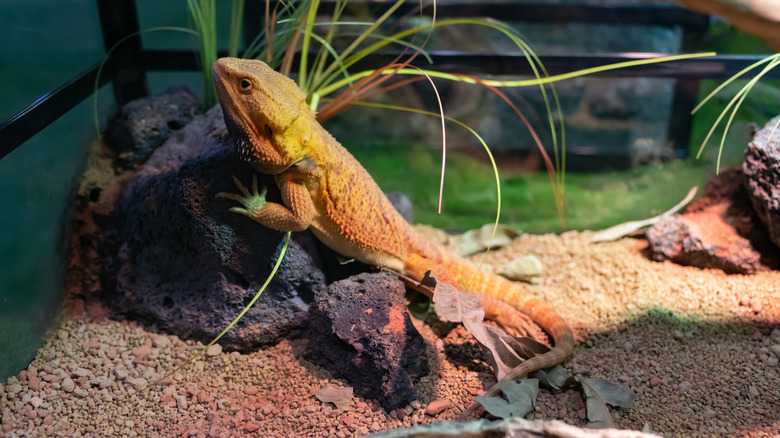
Chameleon Life Cycle
Other Cute AnimalsChameleon Life CycleByBen TeamUpdated: Dec. 10, 2024 3:49 pm ESTFreer/ShutterstockAfter birth or hatching from their eggs, chameleons begin eating and growing. Most species mature relatively quickly — within three to 12 months, depending on the species – and begin seeking out conspecifics (others of their kind), defending territory and mating. They dedicate most of their adult lives to reproduction, and chameleons usually attempt to breed until they die. However, the more than 150 living chameleon species exhibit considerable variation in life history, primarily as it relates to their reproductive strategy.Egg DepositionMany prolific species deposit their eggs shortly after fertilization; for example, female veiled chameleons (Chamaeleo calpytratus) only carry their eggs for about two to four weeks. By depositing their eggs quickly, the females can initiate the development of new eggs, which they usually fertilize with stored sperm. This allows females to produce more offspring than species that carry eggs or young for longer periods of time.DiapauseThe eggs of some chameleon species incubate for varying lengths of time. Some clutches begin hatching as soon as six months after deposition, whereas others incubate for a full year before hatching. This happens because some chameleon eggs can pause their development – a phenomenon calleddiapause– and restart development at a later time. While the phenomenon is not yet completely understood, a study by Robin M. Andrews and Susuan Donoghue, published in a 2004 issue of "Journal of Experimental Zoology," found that veiled chameleon eggs resume development in response to rising temperatures.Live BirthWhile most commonly kept chameleon species areoviparous, meaning they deposit shelled eggs, some female chameleons areovoviviparous. This means that they carry their eggs internally for the duration of their development. As the female ejects the litter from her body, they begin hatching from flexible membranous eggs. Some may hatch before they emerge from the female's cloaca. Technical details aside, such species essentially give live birth.One commonly kept ovoviviparous species is the Jackson's chameleon (Trioceros jacksonii). Female Jackson's chameleons generally carry their first litter for seven to nine months; subsequent litters occur every three months. Each litter typically contains about 20 to 30 offspring.Life SpanAlthough many common pet species, such as panther, Jackson's and veiled chameleons, live shorter lives in the wild, they often survive for about five to 10 years in captivity. However, other chameleons live much briefer lives. For example, the Labord's chameleon (Chamaeleo labordi) spends more of its short life inside its egg than it does outside. These lizards live for only four or five months, but the incubation period of the eggs is usually about eight or nine months. Because these animals breed, hatch and mature at about the same time, the trees in their native lands are devoid of the species for the entire dry season, as the next generation resides inside eggs buried in the substrate.Among those species with relatively long life spans, males often outlive females. This is likely due to the wear and tear that constant reproduction places on their bodies. For example, male Jackson's chameleons may live for about a decade, but the females only live about half as long. A similar pattern is seen among veiled chameleons as well.
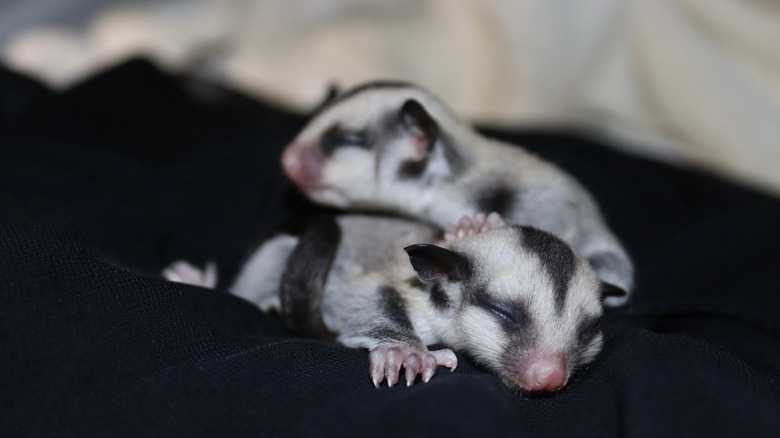
How To Potty Train Your Sugar Glider
Other Cute AnimalsHow To Potty Train Your Sugar GliderByCuteness StaffUpdated: Dec. 11, 2024 12:52 pm ESTSalama AlHajri/ShutterstockAs social animals, sugar gliders require frequent interactions with their owners. Many pet parents will carry around these little mammals in their pockets or a special pouch to maximize quality time. Unfortunately, some surprise poop or pee from a sugar glider at an inopportune moment can put a real damper on this mode of bonding. While you won't be able to teach your companion to go to the bathroom in a litter box as you would a cat, many sugar gliders will take to potty training, helping you to steer clear of future accidents."They are very intelligent little animals, and they're extremely predictable," Dr. David M. Brust, DVM, explained on his YouTube channel, sugarglidervet. "Because of this, if you learn to read your animal's natural habits and practice a couple of simple conditioning exercises with them ... they can go with you almost anywhere and make great companion pets."Consistency is key to training your sugar glider to use the bathroomKristina Parchomchuk/Getty ImagesDr. Brust explained that sugar gliders are clean animals by nature who will typically not pee or poop in their preferred sleeping location. As a result, much like humans, sugar gliders look to relieve themselves immediately upon awakening. "Understanding these two simple things are the foundation of training your baby and avoiding unnecessary accidents," advised Brust.To potty train your sugar glider, you will need some newspaper and unscented baby wipes. With these materials ready to go next to their cage, you'll complete three steps whenever you remove your pet from its enclosure. First, pick up your sugar glider and hold it over the newspaper (if you'd prefer not to use newspaper, you can also hold them over a trash can or the sink). From there, use a clean baby wipe to stimulate urination and bowel movement by gently rubbing its bottom and genital area. It may help to massage its belly at the same time.After it relieves itself, switch your sugar glider from hand to hand for a couple of minutes. This exercise will stimulate its digestive tract, ensuring all excrement and urine gets released. Finally, repeat the first step by rubbing its bottom again for about one minute. Never leave the process incomplete. Once they've finished using the bathroom, you can reward them with a favored activity, such as getting to snuggle up in your pocket, or a treat (just don't go overboard, as PetMD advises limiting treats to only 5% of their diet).Stay on the lookout for signs that your sugar glider needs to relieve itselfYoshiyoshi Hirokawa/Getty ImagesAs nocturnal animals, sugar gliders will spend most of the day sleeping, making it easy for them to ride around in your pocket for extended periods of time. According to Dr. Brust, they should not need to relieve themselves again for two to three hours (likely sooner if you provide them with food or water) after they go to the bathroom. Thankfully, it's pretty straightforward to tell when a sugar glider has to potty, allowing you to avoid most accidents, even while on the go.If your sugar glider wakes up in your pocket or their designated pouch and starts to move or wiggle around, this is a good indicator that they need a bathroom break. Simply take them out, head to a sink, trashcan, or prepared newspaper and allow them to do their thing. It's also a good idea to keep some baby wipes on hand for easy cleanup in the event that you miss your sugar glider's potty signal, as no training method is foolproof.
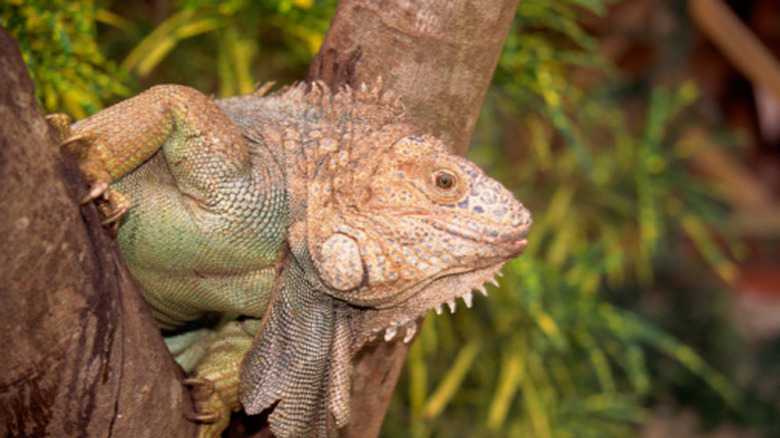
The Life Cycles Of Iguanas
Other Cute AnimalsThe Life Cycles Of IguanasByDelialah FalconUpdated: Dec. 5, 2024 5:31 pm ESTIguanas are lizards that live in tropical climates. They have become popular pets, which has led to their capture in the wild to be sold for profit. Iguanas are cold-blooded creatures that eat mostly plants, leaves and fruit, but will occasionally eat eggs and insects. They can grow to be up to 6 feet long and have tails that can detach from their body when pulled without causing any harm.EggsOnce a female iguana has mated with a male, she will begin digging a burrow in the ground so she can build her nest. She will lay her eggs approximately 45 days after mating. Although she will lay between 40 and 50 eggs, only a fraction of those will survive. Once the eggs are laid, she will desert the nest, leaving the eggs to develop on their own.IncubationThe hatchlings will begin developing inside of the eggs immediately after the eggs are deposited into the nest. The eggs will enter into an incubation period for 90 to 120 days before the hatchlings will emerge.HatchlingsAfter the incubation period is over, the hatchlings will begin to emerge from their eggs. The hatching process does not occur all at once and can take anywhere from one week to 10 days. The hatchling will scratch the egg and create a crack or two in the shell. The hatchling will then go into a resting phase. A day or two later, more cracks will develop, followed by another resting phase. The hatchling's head will emerge, and another resting phase will follow. These phases will continue until the hatchling emerges completely from the egg.BabiesAfter the hatchling emerges, it will still have the yolk sac attached to the body. This yolk sac was the lifeline that provided the nutrient to keep the hatchling alive during the incubation process. Once out of the egg, the sac will remain on the hatchling for two to three days, continuing to provide nutrients. When the sac falls off, the Iguana is now a baby and will need to begin consuming food to stay alive. It will take two years for the baby to reach adulthood.AdultsAn iguana enters adulthood at around 1.5 to 2 years on average. A male iguana will be ready to mate at this time. Female iguanas may take an additional year or two to be ready to breed, as they may require more time to build up their calcium reserves. The female may, however, begin to produce eggs sooner, even if they are not yet fertilized. Iguanas can live to be 30 years old.

The Highest-Earning Celebrity Pets
DogsThe Highest-Earning Celebrity PetsByAdam SymchukJan. 18, 2025 9:05 am ESTSarah Morris/Getty ImagesThe celebrity landscape for pets has undoubtedly changed with time. While some may think of Lassie, Rin Tin Tin, Bud, or Beethoven, animals in the acting industry don't quite make the same money as their Instafamous counterparts (just look at the amazing lives of Taylor Swift's cats and their sizeable online followings). With millions of fans, these pets can rake in big bucks.To identify the highest-grossing earners, we looked at Instagram followings to pinpoint how much these pet influencers can make on a single sponsored post. As most famous pets expand past social media, other avenues of income will be touched on to get a more complete picture of the worth of these renowned canines and felines. All information, including current social media followers and engagement rates, was gathered in November 2024.The estimated price ranges per Instagram post were identified using Influencer Marketing Hub's Instagram Money Calculator. Meanwhile, we determined engagement rates via Trend Hero's Instagram Engagement Rate Calculator. Amounts for sponsorships, appearances, endorsements, and merchandising are not often disclosed, so monetary gains in these categories are mentioned only as potential additional earnings. All amounts were calculated based on available information; Instagram does not pay a fixed rate to its users.Nala Cat - $9,540 - $14,310 per sponsored postNala Cat has reigned supreme as the top-earning Instagram pet and held a Guinness World Record for the feline with the most followers on the platform since 2020 (she had 4.5 million as of late 2024). Nala's owner, Varisiri Methachittiphan, better known online as "Pookie," brought the feline home when she was 5 months old. In an interview with Muchiecat, Methachittiphan shared, "Even though I never intended to adopt a cat that day, when I saw Nala, I couldn't resist her big blue eyes. Once I had Nala in my arms, she looked up at me and licked my face. I knew it was meant to be." A year and a half later, Methachittiphan created an Instagram account for Nala with the goal of sharing her feline friend with those close to her; however, Nala's popularity steadily rose until she had captured a global audience.While Nala's estimated earnings per sponsored Instagram post are impressive, the beautiful kitty's worth goes beyond social media. She has her own cat food brand, Love Nala, which includes wet and dry food, supplements, and treats. The famous feline also inspired the book "Living Your Best Life According to Nala Cat," appeared in the 2018 film "Nine Lives" along with other cat celebrities like Lil Bub and Waffles, and won Tik Toker of the Year at the Shorty Awards with her following of over 200,000 people. All these accomplishments have led to Nala being valued at over $100 million. That is one rich kitty cat.Tucker - $8,275 - $12,412 per sponsored postThe golden retriever has a notable reputation as a family pet, and Tucker has become the poster child of that bond with over 3.9 million Instagram followers, 11.5 million TikTok followers, and 5.6 million YouTube subscribers. He rose to stardom pretty quickly, with the pup gaining 60,000 followers at only 6 months old. Adopted by Courtney and Mike Budzyn, the two went on to quit their jobs and focus full-time on managing Tucker's social media and other projects for the world's No.1 most followed doggo. Courtney spoke candidly about how much the famous pooch makes with The New York Post in 2023, "A YouTube-paid post can be anywhere from $40,000 to $60,000 for a 30-minute pre-roll. Instagram, we make about $20,000 for anywhere from three to eight stories."Like many influential pets, Tucker has expanded to ventures beyond social media. Through Tucker & Todd, the adorable golden retriever sells plushies, calendars, clothes, leashes, and bandanas, among other pup-related items. Tucker has also entered the wellness industry with his CBD oil, Tucker's Gold. The entrepreneurial golden retriever looks to keep building his legacy and growing his empire with his son Todd, who is an integral part of the Budzyn household and plans. With Tucker at 6 and his son at 3 years of age, they have plenty of time to build their impressive following together.Doug the Pug - $7,668 - $11,502 per sponsored postDoug's rise to pop culture icon status can be tied to a singular event: In March 2015, his owner uploaded a video of the adorable pug on an outdoor adventure with a pug balloon as Harry Nilsson's "Best Friend" played in the background. The footage received over 20 million views on Facebook on day one and led to appearances on various TV shows, including "Good Morning America." Yet owner Leslie Mosier always knew she had something special with her little friend. She enjoyed dressing him up and showing off his unique personality from when she first adopted him, falling in love as most owners do with their pugs and pug-mixes. Now Doug the Pug is known worldwide, with 3.6 million Instagram followers, 5.6 million Facebook followers, and 6.1 million TikTok fans.Doug the Pug has an edge over many of his fellow online pet celebrities as one of the few to step into voice acting. He provided the snorts and borks for Monchi in the 2021 Netflix Original animated film "The Mitchells vs. the Machines." While Doug has also tapped into merchandising, sponsorship, and his line of holistic products called Nonipup, the happy pug has also looked to inspire others. As the face of the Doug The Pug Foundation, he has brought awareness, smiles, and donations to kids with cancer and other life-threatening illnesses.Juniper - $6,998 - $10,497 per sponsored postJuniper has gotten a lot of help from her furry companions in building her online presence. Still, the "happiest fox" has become the face of the Juniper Wildlife Refuge, which gives a home to animals that cannot live in the wild. Jessika Coker adopted the red fox from family farm that specializes in ranched foxes that trace their ancestry back to the fur trade. Juniper, along with others like Jam Jar the skunk and Newt the raccoon, helped the Juniper Wildlife refuge Instagram page amass 3.3 million followers, with another 4 million fans on TikTok.Juniper's rise has certainly been a journey, and Coker used the fox's surprise stardom to create a home for many animals that need help in the Juniper Wildlife Refuge. Other residents include a surprise friend in Fig, a fox that charmed followers as it bonded with Juniper, becoming her first fellow fox companion. While conservation and awareness are at the forefront of Juniper's image, she, along with a couple of her friends, also sells art and merchandise while helping to raise money for other charitable causes. Fans can also support the pals through an Amazon wishlist or Patreon.Swaggy Wolfdog - $6,574 - $9,862 per sponsored postSwaggy Wolfdog is a newer addition to the list of Instafamous pups, a feat he's accomplished by bringing an abundance of style to the red carpet and other events. The partying Husky and his owner, who stays anonymous and goes by "Swagrman" online, have managed to amass a large fanbase, with 3.1 million followers on Instagram and 7.4 million on TikTok. As part of his rise to fame, he has appeared countless times alongside celebrities, including a picture with Taylor Swift that brought him to the attention of many.For Swaggy, it is all about bringing that drip wherever he goes, and showing that he has the cash to back up his bark. The dog even made headlines when, in September 2024, he lost a $100,000 diamond chain while appearing at the iHeartRadio Music Festival in Las Vegas. The sunglasses-wearing canine serves as the face of his own cryptocurrency when he is not too busy rubbing shoulders with the biggest celebrities. Is Swaggy Wolfdog a publicity stunt or a means to push crypto? The debate rages on, but he is also an adorable Husky who puts the swag in Swaggy, earning him a fan following. Just remember to exercise caution when taking financial advice from a partying dog.Venus the Two Face Cat - $4,682 - $7,023 per sponsored postAdopted in 2009 by owners Christina and Chris, Venus' remarkable appearance stunned many online. Some have even claimed that the unique look is fake, but the former stray has been quick to clap back, saying, "In the salon where I get my pedicures done, Photoshop and spray paint aren't even allowed" (via Independent). Venus' two-toned appearance is certainly rare but not unheard of, with the cat either being a chimera (two sets of DNA resulting from the fusion of two embryos) or extremely lucky. Most don't deny the feline's fabulous looks, which has led to her amassing 2.2 million followers on Instagram and Tiktok.Venus has followed in the footsteps of other pet celebrities, making special appearances and gaining sponsorships, including a deal with Chewy, an online pet food and supply store. However, unlike many other famous kitties on this list, Venus has yet to branch out into her own business ventures or merchandising. Christina, now the sole owner of Venus, has also started sharing the life of her many other pets, which include Roo, Diesel, Tater, Ginger, and Halo. A cryptocurrency uses the image of the split-colored kitty, but there doesn't appear to be a direct connection between Venus and this endeavor.Tuna - $4,028 - $6,042 per sponsored postThere is no way around it: Tuna is one of the most beloved, derpy dogs you will find online. With a charming smile punctuated by an overbite, recessed jaw, and "shrivelneck," the Chiweenie (Chihuahua x miniature Dachshund) saw a pretty quick rise to fame two years after Courtney Dasher adopted him thanks to Instagram featuring an image of the pup on its official page. Since then, the charming little pooch with a knack for taking hilarious photos in and out of costume has garnered a following on Instagram of 1.9 million people.Tuna's presence remains primarily on Instagram, but the doggo has branched out into other ventures. Together with Dasher, the pup penned the book "Tuna Melts My Heart: The Underdog with the Overbite," which gives a behind-the-scenes look at Tuna's life while driving home that all pets deserve a loving home regardless of their appearance. On his official site, Tuna also sells plushies and an annual calendar (not available at the time of this writing), so you can take a piece of the charming little Chiweenie home yourself.Loki the Wolfdog - $3,816 - $5,724 per sponsored postLoki the Wolfdog certainly lives a life many naturalists can admire, with much of the canine's social media showing him happily traveling with owner Kelly Lund and his brother, Raven. While the Husky, arctic wolf and Malamute mix certainly has that image of a wild-bred pup, Loki's adorable antics and tendency to misbehave have also made him an endearing persona online.Lund spoke about Loki's independent nature and their unique bond in an interview with Backpackers.com, saying, "I receive love from Loki by watching him and listening closely as he explores and fills his nose and eyes with the world around him. I just need to give him the opportunity." Building on this sentiment of allowing Loki to explore, the wilderness-loving doggo has gained 1.8 million Instagram followers.An active member of his community in Colorado through his work as an outdoor recreation coordinator, Lund has used Loki to help convey the importance of exploration and exercise. His career and Loki's wanderlust led to the wolfdog having a line of natural CBD products, gear, and merchandise on his official site to celebrate those who love to travel with their pets. Lund shared some of his journey with Loki, who he first met in 2012, in the book "Wild Together: My Adventures with Loki the Wolfdog."Suki Cat $3,604 - $5,406 per sponsored postAn adventurous and energetic Bengal cat, Suki has built an audience through her various treks across the wilderness of Canada (where she is from), Europe, and South America with her owner, Martina Gutfreund. A well-trained kitty, Suki's love of exploration and expressive personality have earned her an impressive following, which includes her 1.7 million Instagram followers and just under 100K TikTok fans and YouTube subscribers. At 7 years of age, Suki's online presence is only likely to grow with more adventures.Amidst their journeying, Suki and her human found the time to write a book called "Travels of Suki the Adventure Cat." Beyond this, the Bengal thrives on time in nature rather than merchandising. Her busy schedule also means that Suki has only had a few chances to meet with fans, with a rare appearance at the Edmonton Cat Fest in 2019 marking one of the few times she strutted her stuff in public.Smudge - $3,180 - $4,770 per sponsored postSmudge's modest (at least comparably) 1.5 million Instagram followers is somewhat offset by his online fame, which puts him on par with (if not more popular than) the other cats on this list. Better known as "Table Cat," Smudge has been "yelled at" by Taylor Armstrong and Kyle Richards of "The Real Housewives of Beverly Hills" countless times over the years, at least in meme form. In fact, the white domestic cat may be the most memed feline currently online. This single image also led to success on Facebook, with the cat having many dedicated meme pages and his official Facebook page amassing over 100k followers.Owner Miranda Stillabower took Smudge in at a time when she was not actively looking for a new companion; however, she instantly fell for his charms when she met him. Stillabower spoke to Munchiecat about how the infamous photo came to be, "He freaks out if he doesn't have his own chair. So he'll hop onto someone else's before they sit down, or he'll meow at everyone throughout dinner. That's how Smudge found himself in front of a plate of salad." Growing his brand off of his famous photo, Smudge has plenty of merchandise available on his official site. The salad-despising puss also likes to give back to his community, with his Instagram page linking to donation requests for Furry Tales Rescue in his home province of Ontario.Bunny $3,180 - $4,770 per sponsored postBunny is one smart sheepadoodle (sheepdog x poodle); her owner, Alexis Devine, says that she has taught her over one hundred words since bringing her home in 2019. While some online have been quick to challenge this claim, Bunny's followers adore the playful, clever pooch and the advice given by Devine, a professional dog trainer. Also helped by her sibling, Otter, the three have built a large online fanbase with 1.5 million Instagram followers, an 8.6 million TikTok followers, and over 330k YouTube subscribers.Bunny's impressive work with the soundboard to express her wants and feelings has certainly inspired many to train their canine to speak. This focus has led to Bunny and Devine becoming spokespeople for FluentPet, including events held by the company behind soundboards for pets. You can see the range of FluentPet products on Amazon. The remarkable duo also came together to write the well-received book "I Am Bunny: How a 'Talking' Dog Taught Me Everything I Need to Know About Being Human."Brodie that Dood - $2,971 - $4,456 per sponsored postBrodie is one big fluffy dood, with the 80-pound curly goldendoodle catching looks wherever he goes. His owner, the aptly-named Cliff Brush, has made his dog's luxurious locks a viral sensation when, during COVID, he took to sharing their lives to help entertain those stuck at home. Their online antics resulted in a healthy following on various platforms, with 1.4 million on Instagram, 6.9 million on TikTok, and 5.46 million on YouTube.Brush initially tried to capitalize on Brodie's success with ideas like an official backpack or a dog park/bar. However, the pieces finally fell into place when the pair settled on the most apparent answer with such a giant mascot: dog hair products. Floof by Brodie aims to become the glorious golden doodle's bread and butter, selling various canine grooming items and supplies. Brodie still has his backpack, which he sells through Little Chonk, and the doggo is always happy to meet with his fans. Still, Brodie and his bro stay grounded, as Brush said in an interview with Tubefilter, "Our content is ever-evolving, and the underlying theme is we're best friends and I want to show that off."
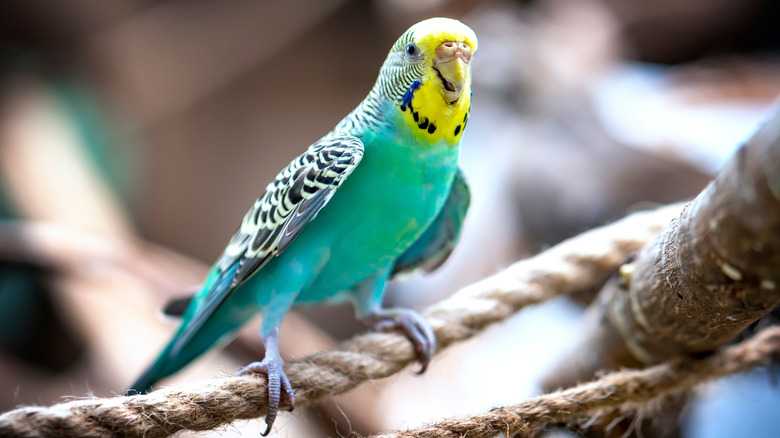
What Are The Symptoms Of A Budgie Having A Stroke?
Other Cute AnimalsBirdsWhat Are The Symptoms Of A Budgie Having A Stroke?ByRosie GovinUpdated: Nov. 19, 2024 11:00 am ESTHuy Thoai/ShutterstockBudgies, more commonly known as parakeets, make great family pets, and they can have a substantial life span of up to 10 to 12 years with proper attention and care. But like all pets, these little, colorful birds can face health problems, and it's important to be able to recognize the signs when your budgie is unwell so you can get it treated. For instance, how can you tell if your budgie is having a stroke?According to PetMD, strokes aren't a super-common budgie ailment, though they can happen, especially as budgies get older. In response to a question about strokes in parakeets on JustAnswer, certified avian specialist August Abbott explained, "As unusual as it may sound, when a bird loses its balance or seems to have the symptoms of a stroke, it could be the result of an internal problem."Your poor budgie may appear to be partially paralyzed, limping, unable to balance, or breathing with difficulty or an open mouth. These may be similar to the symptoms of stroke in hamsters or other pets, but they differ somewhat from the signs and symptoms of a heart attack in pet birds. As Abbott clarified, however, common stroke symptoms may actually be signs of other health problems when it comes to your budgie.Other health problems in budgies can mimic the symptoms of a stroke.Bymandesigns/Getty ImagesIf your pet budgie is exhibiting stroke-like symptoms, it very well may be a completely different health issue. More common illnesses in budgies include tumors, fatty liver disease, injuries, goiters, and foot disorders. A growth on your budgie's tiny body, whether it's a tumor or a goiter, could absolutely cause balance issues or limping. A skeletal injury could do the same, as well as account for heavy, open-mouth breathing.Liver disease, which is fairly common in pet birds like budgies, causes symptoms like fluffed feathers (though this can also be a sign of a parakeet molting), a decrease in food consumption, or general depression at first. Later symptoms include breathing problems, swollen abdomens, and more. According to Dr. Gregory Rich and Dr. Rick Axelson at VCA Animal Hospitals, it's often difficult to diagnose a budgie's issue based on symptoms alone because so many different diseases present in similar ways, so it's imperative to get your sick bird to a vet as soon as you notice that something isn't quite right.What to do if your budgie is sickCherdchai Chaivimol/ShutterstockWhile waiting for your parakeet to seen by their vet, there are a few things you can do to make it comfortable if it's showing signs of illness. First, you don't want to handle your budgie too much — this can cause it unnecessary stress. Second, it's a good idea to provide some warmth and humidity for your suffering pet bird. To do this, you can place a towel over your bird's cage and then drape a heating pad set to low over the towel. The ideal temperature you want their environment to reach is between 80 and 85 degrees.Third, a budgie who is sick is likely to stop eating, so it's vital to provide it all of its favorite foods in an accessible way. This means putting it on the cage floor if it's not able to perch or even hand-feeding it if necessary. These are all temporary measures to take just to keep your budgie comfortable before it can be seen by a professional.
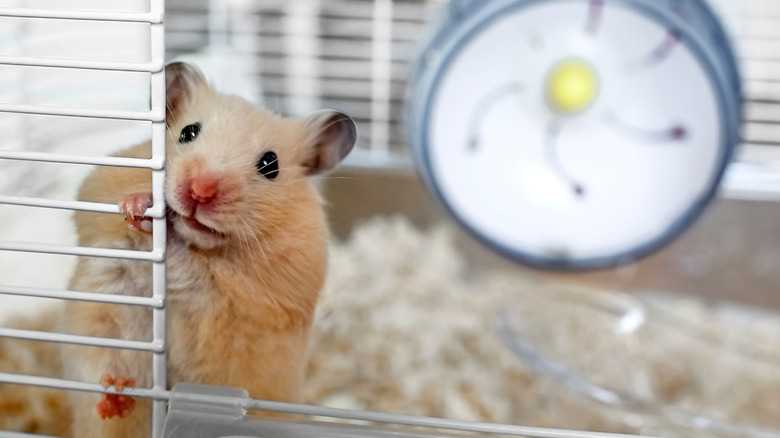
How Often You Should Clean Your Hamster's Cage (And The Best Way To Do It)
Other Cute AnimalsHow Often You Should Clean Your Hamster's Cage (And The Best Way To Do It)ByJessica DesrosiersFeb. 16, 2025 3:25 pm ESTOlga Dzhoshkuner/ShutterstockWe may receive a commission on purchases made from links.A safe, clean environment is important for your hamster's well-being. It can help prevent health issues like hamster mites, which can be challenging to get rid of, as well as keep your furry, pocket-sized friend from getting ill. However, cleaning your hamster's cage might seem a bit daunting. How often should you clean it? Does everything need to be cleaned at once? Is it stressful for your hamster?To start, you should have a few items handy to help with cleaning. These include gloves, bedding, wipes, and cleaners like the Nature's Miracle Small Animal Cage & Surface Cleaner. You need to be cautious when using cleaning wipes if you have pets, so be sure to check that they — and your other cleaning supplies — are safe for hamsters before using them. You'll also want to use soap and water to clean any items that contain food or water, such as dishes and bowls. If your hamster lives in an enclosure with plastic tunnels, a bottle brush is also useful for cleaning out those smaller, enclosed spaces.Thankfully, there are also easy ways to reduce stress in your hamster when cleaning its cage. First, you can schedule cleaning in the evening or nighttime to coincide with your hamster's natural nocturnal cycle. In addition, you can spot-clean soiled areas while doing deep cleans less often or if your hamster has been ill. Another time-saving tip is to divide your hamster's enclosure into sections and then clean one section each day. This should help keep your hamster's scent in the enclosure and lower its stress levels.Create a schedule for hamster cage cleaningsommthink/ShutterstockCreating a cleaning routine with your pets can help ease stress for both you and your hamster, as well as help you stay on top of things. Where should you start, you may ask? Well, divide your cleaning into daily, weekly, and monthly tasks. Daily tasks include tidying your hamster's enclosure, replacing its food and water, and gently wiping down or scrubbing any soiled food or water dishes. You'll also want to inspect your hamster's bedding and replace anything that smells or looks soiled daily. If you have a dust bath for your hamster, replace the substrate daily, too. It should also be left no longer than 12 hours at a time in the enclosure to prevent excess soiling.Weekly and monthly cleaning should be more thorough, and you should move your hamster to a travel enclosure to reduce stress. Then, the fun begins. Be sure to completely change your hamster's bedding weekly. Next, remove all items from the enclosure and wash them. All toys and accessories should be wiped down or scrubbed at least monthly depending on how soiled they are. Then, dry all items thoroughly after cleaning to prevent mold growth. Once you're done, you can safely return your hamster to its enclosure to enjoy a happy and healthy place to explore.
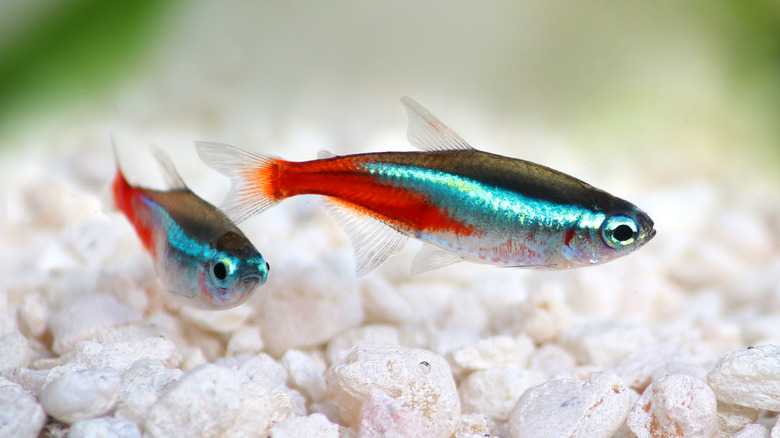
How To Tell If A Tetra Fish Is Gravid
Other Cute AnimalsFishHow To Tell If A Tetra Fish Is GravidByJessica DesrosiersUpdated: Nov. 20, 2024 12:18 pm ESTMirko_rosenau/Getty ImagesWe may receive a commission on purchases made from links.You've assembled your fish aquarium, stocked it with tetras, and filled it with plants. Now, as you observe your fish, you may notice some unusual behaviors or changes to your fish's body that makes you wonder if they're ready to breed. Once you've figured out if you have male or female tetras (or both) and spotted the signs that your fish may be mating, you'll be ready to determine if your tetra is gravid.First, there's a terminology difference between gravid fish and pregnant ones. Typically, "pregnant" refers to fish that are live-bearing, while "gravid" refers to fish that are full of eggs ready to be laid. Tetras are egg-laying fish, which means they become gravid when they're ready to reproduce. Moreover, tetras can create dozens of eggs during a single spawning cycle.But just how can you tell if your fish is gravid? Well, there are actually a few things to look for. For starters, it's best to look at your tetra from above to more easily see these changes. When looking, you'll notice a gravid fish becomes broader, with a rounded belly. This is, of course, because she's full of eggs. In addition, she may show some behavioral changes. These include an increase in appetite or seeking out hiding places to lay her eggs. If you have males in the tank, they may also become more interested in the females, as well as more brightly colored to try and attract the female for mating.Tips and tricks for gravid tetras (and their fry)Bukhta Yurii/ShutterstockSometimes, a fish may be mistaken for being gravid when they're actually ill, and vice versa. It's important to rule out any issues that could mimic a fish appearing gravid. Illnesses that can mimic this include dropsy (a fatal build-up in fluid in a fish), bloating, and digestive issues. The key difference is that a healthy, gravid fish will still be bright-eyed, alert, and interested in the environment around her, while an ill one will display additional symptoms. For example, the scales on a fish with dropsy will become more erect like a porcupine or pinecone. Once your tetra has laid her eggs, you may notice them in the environment. Tetra eggs are clear and small, and they easily stick to spawning mats, plants, and other materials in the tank. However, once fertilized, they'll become opaque-white. After a few days, the eggs will hatch, and the babies, or fry, will emerge. You'll want to feed them a special fry food, such as Ultra Fresh's Baby Fish Food, for optimal health. This food can also help support the energy needs of a gravid fish as she readies to lay her eggs. Overall, determining if a tetra is gravid can be tricky at first, but once you recognize the signs, you can enjoy the fun and joy of new life swimming around your tank in a few days.
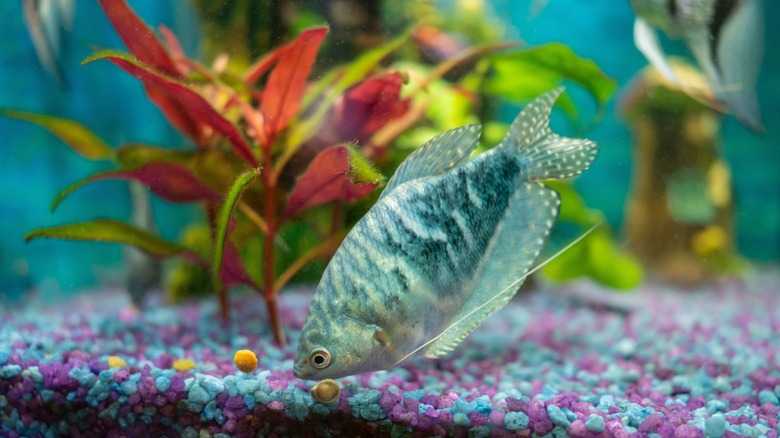
Do Fish Ever Sleep? Here Are The Signs To Look For
Other Cute AnimalsFishDo Fish Ever Sleep? Here Are The Signs To Look ForByRosie GovinOct. 1, 2024 1:25 pm ESTstaras/ShutterstockYou can easily tell when your dog or cat has drifted off — they close their eyes, get lost in dreams, and sometimes even snore, just like humans do. But your pet fish is a different story. That little guy or gal lives in the water and, as Dory would say, "just keeps swimming," seemingly all day and all night. Does your goldfish ever sleep? The answer is nuanced.Yes, fish sleep. Kind of. They may enter periods of lower activity and metabolism function, but they probably won't look like they're asleep. In fact, they often appear more alert than other animals while resting, potentially so they can react to threats. However, according to a 2019 study published in Nature, zebrafish have at least two stages of sleep that resemble those found in our own sleep cycle. (Humans move through four stages of sleep total.)Significantly, researchers have observed fish settling in for a snooze at night, meaning your pet fish may be on a similar sleep schedule to you. Philippe Mourrain, PhD, an associate professor of psychiatry and behavioral sciences at Stanford University, said "the only real difference is a lack of rapid eye movement" when it comes to zebrafish sleep vs. human sleep (per Stanford Medicine).Signs that your fish is sleepingrichardernestyap/ShutterstockSince fish sleep looks different than human sleep, how can you tell when your little buddy has powered down? Well, some fish find a hidden spot in mud or coral to tuck themselves away while they rest. In your aquarium, they might burrow inside a log or under a grotto. Given this, it's always a good idea to provide structures and toys for your aquarium fish. Other fish will just float in one spot for a while. Generally, they may be less responsive during periods of rest.Some fish are diurnal, meaning they sleep at night, while others are nocturnal and do most of their swimming and searching for food after sundown. Zebrafish researchers discovered that exposure to light interrupted their sleep, suggesting they may have a circadian rhythm, the cycle that describes why some animals, including humans, feel awake and alert during the day and get tired at night. So believe it or not, there may be some steps you can take to foster healthy sleep patterns for your pet fish.How to help your fish get enough sleepTrofimova Vika/ShutterstockThe majority of aquarium fish are diurnal, so they'll operate on a similar schedule to you. Since it was found that light exposure can cause sleep deprivation in zebrafish, the simplest way to help your buddy maintain healthy sleep habits is to get an aquarium light with a timer, one that has set hours of operation. Different fish have different needs when it comes to the ideal number of hours of light exposure, so make sure you do your research and place the aquarium in a spot in your home that gets the right amount of light.If possible, it's probably best not to throw a rager complete with pulsing music and flashing lights while your fish is resting. And if you notice your little bud lying at the bottom of your aquarium, floating in one place, don't go tapping on the glass to wake them up. You wouldn't like if someone did that to you, and clearly, fish have more in common with us than we may have thought, especially when it comes to sleep.
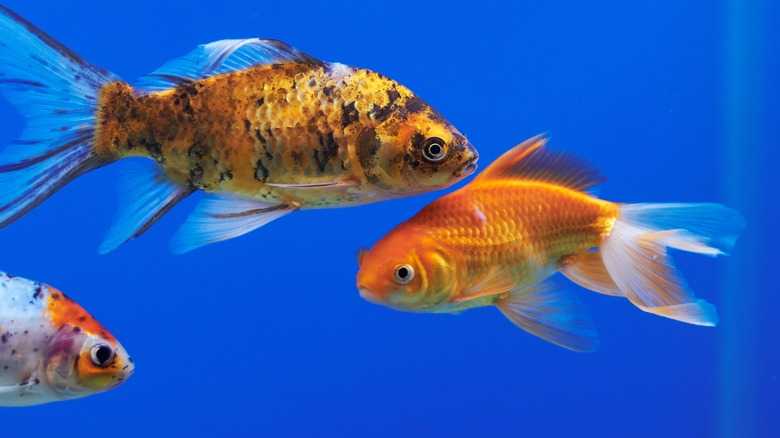
Goldfish Aren't As Easy To Have As Pets As You Might Think
Other Cute AnimalsFishGoldfish Aren't As Easy To Have As Pets As You Might ThinkByPaige MountainSept. 30, 2024 12:11 pm ESTsuprabhat/ShutterstockConsidering fairs and carnivals often hand out goldfish as prizes with an air of nonchalance, you might assume you'll have little trouble looking after one. However, these popular pets actually have a lot of needs you'll need to meet, and deserve proper care just like any other household member. In fact, adopting a goldfish can be quite a commitment.In the right conditions, goldfish can live up to 10 to 20 years, so expect to be in it for the long-haul. It's also important to research the type of goldfish you plan to get. While the comet goldfish is the most commonly seen, there are other varieties out there that may have different needs. Some types of goldfish also might not belong in the same aquarium, so preparation is pivotal to ensure your fish all get along. Goldfish also typically shouldn't be housed with other species, as they have unique environmental requirements that many fish cannot live in.Goldfish environmental needsMirekkijewski/Getty ImagesTo keep your goldfish alive and happy, it's important to understand their environmental needs. When it comes to choosing a home, a bowl isn't going to cut it. Typically, you will want at least a 20-gallon tank for your goldfish (if you have more than one in a tank, aim for a minimum of 20 gallons per fish.) However, if your goldfish is a larger species, you'll need a tank that's even bigger. Comet goldfish can get up to 16 inches long, so you may have to upgrade your tank in the future if your fish starts to outgrow it.Along with a sufficient tank, you also need to maintain proper water quality for your goldfish. Ideally, the water should have a pH between 7 to 8.4. It's important to check the pH using a water quality test kit on a regular basis, preferably weekly. Clean the tank often (the ideal schedule varies based on size, number of fish, and filtration), as well as the tank filter every week.How to care for your goldfishPhilippe Gerber/Getty ImagesGoldfish love food. Temperature can play a role in their appetite, with warmer water making them more hungry. You will typically want to feed your goldfish once a day if their tank is below 70 degrees, or twice a day for higher temperatures. Look for a food that has around 30% protein. Sinking pellets are often better than flakes, as the latter tend to hover at the surface, which can lead to buoyancy problems if a fish eats there too often. Watch out for signs of overfeeding your goldfish, and consider cutting back if you suspect they're getting too much grub.While goldfish are typically housed inside, comet goldfish can often thrive outside if you have a pond at home with the proper conditions permitting. Be sure there is at least 30 gallons of water per fish and that it is a minimum of 3 to 4 feet deep. If you live in a colder climate, you will want a deeper pond, and you may want to transfer your goldfish inside during the winter months.
Caring For Mudpuppy Salamanders
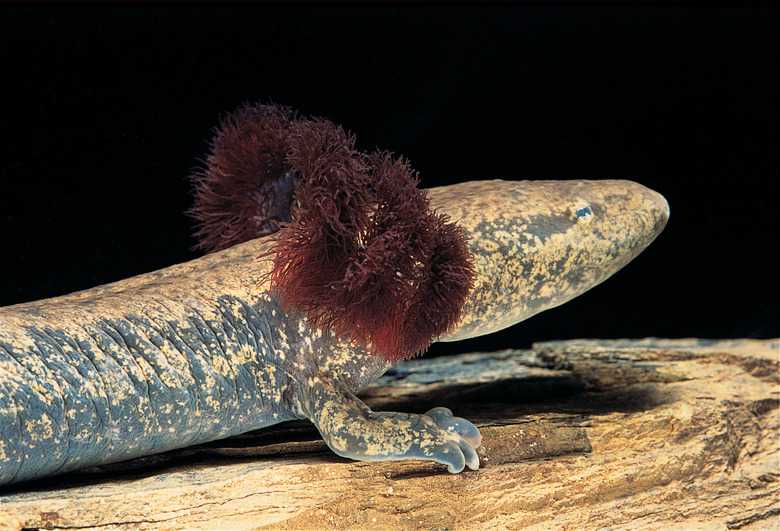
Other Cute AnimalsCaring For Mudpuppy SalamandersByMichelle MileyUpdated Oct 2, 2023Paul Starosta/Corbis Documentary/GettyImagesWe may receive a commission on purchases made from links.If you're looking for a low-maintenance pet, a mudpuppy salamander might fit the bill. Fun to watch and easy to care for, these pets require only periodic water changes and feedings. You'll never have to stop at the pet store to replace worn-out mudpuppy toys or worry about walking them in bad weather. Getting one is a commitment, however, since mudpuppies in captivity often surpass the normal 11-year life expectancy and survive for up to 30 years.Create a habitat for your mudpuppy petCreate a habitat for your mudpuppy petMudpuppies are solitary creatures who only visit with each other during mating season. Don't force yours to live with roommates. Instead, house your mudpuppy by herself and give her plenty of room to roam in a 20-gallon tank. You'll also need a water filter to keep things clean and a heater that will let you keep the water temperature between 68 and 72 degrees Fahrenheit.To prepare your mudpuppy's new home, line the bottom of the aquarium with gravel and smooth pebbles to mimic the bottom of a creek or stream. Add fresh water to the tank, filling it at least 8 to 14 inches deep. Unlike other salamanders, mudpuppies spend their entire lives in the water, so you need not provide any high ground.As nocturnal creatures, mudpuppies like very low lighting and lots of nooks and crannies in which to hide. Provide lots of rocks, tree limbs, and plants for this purpose. Make sure these items are secure so your mudpuppy can't move them or accidentally drop them on herself.Keep things cleanKeep things cleanProper mudpuppy care requires keeping your pet's tank clean. A water filter is a tremendous help, but you'll still need to change the water if it starts to look cloudy or dirty. To do so, place your salamander in a different aquarium along with some of his water. You can then use hot water to clean the inside of the aquarium and rinse the gravel at the bottom of his tank.When refilling a freshly cleaned tank or adding water to a low tank, always use spring water that is free of chlorine and other additives. If you use tap water, let it set out for 24 hours first or use a tap water conditioner.Feed your mudpuppy a healthy dietFeed your mudpuppy a healthy dietFeed your mudpuppy two or three times a week. She is a carnivore who eats crayfish, fish, insects, snails, and small frogs in the wild, so meat is a must. For most mudpuppies, two or three large minnows or night crawlers will make a hearty meal.Nutrition matters, so avoid goldfish and other popular feeder fish. These fish are high in fat and not the healthiest choice for your salamander. To protect your pet from parasites, feed him fish and worms that have been frozen for at least two weeks.Feeding time provides a chance to interact with your mudpuppy more than usual. With a bit of patience and practice, you can convince your mudpuppy to eat from your hand. To do so, approach your mudpuppy slowly and allow her to take the food at her own pace. Mudpuppies do have teeth, so keep your fingers back — though they rarely break the skin, your mudpuppy could accidentally bite you during hand feeding, and bites do sting.Try to avoid handling your mudpuppyTry to avoid handling your mudpuppyMudpuppies are fun to watch and listen to, as you can sometimes hear the small squeaking noise or "bark" that earned them their name. These pets aren't for those who like to get hands on, however. Avoid handling your mudpuppy more than what is necessary to clean his tank or take him to the vet. Salamanders have a layer of slime on their skin that protects them from fungi and bacteria, and frequent handling can disturb this and make your pet sick.You should periodically check your pet for signs of illness, and you may handle him as needed to do so, preferably while wearing latex gloves. Your mudpuppy should visit the vet if you notice that she is losing weight or lacks an appetite. You should also visit the vet if you notice any open wounds, diarrhea, parasites, cloudy eyes, skin bubbles, or bloating.Always check with your veterinarian before changing your pet's diet, medication, or physical activity routines. This information is not a substitute for a vet's opinion.ReferencesCaudata Culture: Necturus MaculosusState of Connecticut Department of Energy & Environmental Protection: MudpuppyDoctors Foster and Smith: FAQs: Newts & SalamandersPetco: Salamanders and Newts

Photoshopped Animals: 28 Bizarre Photoshopped Animal Hybrids We Wish Existed IRL
Other Cute AnimalsPhotoshopped Animals: 28 Bizarre Photoshopped Animal Hybrids We Wish Existed IRLByKayleigh RobertsUpdated Apr 19, 2023There are literally millions of species of animals on Earth (8.7 million, to be exact), but some very imaginative people have been able to come up with even more—and create them in Photoshop. Oh, internet, right?Here are 28 bizarre (and mildly disturbing—but what on Reddit isn't?) animal hybrids.1. The GoldenSealReddit1. The GoldenSealMore Like ThisOther Animals16 Fuzzy Animals to Improve Your Outlook on LifeCats13 Funny Cat Photos That Are Chaos IncarnateDogs16 Cats And Dogs Who Are The Lion King2. The Owl CatImgur2. The Owl Cat3. The Giant PigandaReddit3. The Giant Piganda4. The DonkiwiImgur4. The Donkiwi5. The MeercatReddit5. The Meercat6. The GullsnakeReddit6. The Gullsnake7. The GirmingoReddit7. The Girmingo8. The LlamatReddit8. The Llamat9. The SeagoatReddit9. The Seagoat10. The Meereater (aka the star of your next nightmare)Imgur10. The Meereater (aka the star of your next nightmare)11. The GullibullReddit11. The Gullibull12. The Potbellied MeerpigReddit12. The Potbellied Meerpig13. The Mountain Roat (aka a R.O.U.S.)Imgur13. The Mountain Roat (aka a R.O.U.S.)14. The Jumping WallatImgur14. The Jumping Wallat15. The GorrilimuImgur15. The Gorrilimu16. The MeermaidImgur16. The Meermaid17. The SearamReddit17. The Searam18. The DonkeybaraImgur18. The Donkeybara19. The MeerrelReddit19. The Meerrel20. The Ottuck (weirdly similar to a platypus)Reddit20. The Ottuck (weirdly similar to a platypus)21. A Prize-Winning BeagullImgur21. A Prize-Winning Beagull22. The ParratImgur22. The Parrat23. The Sea MuleImgur23. The Sea Mule24. The PikoxImgur24. The Pikox25. The Cat SquirrelReddit25. The Cat Squirrel26. The SnotterReddit26. The Snotter27. The YakaqueImgur27. The Yakaque28. The GorrilabradorImgur28. The GorrilabradorAre you ready for more hilarious animals? Yes! Scroll through these 19 Photos Of The Sneakiest Animal Thieves Ever Caught On Camera. You can keep the cuteness coming by following us on Facebook and subscribing to our newsletter. Your life is about to get 200 percent cuter, congratulations!

How To Identify Duckling Breeds
Other Cute AnimalsBirdsHow To Identify Duckling BreedsByBen TeamUpdated: Nov. 28, 2024 5:07 pm ESTEnn Li Photography/Getty ImagesBaby duck identification is often challenging for beginners; when the ducks in question are downy hatchlings without telltale feather coloration, the task can be nearly impossible. In some cases, positive identification is only achievable once the bird matures. Consider characteristics other than feather color that may indicate to which breed your pet duckling belongs.Look for body characteristicsIf your ducklings are accompanied by a parent duck, it will be much easier to figure out their breed. However, ducklings at a feed store or other retailer might not always come with a description of the breed for sale. Familiarizing yourself with duckling characteristics may give you a better idea of what type you might be bringing home.Ducklings come in various combinations of just a few basic colors. Yellow ducklings may grow up to be buff, jumbo Pekin, fawn & white, or Saxony adults. Brown and white duck breeds are often downy yellow with shadowy brownish sections that can resemble dust or dirt, and could turn out to be Cayugas. Black and yellow ducks are likely Black Swedish, Magpie, Mallards, or Rouen. Other ducklings may have gray or brown down.To get a better idea of breed, look to a duck's body build, how it holds itself, its markings, and the color of its beak and feet. Most ducks are short and squatty, but meat breeds will be wide at the chest, and Indian Runners appear tall and skinny. Feet and beaks of various duck breeds might be yellow, orange, gray, bluish, black, or brown.Yellow duckling breedsPekin ducks are the most commonly kept duck breed. They provide 95 percent of the duck meat consumed in the United States and have a broad-breasted long body. Pekin ducks match the mental image most people have when they envision a hatchling; the young ducks are covered in yellow down and have orange beaks and feet.Indian runners stand tallIndian runner ducks are the easiest duckling breed to identify, no matter their color. Their posture differs from that of most other ducks in that they stand stretched up vertically as opposed to the more squatted posture of other breeds.Although runner ducklings are often yellow, they occur in a wide variety of colors and patterns. Yellow ducklings might have patches of brown indicating that they'll be fawn or white. Some are blue-gray and chocolate. However, all Indian runners have their characteristic "standing tall" posture.Unmasking Muscovy ducklingsMuscovy ducks are the only domestic duck breed that does not descend from mallards (Anas platyrhynchos). Instead, they represent a different duck species, called Cairina moschata. Unfortunately, while mature Muscovy ducks are easy to distinguish from mallard-derived breeds by observing their abundant facial skin and bulkier build, the hatchlings are difficult to distinguish from wild mallards, Pekin ducks, or other breeds.Further complicating matters, the breed exhibits a number of color mutations, which can produce ducklings clad in yellow down,brown down, or a combination of both. Additionally, depending on which color mutations, if any, are present in the animal, Muscovies may have brown, black, gray, pink, or orange beaks.Unique Muscovy characteristics include a hissing sound instead of quacking and pronounced toenails for roosting in trees. They don't have as much oil as other ducks and tend to not swim as much as other duck breeds.Look for the linesAlthough they are not a true breed in the strictest sense of the word, many people keep wild-type mallards, rather than their domestic descendants. Because they must avoid drawing the attention of predators, hatchling mallards are often clad in a combination of yellow and dark brown feathers, which help to break up their outline, thereby allowing them to blend in with their surroundings.Wild-type mallards usually have a dark line that passes through their eye. Their beaks are usually rather dark, although yellow and red areas are occasionally present.

What Is A 'Soul Pet' And How Do You Know If You've Found Yours?
Pet ParentingPet CompatibilityWhat Is A 'Soul Pet' And How Do You Know If You've Found Yours?ByCynthia AnayaMarch 26, 2025 9:25 am ESTOscar Wong/Getty ImagesPets are more than just animals. They deserve the warmth and protection of a home, the comfort of some of the best dog beds, and the love of a family, because they're family, too. Without even trying, dogs, cats, and other pets can form a powerful, unbreakable bond with their owners unlike any other. Thousands of people who have experienced this bond refer to the pet as their "soul pet." Like a soul mate, a soul pet involves the belief that a specific animal is destined to be in someone's life based on their intense emotional connection.Some people have more than one soul pet in their lifetimes, but others have only one despite having multiple pets. So, how do you know when you've found your soul pet? The answers vary from person to person, as they can involve variables like personality, species, breed, previous experiences, age, and other factors. However, if there's one thing they all have in common, it's that they include an emotional attachment, a deep love, and a palpable difference compared to other pets the person has owned.Both pet owners and veterinary experts have offered their thoughts on the topic on social media, in magazine interviews, and in other places. More specifically, they shared the criteria that a pet must meet to gain the title of "soul pet."You love being next to each otherDrazen_/Getty ImagesWhen you truly love a person, you want to be near them. You look forward to spending time together and enjoy each other's company, which may include physical touch. Many people feel this same way about their pets, but not all pets reciprocate the sentiment. Certain animals and breeds tend to be less affectionate than others, so while some welcome the proximity and touch of their owners, others do not. This lack of reciprocation could prevent a close human-animal bond from forming. On the other hand, if you find yourself wanting to be close to your pet and it joyfully returns your affection as if it were born to love you, there's a good chance you've found your soul pet.It's easy to know when a pet loves being around you, particularly a dog or cat. It'll follow you around the house, cry if you're in your closed bedroom without it, cheerfully greet you at the front door when you come home, or jump on the sofa or lay on the floor next to you the moment you sit down. Or, if it's a cat, it might rub its face against your leg or headbutt you. A soul pet just can't get enough of you, and you can't get enough of it, either. You may not even know why you feel so drawn to it, but the connection feels natural. A soul pet will do that to you.You feel like you understand each otherUrbazon/Getty ImagesOf course, most animals can't speak, but dogs, cats, and other species can definitely understand certain things when their owners speak. It might be a command, a question, a complaint, or a praise. They hear specific words and phrases so often that they know how to interpret them. Someone with a soul pet might be able to interpret their companion's means of communication as well, whether it's audible or physical.One pet parent on Reddit claimed they could decipher their soul cat's meows and body language, stating, "I understood what he meant by his tone and expression." They continued, "I could always predict his behavior, what he'd like/not like, and he'd seek me out for protection, even when startled, instead of hiding."A soul pet might be able to understand what you need in return, even when you don't use words. Many dogs can also sense their owners' sadness or depression and respond by resting their heads on their lap or just sitting beside them. This simple act has the power to create a deep and emotional connection, converting a regular pet to a soul pet.You've experienced a lot togetherYanya/ShutterstockIn many households, people spend more time around their pets than with their significant other or other family members they live with. Pets obviously don't have to go to work or school like humans do. They can't run errands (although we wish they could), and many follow their owners around the house from room to room. Perhaps yours is one of them. They're there when you wake up and come home. They're there when you sit down to relax or when you have a bad day and need a good cry. They're the relationship that remains, even when certain human ones don't.Whether you've had a pet for years or just a few months, these tender moments together can accumulate quickly. Before long, you realize that some of your favorite or emotion-filled home memories and even recollections of outdoor adventures or trips include your pet. Moving from one place to another, dealing with a breakup or loss of a loved one, people watching on the front porch, RV-ing across the country, and so on. If a pet is part of your personal journey, it becomes a soul pet, attached to you in its own unique, special way.Soul pets improve your moodPeopleimages/Getty ImagesAny pet can give you a sense of purpose, but that doesn't necessarily equate to giving you joy or improving your mood. It does for a soul pet, though. It might be from feeling the paws of your cat kneading your lap, touching its soft fur (or feathers), or having it rub its head against you. It might be witnessing its joy in seeing you come home from work every day that feeds your happiness. One Redditor shared this feeling with their soul pet, stating, "Everything just feels better when they're around, and you know that the feeling is mutual."Some pet owners can feel happier as a result of having a soul pet, even when they aren't in the room. Researchers have studied this correlation between mood and pets for years and continue to find proof that pets can, in fact, improve their owners' disposition. One 2013 study published in PLoS One found that anxiety levels dropped for children with autism after they played with guinea pigs. Therapy dogs are also used to reduce anxiety and other negative emotions in hospital patients. Although an animal doesn't have to be a soul pet to have this effect on people, the effect is sometimes what causes it to become a soul pet, especially when it's consistent.Soul pets leave a scar on your heart after they're goneComplexio/Getty ImagesYou may already suspect that you've found your soul pet, but sometimes it takes its absence to truly confirm it. The intense relationship between a human and a soul pet usually equates to spending a lot of time together, and the love is undeniable. However, the truth no pet owner wants to face is that one day, we have to say goodbye. This loss can be painful and overwhelming. "Even after they're gone, a soul pet leaves a permanent imprint on your heart," Dr. Liza Cahn, a Seattle-based veterinarian, told Newsweek.She added that soul pets can essentially leave a scar that no other pet can heal. One former dog owner confirmed this in a Reddit post, sharing, "I lost my buddy of 15 years ... I truly doubt I'll be getting another dog ... I think I found my guy, and we had a good run, and he was far better than I deserved, but I think to me that's what a 'soul pet' is." This person's experience mirrors that of others who have lost a soul pet. Some pets simply cannot be replaced because of the heart scars they leave behind. Sometimes, a specific human-animal bond is so deep that it can happen only once in a lifetime. A soul pet can touch our lives while it's in it, and beyond, and we're lucky to have such wonderful bonds with our furry, and feathered, companions.

The Dangerous Predator Problem In Houston, Texas, That Keeps Growing
Other Cute AnimalsThe Dangerous Predator Problem In Houston, Texas, That Keeps GrowingByCynthia AnayaApril 23, 2025 9:25 am ESTKrblokhin/Getty ImagesIn a perfect world, people wouldn't have to worry about predators snatching their beloved canine and feline companions from their yards; humans and wild animals could safely coexist in the same place. In the real world, however, this isn't the case. Wild animals can threaten humans and small animals when they start hunting near their homes. Residents of certain Houston, Texas, neighborhoods know this all too well, as they've been reporting an increase in coyote sightings over the past seven months, and some of their pets have gone missing.A homeowner in the Montrose area told KHOU11 in March that he's never seen a coyote near his home in the 55 years he's lived there. His neighbors have been singing a different song, though, as they've been busy posting photos and videos on social media of the predators lurking near their yards and sidewalks. The El Camino South neighborhood of Houston has also had confirmed sightings in September and November of 2024, according to a private community Facebook group seen by Cuteness.Coyote mating season spans from mid-January to early March, and from October to January, many young coyotes leave their family packs. These seasons of high activity could explain the Montrose spring sightings and El Camino South fall sightings. The appearances of these predators have raised concerns throughout these Houston neighborhoods for obvious reasons, serving as a reminder of the importance of protecting your pets.The dos and don'ts of protecting pets from coyotesCarol Hamilton/Getty ImagesIf you live near a coyote habitat, take safety precautions, especially if these carnivorous canines have been spotted on your street recently. Wild and domestic dogs have a lot in common, including their need for meat and water. Entering a yard in close proximity to humans might not be a coyote's first choice of where to find them, but if their search is successful, it might be their first choice later. Remove all food and water sources from your yard, and make sure your trash bins have lids and that bags are securely tied. Don't give coyotes a reason to stay or return.Another important "don't" to consider involves feeding coyotes intentionally. Some people think that feeding a wild dog could prevent it from hunting small dogs (such as those that weigh under 10 pounds) and cats later, but instead, it could actually further endanger them. It puts other humans in danger, too, because it can increase coyote visits and aggressive behavior, which could result in attacks and even deaths. This is why you should never feed coyotes.Aim to protect your pets by any means necessary. Don't leave them outdoors overnight or unattended in your yard during the day unless they're in a predator-proof enclosure; although coyotes are most active after sunset and at night, they hunt during the day as well. You may also want to consider coyote-proof fencing or coyote rollers to keep them out of your yard. Purchasing a Coyote vest for your dog or cat is another option.
How Feeders Can Reduce Bird Infidelity In Your Backyard
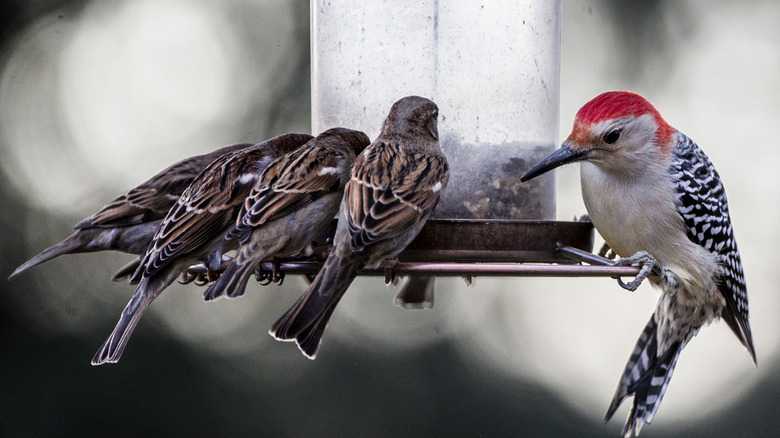
Other Cute AnimalsBirdsHow Feeders Can Reduce Bird Infidelity In Your BackyardBySanaphay RattanavongFeb. 6, 2025 9:25 am ESTBlightylad-infocus/Getty ImagesSurprisingly, the backyard bounty of your bird feeder has a real-world impact on avian fidelity. While your feathered visitors might seem like loyal lovebirds, their relationships are far more complex. Infidelity — scientifically termed extra-pair copulations (EPCs) or extra-pair paternity (EPP) — is astonishingly common in the avian world. A 2019 study published in Molecular Ecology found that 75% of the 342 bird species studied are known to engage in extra-pair paternity.Why do birds cheat? Evolution offers a few explanations. Female birds may seek genetically diverse mates to increase their offspring's chances of survival. In other cases, EPCs act as insurance against infertility or foster cooperative behaviors, like defense against predators. Species vary widely, too. For instance, well over half of reed bunting nests contain extra-pair offspring, while Florida scrub jays almost never stray.Not unlike in human society, this behavior isn't without risks. Male birds often reduce parental care if they suspect infidelity, while female birds risk punishment from their mates if caught. Yet, amid all this drama, your backyard bird feeder might be reshaping avian fidelity in surprising ways. Hanging a bird feeder in your yard can come with some hidden dangers, but it may just be the unexpected hero of this wild-winged love story.How backyard bird feeders lower bird infidelityBachkova Natalia/ShutterstockVariety may be the spice of life — and bird infidelity might be common — but your backyard bird feeder holds more sway over these behaviors than you likely thought. Research on house sparrows published in the journal Behavioral Ecology, for example, has revealed an unexpected trend: Supplemental feeding can significantly reduce the rates of EPCs. When food is abundant, competition for resources decreases, leading to more stable bonds and less temptation to stray.This phenomenon isn't limited to house sparrows, either. The aforementioned study in Molecular Ecology suggests that supplemental feeding affects behavior across various species by altering environmental pressures. In urban areas, where natural food sources might be scarce, bird feeders become a key resource that can stabilize bird communities and even impact genetic diversity. By reducing the drive to seek out multiple mates for survival-based reasons, feeders may be subtly reshaping avian breeding behaviors.However, it's not all rosy. Improperly maintained feeders can spread disease — fortunately, songbirds and other common winged creatures known to frequent our yards aren't known carriers of the avian influenza virus, or "bird flu" — disrupt natural foraging behaviors, and even lead to conflicts between species. To ensure backyard feeding remains a positive force, responsible practices are essential. This includes choosing species-appropriate seeds and strategically placing them to minimize risks from predators (looking at you, kitty cat!) and window collisions. Additionally, a homemade bird seed catcher can help keep the feeding area clean, but other small changes, like spacing feeders apart to reduce crowding, can also improve conditions for visiting birds and make them show visible signs that they're happy.
Here's Why Pet Ducks Won't Fly Away
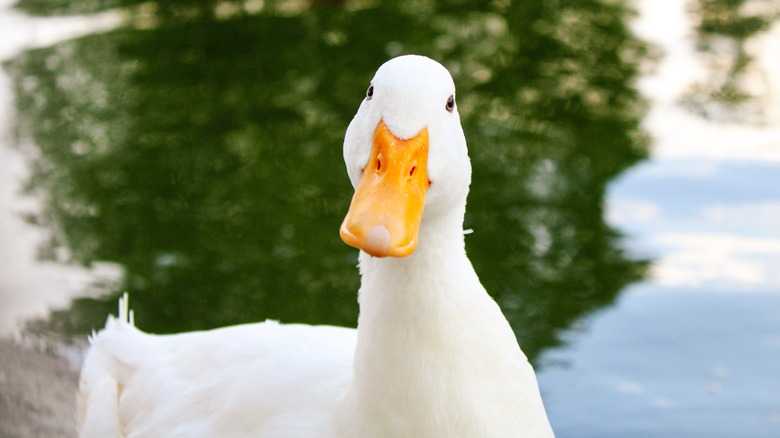
Other Cute AnimalsBirdsHere's Why Pet Ducks Won't Fly AwayByPaige MountainOct. 19, 2024 3:25 pm ESTAlejandro Correa Bayardo / 500px/Getty ImagesIf you know someone with a pet duck, or maybe you have a pet duck yourself, you might be curious as to why these birds stay with you instead of using their wings and flying away. As it turns out, most domesticated ducks couldn't fly away even if they wanted to, as they actually aren't able to fly at all. Pet ducks are no different than your pet cat or dog, they've been domesticated and now require humans to care for them as they don't have the skills necessary to survive on their own.The reason most domesticated ducks cannot fly is due to their body structure. Wild ducks have what are called primary feathers which give them the ability to fly. Domesticated ducks, however, either don't have feathers that are long enough to fly, or they have their primary feathers clipped to keep from flying away. Many pet duckling breeds are also simply too big and heavy to fly, or they don't have the essential muscles required to take flight.History of domesticated ducksTatyana Tomsickova Photography/Getty ImagesDomesticated ducks have a rich history that goes way back. It's believed that many breeds of today's domesticated duck are descendants of mallards. Some of the other common domesticated duck breeds are the Muscovy duck, the Mandarin duck, and the wood duck. Pet ducks aren't a recent fad, but rather were domesticated all the way back in 4000 BC, per the University of Wisconsin-Madison. At this time, ducks were domesticated by the Egyptians, Europeans, and Chinese.Back in the day, domesticated ducks were kept by families as a food source for meat as well as for eggs. Their feathers have also been used as down filling for coats and pillows. Today, many duck owners keep these waterfowl as a source of eggs. Others may keep them simply just for fun, as a duck's behavior makes for an amusing pet. If you are thinking about getting a pet duck, there are some factors you should consider.What to know before getting a pet duckCavan Images/Getty ImagesDucks can make great pets, but they do require some work. Since pet ducks can't fly, they are going to need to stay safe and protected from potential predators. If you are considering owning pet ducks, make sure to invest in a fully enclosed coop to keep them safe. Pet ducks should also have access to outside yard space where they can safely roam around. Ducks also produce a lot of waste and require fresh water at all times, so be prepared for that kind of maintenance.If you decide you want to parent some ducks, you'll also want to figure out which breed is the best fit for you and your lifestyle. If your main goal of having ducks is to produce eggs, there are certain duck breeds that lay more eggs than others. Some ducks, such as the Pekin duck, are a good producer of many resources, including eggs and feathers. Do your research before getting ducks to discover which breed would work best for you. When considering getting a duck, it's important to remember that domesticated ducks can live for 10 to 15 years, according to petMD. So it's key that you are willing to commit to them long term, as they will be counting on you to survive.
Mickey Mouse Platy: How Do I Know If My Mickey Mouse Fish Is Pregnant?
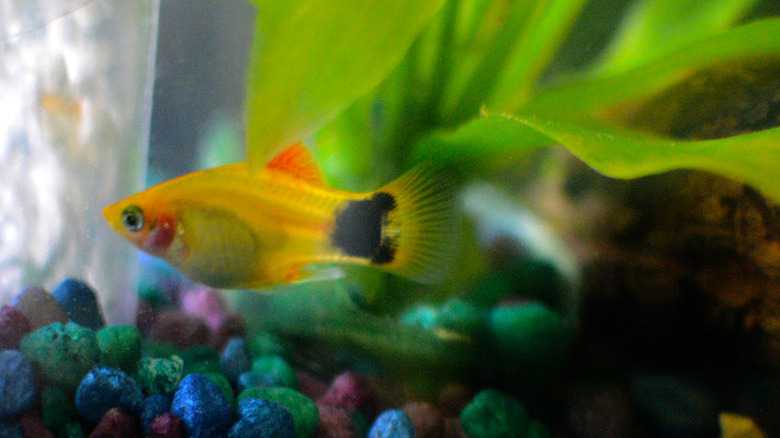
Other Cute AnimalsFishMickey Mouse Platy: How Do I Know If My Mickey Mouse Fish Is Pregnant?ByLynn AndersUpdated: Dec. 10, 2024 4:34 pm ESTasiantiger247/iStock/GettyImagesScientifically known as Xiphophorus maculates, these orange and black platys also go by Mickey Mouse platy, southern platy and moonfish. Males of this species are significantly smaller than the females; males reaching up to 1 ½ inches and females 2 ½ inches. They begin to breed at a young age of only a few months old, and then never seem to stop. The female can produce a new batch of babies about every month. Like other platys, Mickey Mouse fish breed easily. The female only needs to mate with a male once to give birth for several months in a row.Breeding Mickey Mouse fishStep 1Calculate the age of your fish if possible. If you know your Mickey Mouse fish are over the age of 5 months then you know they are old enough to breed.Step 2Determine if you have a male and female Mickey Mouse fish. If your fish are adults, based on age, and there is a significant size different then you likely have a male and female. If you have a male and female adult Mickey Mouse fish, the female is likely pregnant, or will be soon.Step 3Watch the female for a growing belly. She will produce about 50 babies with each birth–she will be noticeably pregnant within a week or two of fertilization.Step 4Look carefully at the female's belly if she is growing rounder. At first, you may see what look like dots inside her belly–these are the eggs. Toward birth, you may see the fry moving around inside the mom.
What To Feed Sucker Fish
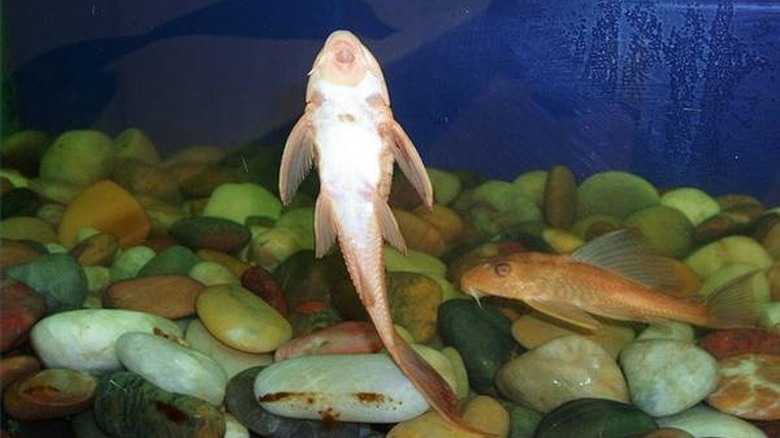
Other Cute AnimalsFishWhat To Feed Sucker FishByCuteness TeamUpdated: Dec. 6, 2024 4:21 pm ESTWe may receive a commission on purchases made from links.Sucker fish or suckermouth catfish are the common names for bottom-feeding fish such as the common algae eaters, or plecostomus fish. They spend a lot of time in the aquarium sticking to the walls or the ornaments with their mouths. They are popular as pet fish as they help to keep the tank clean. They will also eat any dead fish.Sucker Fish Need More Than Just AlgaeThe misconception is that the sucker fish will get all of the food it needs from the natural algae build up in the tank. This is not true, especially for growing plecostomus fish. There simply will not be enough algae in the tank to keep them well fed. A hungry sucker fish will begin to suck on the skins of any other fish in the tank, which is a danger sign that the fish is starving. Since sucker fish are mostly active at night, it is best to feed them at night right before turning the tank lights out.Preferred FoodGood commercially available food for sucker fish are algae wafers. These sink to the bottom of the tank, where the sucker fish prefer to eat. They will also eat any of the flake or pellet food that has drifted down that the other fish in the tank missed. Sucker fish will not eat at the top of the tank such as goldfish or many other kinds of fish.Favorite TreatsSucker fish prefer vegetable matter as treats, but also like sinking shrimp pellets. They also eat canned peas, canned green beans, cooked and cooled zucchini, raw zucchini and cooked and cooled peas. If the treats will not sink, they can be added to a small device called a produce clip. This is a small device that sticks onto the tank sides on one end and clamps onto a bit of vegetable on the other. Some hungry sucker fish will also eat any live plants, so if you want plants in the tank, they made need to be plastic, depending on the type of pleco you have.ReferencesFishlore: PlecostomusPetco Care Sheet: Plecostomus
What Types Of Birds Have Yellow Beaks?
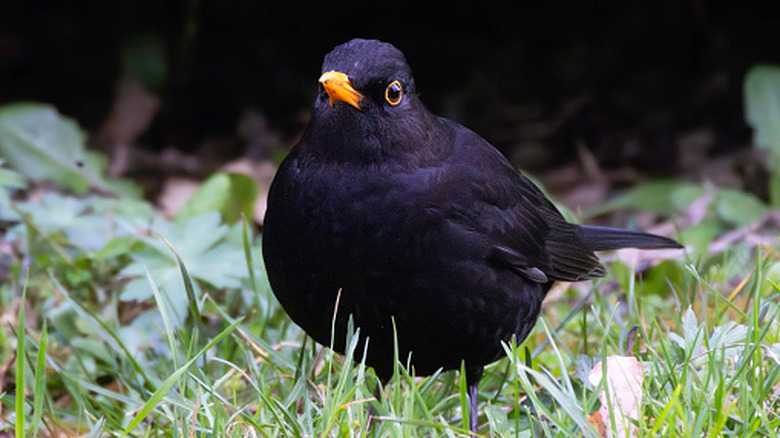
Other Cute AnimalsBirdsWhat Types Of Birds Have Yellow Beaks?BySierra M. KoesterUpdated: Dec. 3, 2024 5:12 pm ESTTaviphoto/Getty ImagesBird beaks come in a variety of shapes, sizes, and colors, including red, black, gray, brown, orange, gold, tan, and yellow. Many birds have yellow beaks, including the common blackbird, American robin, starlings, bald eagle, and magpies. All of these birds possess characteristics that make them unique.Common blackbirds are found worldwideCommon blackbirds live near humans, and these black migrating birds can be found worldwide. They populate Asia, Africa, Europe, Oceania, and North America. Blackbirds live in a variety of habitats, including forests and woodlands. You may see common blackbirds in parks and gardens where there is enough tree cover for them to hide. These birds are omnivores and eat fruits, such as berries, apples, grapes, and cherries as well as some seeds, insects, earthworms, and spiders. The average life span of a common blackbird ranges from 2 to 21 years.American robins frequent backyardsIt's not uncommon to find American robins in backyards and parks. These birds also live in forests, grasslands, and woodlands. American robins are the most widespread species in the thrush family in the United States. These birds are omnivores and eat earthworms, insects, and berries. You can often see these birds hopping around while they're hunting for food. American robins begin mating sooner than many other birds, and they can lay up to three clutches in a single breeding season. Parents are aggressive about defending their nests.The European starlingEuropean starlings were introduced into North America in 1890. These birds are now so common that some consider them pests. You can find starlings in cities, farms, open groves, parks, and fields. Starling birds change from brown with white spots in the winter to a dark purplish-green iridescent color in summer. Interestingly, these birds change colors without shedding their feathers. In the fall, starlings grow new feathers with white tips. By the time spring arrives, the white tips have worn off, leaving the rest of the feathers, which are dark in color.Starlings are not quiet birds; they are loud and boisterous. Starlings eat insects, including caterpillars, beetles, flies, and grasshoppers as well as a variety of seeds and berries. Female starlings lay two broods each year, typically containing four to six eggs each. Both parents incubate the eggs and take care of the young after they hatch.The large bald eagleThe bald eagle is one of the biggest birds in North America. The bald eagle is a bird with a yellow beak, white head, and dark brown body and wings. These birds can be found on coasts and close to rivers, lakes, reservoirs, and marshes. Although the bald eagle may have a yellow beak, you are more likely to be able to identify a bald eagle by its white head and white tail.Bald eagles mostly eat fish, such as salmon, herring, catfish, and carp. These birds also eat ducks, muskrats, jackrabbits, and carrion. Female bald eagles typically lay one to three eggs, and both parents incubate them in the nest for approximately 34 to 36 days. Both parents help care for their young for the first several weeks after they hatch, bringing food, tearing it into pieces, and feeding it to them.The magpie varietiesYellow-billed magpies can only be found in California while black-billed magpies can be found across North America, Europe, and Asia. A magpie's diet varies with the seasons. For instance, these birds eat a lot of acorns in the fall and winter months and grasshoppers in the summer.Female magpies lay one brood each year containing five to eight eggs. The female magpie incubates the eggs while the male brings food to her. Incubation lasts approximately 18 days. Upon hatching, both parents feed their young. Parents may continue to feed their young for several weeks after they leave the nest.
Everything To Know Before Adopting A Duck As A Pet
Other Cute AnimalsBirdsEverything To Know Before Adopting A Duck As A PetByCynthia AnayaJan. 31, 2025 11:25 am ESTCavan Images/Getty ImagesWe may receive a commission on purchases made from links.While a bit unorthodox, ducks can be kept as pets, legally, in most states. Perhaps you've wanted a pet duck ever since you saw Joey and Chandler with one on "Friends," or maybe you just always enjoyed feeding ducks as a child. Ducks can show affection and be entertaining as well. Whatever the reason, ducks can make good companions and offer some of the same benefits that dogs and cats do. However, you should consider the daily activities, requirements, and restrictions associated with adopting a duck as a pet, all of which could pose an inconvenience.On a positive note, keeping ducks fed is as easy as keeping a more traditional pet fed; you can purchase a bag of duck feed pellets from pet stores and online retailers, such as Mazuri Waterfowl Layer Food for Ducks. Ducks also feed on grass, including weeds, and rid yards of pests, so they can serve as great lawn-maintenance animals. Some owners consider this type of waterfowl high-maintenance and challenging to care for because of their needs, while others feel the opposite. With this in mind, it's best to consider all variables of ownership before bringing your own personal Donald or Daisy home to be part of your family.They can be messyLinas Toleikis/Getty ImagesAll pets can have bowel accidents in undesired places, but their water bowl is not one of them for most. Ducks, on the other hand, naturally defecate in water, even if it's the same water they bathe in and drink. This means that whatever drinking water you have prepared for them might contain their droppings and need to be replaced regularly. Ducks also enjoy playing in mud and dirty water puddles, so by the end of the day, they could be covered in feces-tainted water and dirt.It's also important to note that ducks excrete waste frequently — about every 10-30 minutes — which equates to roughly 100 times a day. Since they don't spend all their time in water, you'll find their droppings not just in their water containers but in their enclosure and your yard. The good news is, duck waste makes good fertilizer, due to its nutrient-dense nature. You just need to compost it first before applying it to any plants or soil.Some ducks can be boisterousHam patipak/ShutterstockYou might find the sounds of ducks quacking at a park or while you're kayaking down a creek harmless and maybe even appreciated. When the quacking happens in your backyard throughout the day, however, you might not feel the same way about it. Your neighbors might also have an issue with this, especially if the quacking wakes them up.Although all ducks vocalize in some way, some species and breeds are noisier than others. Mallard ducks, particularly the females, quack often to communicate in different ways. One duck owner on the Reddit subreddit r/ducks reported that their female mallard quacked constantly while in her large enclosure, despite being well-fed and having humans interact with her. Female call ducks, as their name implies, are also known to vocalize loudly and frequently.At the quiet end of the "quack spectrum" are Muscovy ducks. Instead of quacking, this species makes hissing and cooing sounds to communicate. These sounds will likely be too quiet to bother you or your neighbors. You may not even hear them unless you're standing nearby.They should be kept contained outdoorsWirestock Creators/ShutterstockUnlike furry indoor pets, ducks should spend most of their time outside in their natural habitat. You can bring them inside on occasion, but they thrive best and should live in an outdoor environment. Living in the great outdoors meets their natural instincts and behaviors that a standard indoor environment can't.Another reason to keep your pet duck outdoors is their frequent bowel movements and water activities. Ducks love to swim and play in water, and remember, they also poop in water — and poop often. You probably won't want them leaving droppings all over your carpet, so keep them outside instead and ensure they have water in the form of a pond, kiddie pool, or tub to play and bathe in. Have a separate, smaller water source available for drinking that's deep enough for them to fully cover their heads.It's also recommended to have a fenced-in yard, but more importantly, ducks need a pen with netting or some other type of predator-proof shelter with a roof. When you let them out of their enclosure to play, only do so while you're home and able to keep an eye on them. They should be placed in a roofed shelter when you can't watch them, as well as overnight.They crave companionshipMatthias Rohrberg/Getty ImagesDucks can be compared to humans in some ways, including their desire for companionship. They enjoy socializing with other ducks and can get lonely without other feathered friends to quack, swim, and waddle with. With that in mind, it's best to adopt a pair of ducks (or more!) or adopt a second shortly after bringing the first home if a pair isn't immediately available. The ducks can be of the same or different breed or species.Another option is to complement your pet duck with other birds, such as geese or chickens. All of these birds can generally share the same enclosure without any issues. Certain dogs can also become your duck's sidekicks. However, there are some caveats. Some dogs — especially large ones — see ducks as prey and may want to chase or harm them. This behavior can be avoided by adopting a puppy and duck at the same time, choosing a small dog that weighs under 10 pounds, and/or training. In any case, you should closely monitor all initial interactions between the two animals.Caring for them is time-consumingFertnig/Getty ImagesSome pets don't require much beyond food, water, toys, comfortable bedding, the shelter of your home, and waste cleanup. At the end of a typical day, you might end up spending all of two minutes on feeding and cleanup, if necessary. Caring for ducks, on the other hand, requires a lot more time. One owner on Reddit's r/pets shared their daily routine for caring for their two ducks, totaling 40 minutes every day. They spend 20 minutes in the morning and 20 minutes in the evening. Their daily routine includes filling all water stations and food bowls, relocating the ducks from a garage coop to a yard pen, and cleaning the coop wood shavings in the morning. In the evening, the owner puts fresh wood shavings in the coop, moves the ducks back to the coop, adds fresh food and water, and washes all the water stations.Other duck owners' daily routines differ. However, if you want your duck to have a clean habitat and to be safe and comfortable every day, you'll need to put effort toward this goal. If you have enough time to devote to a morning and evening routine, or if you have someone to help you, caring for a duck can be manageable, easy, and enjoyable. Otherwise, you might find it too demanding and overwhelming, so be sure to thoroughly consider these daily requirements of ownership, and aim to understand duck behavior before deciding to adopt one.

A Celebrity Horse Breed Known For Its Calm Nature Is Hard To Find In America
Other Cute AnimalsA Celebrity Horse Breed Known For Its Calm Nature Is Hard To Find In AmericaByAdam SymchukFeb. 25, 2025 1:25 pm ESTLois GoBe/ShutterstockHorse cross breeding dates back millennia, with mentions of mules (a horse crossed with a donkey) appearing in the Bible during King David's reign around 1000 BCE. Before that, the Botai people of Kazakhstan were the first recorded to domesticate and breed horses, dating back 5,500 years. Over 400 breeds and crossbreeds have been raised to fit particular needs, and horses have even helped transform human society.The drum horse is an example of people cross breeding horses to fulfill a role. This equine can be seen carrying soldiers and drums during the Band of the Household Cavalry (formerly Band of the Life Guards) processions. The regal, tall, and calm demeanor of the modern-day drum horse — prized for its ability to navigate British processions — comes from combining traits of Clydesdale, Gypsy Cob, and Shire breeds.Despite their agreeable nature and prominence in British processions, which have earned them celebrity status, the drum horse breed is exceptionally rare in America due to its specialized role and lack of substantial breeding stock. Additionally, the breed's tumultuous history has contributed to this scarcity.How the drum horse became rareLois GoBe/ShutterstockA singular change to the Shire Registry resulted in certain patterned shire horses — piebald (large uniform patches of black and white) and skewbald (large white patches on any other color) — being removed. The Shire Horse Stud Book, established in 1878, was essential in tracking and protecting the lineage of Shire horses. Once these patterned horses were excluded, they fell out of favor with the upper class and became a staple working breed among the Roma people. These piebald and skewbald Shire horses went on to become integral in forming the modern-day Gypsy Cob.As original Shire patterning began to disappear, piebald and skewbald horses again became highly prized. The modern drum horse is created through selective breeding of Clydesdales and Gypsy cobs to reproduce the traditional colored Shire's patterning. Sabino-patterned horses — defined by unique white spotting — also serve as drum horses, although piebald or skewbald coloring is still preferred for leading processions.The Royal British drum horse that helped cement the breed's celebrity statusLois GoBe/ShutterstockThe drum horse breed would not enjoy nearly the same celebrity status if it were not for one remarkable stallion, standing at 17.1 hands high (5 feet 9 inches): Galway Warrior. Registered initially under the royal name "Beauty" to Her Royal Majesty the Queen, Galway Warrior was sold in 1993 to recoup funds after a massive fire at Windsor Castle forced the royal family to pay taxes.Galway Warrior's son, Chew Mill Guinness, was imported to the States and used as a stud and show horse. However, a few months after his arrival, professional jouster turned premium Shire horse breeder Jeff Bartko arranged for Galway Warrior himself to come to the United States. Galway Warrior made an appearance at Breyerfest in 2003, leaving a lasting, joyful impression on people who love horses fortunate enough to see him. He died on July 2, 2009 at 26 years old, yet his lineage lives on through his offspring. While the drum horse may still be rare, their celebrity status and unique ancestry make for an intriguing breed.
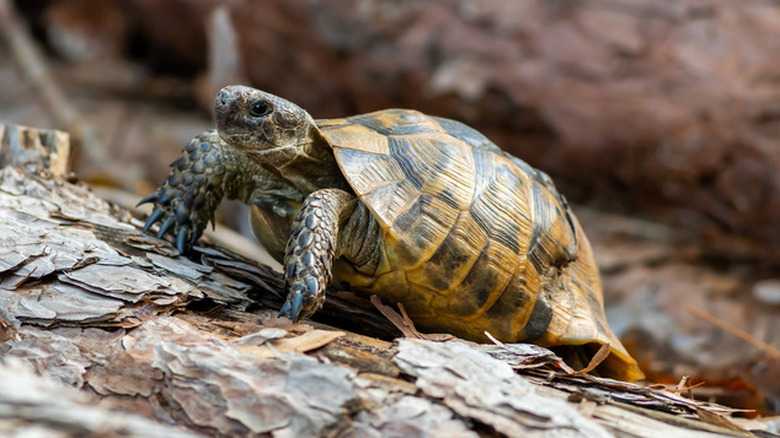
How Fast Does A Turtle Run?
Other Cute AnimalsHow Fast Does A Turtle Run?BySherri TelenkoUpdated: Dec. 10, 2024 3:51 pm ESTIf you grew up reading the Aesop fable about the tortoise and the hare, you'll know the turtle is not the fastest animal in that race. However, the actual speed of turtles might surprise you. Some species move 1 mile per hour on land, and sea turtles can set impressive records in the water, especially when threatened."Turtles" is a term referring to sea turtles, freshwater land turtles, and tortoises. So, determining turtle speed depends on the type and species. Clearly, a turtle's strong shell is their best defense against predators. Turtles are attached to their shells; they are not resting inside. Pulling themselves into their shell is their first defensive impulse, but evading is sometimes necessary, and that's when water gives turtles a speed advantage.Turtle speed on landbuyungspz/ShutterstockSoft-shelled turtles, such as the smooth softshell turtle and the spiny softshell turtle, are believed to be the quickest land turtle, moving at speeds of an estimated 3 miles per hour. Some reports claim that certain types, such as the Florida soft-shell, can sprint up to 15 miles per hour, making them the fastest land turtle species. River cooters, meanwhile, move at a rate of 1 mile per hour.Among the fabled tortoises, the Seychelles giant tortoise has a documented land speed of .23 miles per hour, which is notably slower than the soft-shelled turtle. Both land and sea turtles swim three to four times faster in the water than they do on land.Turtle speed in the seaKevin Carter/Getty ImagesUnlike tortoises, who can't swim, turtles are strong swimmers who can breathe underwater for extend periods of time. In the water, turtles are swift and agile. Sea turtles, also called marine turtles, move three to four times faster in the water than on land, which is good because they spend most of their time in the water. Sea turtles have strong flippers. The front flippers thrust the turtle forward, while the back flippers act as rudders for steering. Shells are cumbersome on land, but in water, they become streamlined and are efficient for cutting through the waves.Marine turtles achieve speeds of up to 10 knots while migrating through the sea. Green sea turtles, for instance, are able to swim 300 miles in 10 days at speeds between 1.5 and 6.3 miles per hour. Leatherback sea turtles are faster, swimming up to 22 miles per hour. Even hatchlings are strong swimmers. Within 30 hours of hatching, baby turtles can swim a 25-mile distance if they reach the water from their sandy nests.Land turtles, such as cooters and red-eared sliders, also swim well thanks to webbed feet allowing them to paddle through rivers and ponds. Other land turtles, including snapping turtles and alligator turtles, actually walk along the bottom of water bodies. Larger freshwater turtles don't swim as quickly as smaller freshwater turtles, but the average freshwater turtle swimming speed is 10 to 12 miles per hour.
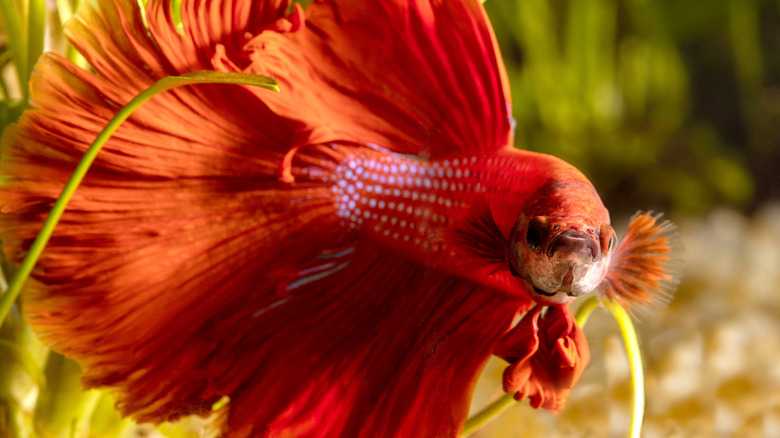
How Long Do Betta Fish Live? It Depends On How You Care For Them
Other Cute AnimalsFishHow Long Do Betta Fish Live? It Depends On How You Care For ThemByJessica DesrosiersDec. 27, 2024 9:25 am ESTSchnapps2012/Getty ImagesWe may receive a commission on purchases made from links.There are over 70 species of betta fish, with the most common pet varieties being the crowntail, delta, double tail, and halfmoon. Betta fish purchased from a pet store can live up to seven years; however, it's more common for a betta fish to live about two to five years in captivity. There are rumors that the oldest betta fish made it to 10 years of age; however, this claim is purely anecdotal, so it's best to approach it with caution.Betta fish may already be 6 months to a year old by the time they arrive at the pet store. In addition, male betta fish take longer to mature and gain their full coloration, potentially making them even older by the time they're ready to go home with you. Luckily, there are multiple ways you can help extend your pet's lifespan. With the right betta fish entertainment activities, a great tank setup, and some knowledge of their longevity, they're more likely to stay happy and healthy.Betta fish will not thrive in small containersCmersoy/Getty ImagesBetta fish have strict aquarium requirements that can make them challenging for beginners to care for. It's a common misconception that they enjoy living in small spaces. They don't thrive in bowls or vases due to the cramped space and lack of proper filtration. Veterinarian Dr. Krista Keller from the College of Veterinary Medicine at the University of Illinois Urbana-Champaign explained, "Betta fish are often seen living in bowls that are too small to allow for normal swimming and hiding behavior."The poor conditions of such tiny containers can make it hard for your betta to thrive. Instead, A good aquarium kit, such as the Pondon 5-gallon Tank for Bettas can start you off with the basics, as Dr. Keller shared that these fish should ideally have a 5-gallon tank to themselves. If they'll be housed with other fish, you'll need a larger tank. Proper filtration and heating are also important: The tank's temperature should be maintained at 76 to 81 degrees Fahrenheit with a heater and fitted with a low-flow filtration system to keep the water clean.Choose the right tankmates to minimize stress for your bettaSergiy Akhundov/Getty ImagesThe wrong tankmates can lead to extra stress or fights — which can drastically shorten your betta's lifespan. There are a few fish that are good for keeping with bettas if you'd like more variety in your aquarium — just be sure your container is appropriately sized to house everyone without crowding. It's also important to note that bettas are carnivores, so if they're underfed or bored they may hunt their tankmates.Male bettas typically should be housed alone due to territorial issues, or live with non-betta fish in an aquarium of at least 10 gallons, per PetMD. Non-territorial tankmates are best, such as tetras, as they'll stay out of your betta's territory and explore different levels of the aquarium. Females are easier to house and can be kept in small groups together, though you'll want a minimum of a 15-gallon aquarium to accommodate this scenario. In addition, some non-fish tankmates, like snails or ghost shrimp, do okay with betta fish.Food and enrichment for your betta's healthArtem Stepanov/ShutterstockKeeping your betta fish healthy and well-fed is important for expanding their lifespan. Overfeeding and giving too many treats can be detrimental to bettas, as obesity can affect their health. A pelleted diet formulated specifically for bettas, such as Hikari Gold Betta Pellets, offers a good balance of nutrition. In addition, bettas enjoy snacks like freeze-dried brine shrimp; however, you should only offer them occasionally to prevent your fish from gaining too much weight.An engaging environment is also important for keeping your betta fish active and healthy. Having plenty of tank decorations can add enrichment by providing places for your betta to hide, hang out, and explore. However, it's important to avoid any sharp edges or rough textures on any tank decorations, as they can easily tear delicate fins. Live plants, such as Java ferns, can also add variety and are fun for your betta to nibble on.
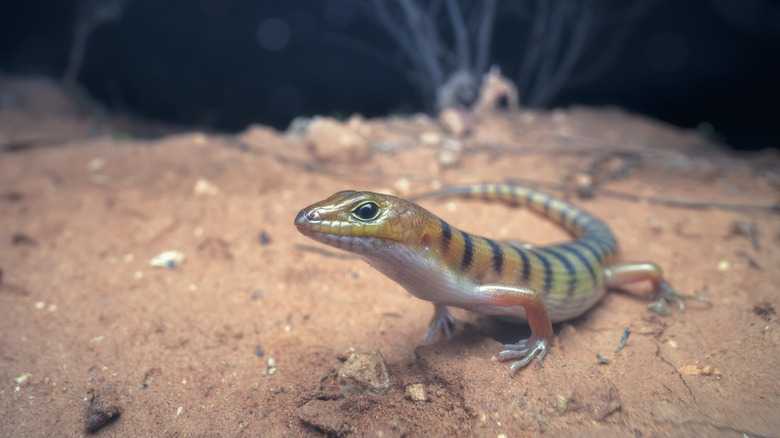
What Kinds Of Lizards Are Nocturnal?
Other Cute AnimalsWhat Kinds Of Lizards Are Nocturnal?BySherri TelenkoUpdated: Dec. 5, 2024 5:52 pm ESTKristian Bell/Getty ImagesMost lizards are diurnal, which means they are active during the day and quiet or sleeping at night, just like primates. Because few lizards can regulate their own body temperature, they need sunlight or a heat source to survive. Therefore, being active during the day and quiet at night makes sense. Lizards don't need much food to survive, and most will seek out a place to hide and keep warm during the night.However, there are a few exceptions, notably geckos. Not all geckos are nocturnal, but many of these lizards are, and that means they prefer to be active at night and quieter during the day. Nocturnal behavior is an important factor if you are considering geckos as pets or if you are living in or visiting warmer climates where house lizard species, like geckos, might be running wild. Whether lizards are up at night might be a concern in either situation.Nocturnal or crepuscular geckosSeveral species of geckos that are popular as pets prefer to be more active at night than during the day. For instance, leopard geckos, one of the most common house lizard species, spend most of their days curled up under rocks to avoid predators in the wild, or they stay under twigs and leaves in captive enclosures. For this reason, they are often considered nocturnal.However, in their natural habitat of northern India, leopard geckos become active at dusk or shortly after sunset to hunt for food, such as invertebrates. Most geckos are insectivorous but will eat fruit as well. Because leopard geckos are usually active from dusk until dawn rather than only at night, some consider leopard geckos to be crepuscular and not true nocturnal creatures.Staying quiet during full daylight hours makes sense, though, considering the medium-size leopard gecko makes a substantial meal for birds of prey and foxes. In captivity, pet leopard geckos should be fed in the early morning or evening because dusk or twilight is when they will naturally be most active.Other nocturnal geckosOther nocturnal geckos include tokay geckos, who are also common as pets. These geckos can reach a length of up to 12 inches, not including their tail. The tokay gecko can regulate body temperature by moving through different habitats in the wild but spend the day hiding under leaves and in the bark of trees. Note that this is a noisy gecko species, most often at night, emitting a bark or "tokay" sound true to the name.Crested geckos, native to New Caledonia, are also nocturnal and are arboreal, living in trees and high branches. Interestingly, crested geckos were once thought to be extinct, but discoveries in 1994 proved otherwise. Since then, crested geckos are growing in popularity as pets.Other nocturnal lizard speciesThe prehensile-tailed skink, also called the monkey skink, are unusual, not only because they use their tail to cling to trees but because they are nocturnal herbivores. During the night, they move through the tree canopy of the Solomon Islands in the South Pacific, eating leaves.Desert night lizards might count as nocturnal, at least when it's hot. During warmer seasons in the American Southwest, desert night lizards only come out at night, but during cooler temperatures, they become diurnal, hunting insects throughout the day.Similarly, the misunderstood carnivorous Gila monster is also nocturnal during extremely hot days in the desert but can become diurnal or even crepuscular in different temperatures. Gila monsters are good climbers and are able to forage for eggs in high nests. It's possible to encounter them out and about at any time of day.ReferencesPets on Mom.com: Do Lizards Come Out at Night?Leopard Gecko Habitat: Are Leopard Geckos Nocturnal? (The Answer May Surprise You)Crate & Basket: Where Do Lizards Go at Night?San Diego Zoo: Gila Monster

How To Know If A Danio Fish Is Going To Spawn
Other Cute AnimalsFishHow To Know If A Danio Fish Is Going To SpawnByAnn LaPanUpdated: Dec. 6, 2024 5:36 pm ESTPurestock/Purestock/GettyImagesDanios are small schooling fish. There are many different breeds, with different colors and patterns, and many of these breeds are very popular with aquarium hobbyists. Although there are some types of fish that are hard to breed in an aquarium setting, danios breed well on their own. If you suspect your female danio may be ready to spawn, it's important to find out for sure, so that you can prepare the tank for the baby fish, called fry.Make sure the fish you are looking at is actually a female. Male and female danios look very much the same, but if the fish in question turns out to be male he could actually be having some serious health problems. Female danios are generally fatter than male danios, whether they are carrying roe or not.Look at your female danio. If she looks wider than normal, she is probably carrying roe. Since danios are not livebearers and female danios never carry fertilized eggs, this is as close as danios get to being pregnant. If your female is carrying roe, your male danio will fertilize the eggs as they are dropped, during spawning. Watch your fishes' behavior. Danios like to spawn in the mornings.ReferencesDanios and Devarios: Danios rerioDanios and Devarios: Breeding Danios and DevariosAquatic Community: Celestial Pearl DanioRobyn's Zebra Danio Page: BreedingWarningDanios will eat their own eggs not long after they have laid them. If you want the danio eggs to hatch, you will have to keep the parents from the eggs. You can do this by laying marbles or a loose-weave net over the bottom of the tank. The eggs will fall through the gaps in these materials and the parents won't be able to reach them. You can then remove the parents from the spawning tank into a different tank. You can also remove the eggs from the tank with the parents in it, but this may be slightly trickier.
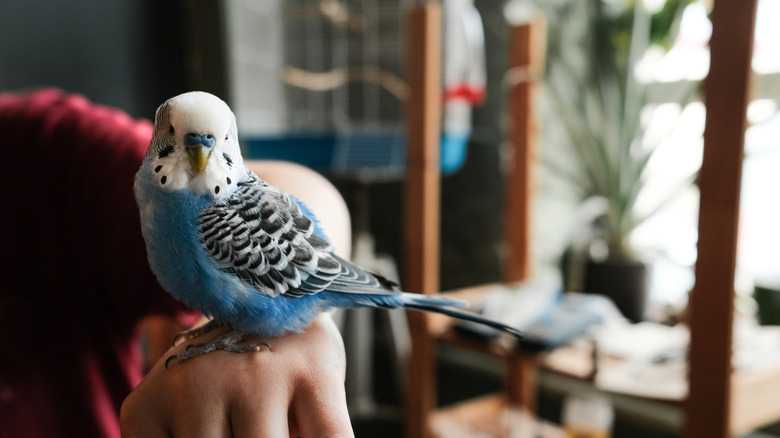
Signs That A Budgie Is Gravid
Other Cute AnimalsBirdsSigns That A Budgie Is GravidByMaura WolfUpdated: Dec. 6, 2024 4:53 pm ESTAleksandr Zubkov/Getty ImagesBudgies and parakeets are oviparous, meaning they produce and lay "eggs that develop and hatch outside the maternal body," as defined by Merriam-Webster. Offspring from oviparous animals undergo little or no embryonic development within the mother, so scientifically speaking, birds cannot actually be pregnant, which is defined by Princeton University's WordNet as "carrying developing offspring within the body." However, budgies do become gravid and can exhibit signs that an egg is about to be laid.Weight GainTypically, "there are no physical signs other than a little weight gain (a few grams) to tell you that a budgie is about to lay," according to the Tailfeathers network. With most budgies, you won't notice any signs of gravidity, and there won't be any weight gain or anything else out of the ordinary. Female budgies and parakeets produce and lay eggs when they are ready, and some lay infertile eggs when no male is present.AppearanceThere is really no sure way to know that a budgie is carrying an egg. A budgie that is carrying an egg may or may not look a little rounder in the abdomen, but other situations and issues can cause that. According to Keet Corner at Wavian.com, "You can't tell the female is pregnant—she will not look swollen."BehaviorBehavior changes may occur, but they will probably be subtle. If your budgie has a nest box, she may spend most of her time in it before she lays an egg. Some birds seem to be constantly cleaning the nesting area, scattering and rearranging nesting material in the box. If you do not supply your bird with a nesting box, she will probably establish a place in the cage like a corner, food bowl or some area on the cage floor, to lay her egg. She may become protective and defend the chosen nesting spot against any disturbance.As she gets closer to laying an egg, your bird may display behaviors such as compulsively cleaning herself or parts of her cage, or moving around her cage in a repetitive manner. Keet Corner warns that "if you see your budgie straining for a few hours, your parakeet could be suffering from a potentially fatal condition known as egg binding, where the egg will not come out." This is a life-threatening emergency and your bird needs immediate examination and treatment by an avian veterinarian.Physical ChangesBefore laying an egg, your budgie may start molting more and begin to use her feathers as nesting material. As a bird gets closer to laying her egg, there is less room for the bird to pass droppings. You will notice that your bird is going to the bathroom less frequently, and when she does go, droppings may be much larger than usual. "The bigger the poops get, the closer the egg is to the cloacae, where it is due to be expelled," according to the Tailfeathers network. If the droppings are huge for days and your bird seems to be straining, she may be egg bound and must be taken to a veterinarian immediately.ReferencesMerriam-Webster Online Dictionary: OviparousWavian.com: Keet Corner
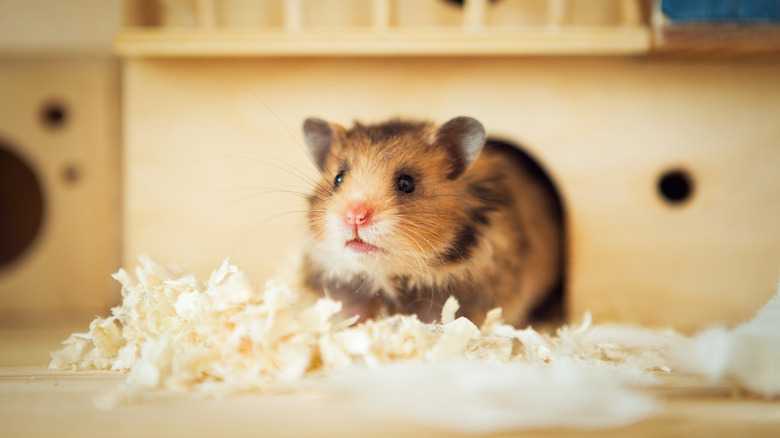
The Friendliest Hamster Breed Is Also Easy To Hold
Other Cute AnimalsThe Friendliest Hamster Breed Is Also Easy To HoldByCynthia AnayaFeb. 2, 2025 9:25 am ESTBetterTomorrow/ShutterstockThey may not ever top any "most popular pet" lists, but hamsters can make great companions for anyone who prefers a pocket pet over a more traditional pet. Part of the rodent family, these critters are relatively easy to care for, intelligent, and entertaining with their cheek-stuffing and wheel-spinning behavior. Syrian hamsters — also known as golden hamsters — are one of the friendliest hamster breeds and they're easy to hold.Weighing only 4 to 5 ounces and reaching about 7 inches in length when fully grown, this breed is a popular choice for children. In fact, they're one of the most popular hamster breeds in the United States for owners of all ages. Their personality is likely one of the reasons; they're known to be playful, curious, and easy to tame and handle.Over time, you may even be able to learn how to tell if your hamster likes you. However, just as with any other small or new pet, you should consider a few safety precautions when handling your Syrian hamster for the first time, and every time.How to safely handle your Syrian hamsterCatherine Falls Commercial/Getty ImagesAfter bringing a Syrian hamster into your home for the first time, it may be tempting to want to immediately pick them up and hold them, but this isn't the best approach. Your new fur baby will probably want to explore their new habitat freely, without being restricted by a hand wrapped around their body. Give your hamster time to explore and get cozy in their new home. Consider making a list of things that hamsters can eat before bringing them home, and let them sniff around and eat before picking them up.When you do handle your hamster, keep your hand tight enough around them to prevent dropping them, but loose enough to allow them to breathe freely and wiggle around a bit. Avoid carrying them too high from the ground, and always place something soft beneath them, in case they jump or fall out of your grasp.Another factor to keep in mind when handling your pet is that they should be the only hamster you handle within one enclosure. Syrian hamsters prefer to live alone in their tank or cage. They prefer solitude, so don't force them to have a roommate. Doing so could result in a territorial scuffle, leaving you wondering how to get rid of your hamster. Luckily, these friendly critters do great on their own, and will get used to being handled over time.
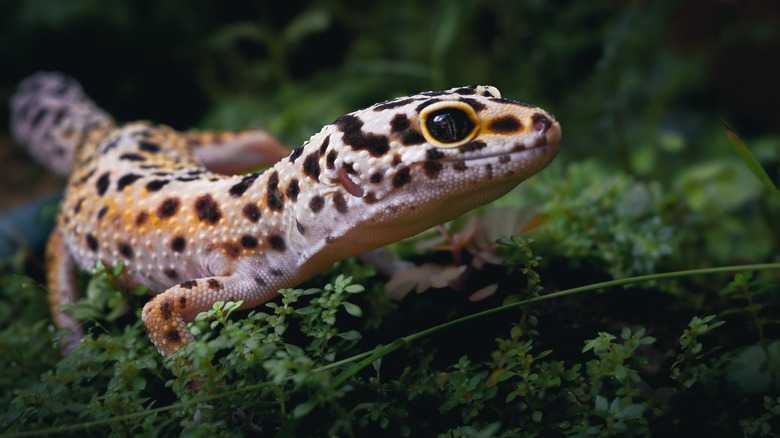
How To Tell If A Leopard Gecko Is Gravid
Other Cute AnimalsHow To Tell If A Leopard Gecko Is GravidByJacob ReisUpdated: Dec. 3, 2024 5:32 pm ESTanomaly026/ShutterstockLeopard geckos are considered easy to breed for seasoned reptile owners, but preparing for your first clutch of eggs can be a daunting task. Fortunately, a simple examination at home can help you tell if your female is carrying eggs.TipLeopard geckos lay eggs; they areoviparous. Reptile experts refer to females carrying eggs asgravid, rather than pregnant, since little embryonic development occurs within the female's body.Mating SeasonThe first consideration in deducing whether your female leopard gecko is gravid is the time of year. Leopard geckos follow a mating season even in captivity, though this is not always accurate.February through Augustis prime mating season for leopard geckos. If other indicators are present during this time, your female may be gravid. Be aware that females may produce eggs even when no male is present. In fact, she may even lay these infertile eggs.Examining the FemaleThe eggs grow within the female's body, usually two at a time, and are laid two to five weeks after mating. During these weeks, you may notice that your female is becomingless active, preferring to spend her time lyingat the warm end of the vivarium. She may also swell up a bit around the midsection. To examine the female for eggs, gently lift her and look at her belly. Since the skin is relatively thin, you should be able to see a couple of white eggs, one on either side, between the midsection and hind legs. These will start as spherical and grow to be more elliptical in shape and will be close to an inch long before the female lays them. Leopard geckos lay two eggs at a time, though the first and last clutch of the season may be only one egg each.Feeding and Housing ConsiderationsMonitor your leopard gecko's diet carefully if you plan on breeding her. In particular, make sure that she always gets enough to eat and isn't being bullied out of her food by a male or another dominant female. Dust all insects with reptile dietary supplement powder that containscalcium and vitamin D3— a nutrient-rich diet is necessary for the growth of healthy eggs.Provide a female with a place to lay her eggs well in advance. Fill a 16-oz. deli cup halfway with vermiculite and keep it moist. Cut a hole in the lid large enough for her to crawl in and out. Once the eggs are laid, mark the top of the eggs lightly with a permanent marker. Prepare an incubation box with 4 parts water for every 5 parts vermiculite by weight and place the eggs inside, embedding them halfway in the vermiculite and making sure the mark you made is up. A temperature range of 80 to 90 degrees Fahrenheit is ideal for leopard gecko egg incubation. Keep the vermiculite moist and ventilate the eggs weekly. These eggs, if properly cared for, will hatch in 45 to 65 days.Tip 2Contact a herpetologist -- a reptile scientist -- or a veterinarian with questions regarding the health of your gravid female leopard gecko or her eggs.WarningDo not place baby leopard geckos back in the habitat with adults -- they may be taken for food.
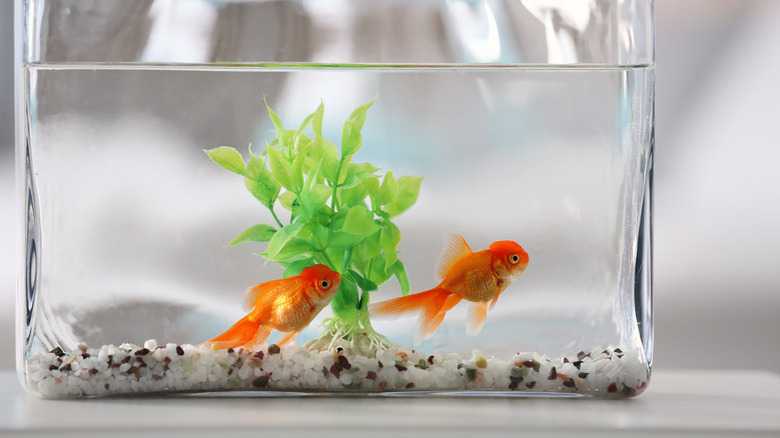
How To Tell A Goldfish's Age
Other Cute AnimalsFishHow To Tell A Goldfish's AgeByA. A. RileyUpdated: Dec. 10, 2024 5:23 pm ESTLiudmila Chernetska/iStock/GettyImagesUnlike the destiny suffered by so many other carnival goldfish, the life of Tish the goldfish stretched for a whopping 43 years. Although the only official way to calculate the age of your goldfish is by examining his scales under a microscope, there are visual clues to goldfish age.Size and goldfish ageAlthough most species of aquarium fish can be aged based on how long they are, this doesn't always hold true with goldfish. She's unlikely to reach her maximum size if you keep her in a 20-gallon tank, especially if she shares the space with goldfish tank mates. That's because growth-inhibiting hormone builds up in the environment, limiting her size.How big she gets also depends on how she was treated early in life. Goldfish breeders and pet shops sometimes keep fish in overcrowded tanks, stunting their growth from the start. If you're raising fry yourself, you can influence maximum growth by providing quality nutrition without overfeeding, giving her enough space, and performing frequent water changes.Juvenile vs. adult goldfishDuring their first week of life after hatching, the fish grow from about 4.5 mm (3/16 inch) to 5 mm. They average increasing their length by 27 percent per week during the first eight weeks of life, nearly doubling their weight weekly. Look for the largest growth spurts during week two and three, when fish increase in size by 40 percent and 57 percent, respectively.At less than 8 weeks old, you can easily determine goldfish age since they don't have fully developed fins. At 1 week of age, the pectoral fins are most obvious, but they also have a small medial fin running from where their dorsal fin would start around the end of their tail to the vent area. The tail fin develops in the second week, and dorsal fins during week three. By 1 month old, their dorsal fin is well developed, and the anal and ventral fins appear. All fin development is complete by 5 weeks old, when the fish is about 11 mm (5/8 inch) long.By the fifth week, features such as protruding eyes will start becoming obvious. The goldfish will lengthen to 1.5 to 2 inches by 6 months old and become an adult goldfish at the age of 1 year at approximately 3 inches long. Given optimal water parameters and nutrition, a goldfish will continue growing for the first seven years of life until he reaches about 12 inches long.More about goldfish ageWhen your fish is an adult goldfish in her prime, the only way to tell her age is through her scales. Tiny rings develop on the scales for each year of life, somewhat like a tree ring. The process involves removing 10 scales from your goldfish's body and examining them under a microscope. Because they can be tiny on small fish and rings are present primarily in fish who endure temperature extremes outside, you should consult your veterinarian before considering this method.Goldfish color can also be a clue to age. Young fish are more of a bronze color. Goldfish in the prime of life are orange (unless they're a black moor, marble, or other color variation). Look for signs of your goldfish entering old age, such as fading color. Some goldfish even become silver or white in their later years, much like humans getting white or silver hair.
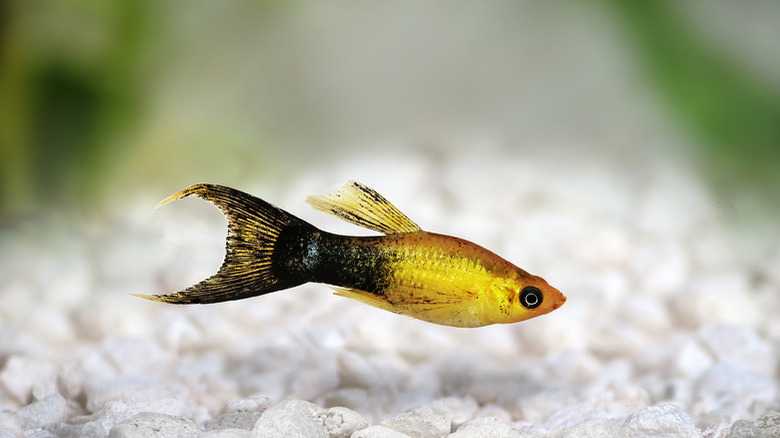
How To Cure Swim Bladder Disease In Molly Fish
Other Cute AnimalsFishHow To Cure Swim Bladder Disease In Molly FishByA. A. RileyUpdated: Dec. 2, 2024 4:13 pm ESTMirko_Rosenau/iStock/GettyImagesWe may receive a commission on purchases made from links.Disclosure: At Cuteness, we are committed to being the go-to resource for pet owners and animal lovers. We only recommend products we think our audience will love. If you purchase something by clicking on one of these links, we may receive a small commission of the sale and the retailer might receive some data for accounting purposes.Mollies make an excellent choice for novice aquarium owners as they are hardy freshwater fish, come in a variety of colors, and can live in an aquarium as small as 10 gallons. The species is fun to watch as they fin their way gracefully around the tank. Because they're usually on the move, unusual things like a motionless molly listing off to one side or the freshwater fish swimming upside down are readily noticeable. Don't assume she's dying; although swim bladder disease in molly fish can be fatal, with early detection and treatment, your fish has a good chance for survival.Swim bladder functionYour fish's swim bladder lies deep within his body as an offshoot of the digestive tube. The bladder contains gas, including oxygen, that lets the fish float upright at the desired depth. When the swim bladder malfunctions, the fish has trouble maintaining his level in the water and can sink to the bottom of the tank or be stuck near the top. The abnormal ballast can cause the fish to turn sidewise and swim on his side, or even roll entirely upside down.Swim bladder disorder causesSwim bladder disorder often results from other organs pushing on the swim bladder, thereby disrupting its function. Overeating and constipation are the first two things to suspect, especially if you leave food floating on the top of the tank after your fish have had two-to-three minutes to feed. Fatty liver disease, kidney problems, or impacted eggs are other physical causes of floatation problems. Finally, bacterial counts in the tank, parasites, or high levels of nitrates can also be at fault.Initial treatment: First 48 hoursCheck the temperature of your tank. If you tend to keep it on the cold side of the 70-to-85-degrees Fahrenheit water temperature recommended for mollies, turn it up to at least 80 degrees. Low temperatures can cause digestive issues in fish, so chances are your entire molly community will benefit from added warmth. If your molly isn't interested in feeding and the other fish are leaving her alone, it's not necessary to remove her from the community tank. However, if you recently introduced the fish to the community and bacteria could be at fault, isolate her in a hospital tank immediately to minimize exposure to other tank mates. Don't feed the sick fish for the first 48 hours to allow her to process what is already in her digestive tract. In many instances, the fish will return to normal during this timeframe.Further swim bladder disease treatmentIf your fish hasn't recovered or shown significant improvement within 48 hours, administer continued therapy in a separate tank. Put your fish on a high-fiber diet consisting of a peeled, cooked pea so the extra roughage can help clear constipation. Let the fish nibble the pea for two-to-three minutes and then remove until the next feeding. Offer your fish a peeled, cooked pea up to three times a day and continue withholding regular fish food.Add one tablespoon of aquarium salt for every 5 gallons of water in the molly's recovery tank as a salt treatment. Make sure to use aquarium salt designated for use in a freshwater aquarium, such as API aquarium salt, readily available on Amazon. The salt kills bacteria that contribute to swim bladder disease.Alternatively, you could treat the water with an antibacterial formula to take care of any tank bacteria causing the infection. Should your fish need further swim bladder disease treatment, take him to a fish vet to see if he needs swim bladder medication.Preventing a recurrenceWater quality is the factor most common in any fish disease, and swim bladder disorder is no exception. Fish suffer stress when their water quality is poor, such as if the pH is off, the temperature is too cold, or there are too many nitrates. Such factors disrupt their bodies' homeostasis, leaving them vulnerable to buoyancy problems and other disorders.ReferencesThe Aquarium Guide: Mollies Care GuideAquatics World: How to Cure Swim Bladder DiseaseFish Keeping Advice: Swim Bladder DiseaseEncyclopedia Brittanica: Swim BladderAquatic Veterinary Services: Fish Disease
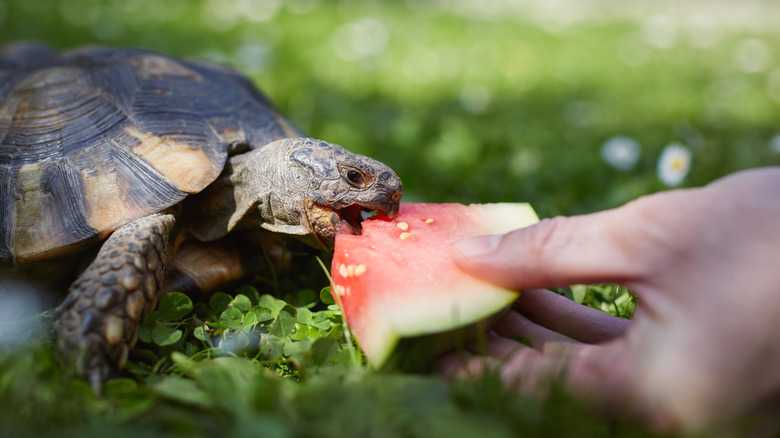
Pet Turtle Laws In Tennessee
Other Cute AnimalsPet Turtle Laws In TennesseeByJane MeggittUpdated: Dec. 10, 2024 5:18 pm ESTJaromir Chalabala/ShutterstockThe law governing the keeping of pet turtles in the state of Tennessee are pretty simple: they're not allowed. In 2012, the turtle ban was enacted, and permits were no longer issued for the selling of turtles in pet stores or for pet-keeping purposes.No Sales or BarterThe Tennessee statute, 1200-14-01-.36, states, "It shall be unlawful for a person to sell, barter, exchange or otherwise transfer any turtle as a pet; or to import or cause to be imported any type of turtle in the State of Tennessee for such purposes." The Volunteer State joins South Dakota and North Carolina in banning the sale of pet turtles. Turtles can still be sold in Tennessee for scientific research, for educational purposes or for food.Salmonella RiskThe primary reason for the turtle ban is the fact the pet turtles, such as the red-eared slider, carry salmonella and other bacteria. Salmonella causes diarrhea, vomiting and fever, and people can die from the infection. Kids are especially vulnerable, since pet turtles are often purchased for them and they don't observe good hygiene practices.Wild TurtlesTennessee didn't allow wild turtles to be kept as pets long before the ban on small pet turtles. State law doesn't permit the keeping of any wild animals for pet purposes. If you find an injured wild turtle, call the regional TWRA nearest you. A representative will give you the contact information for licensed state wildlife rehabilitators, and you can arrange to turn the turtle over to one of these individuals. The rehabilitator will nurse the turtle back to health and eventually return the animal to the wild. If that's not possible, the turtle may find a home with a licensed special educator, who can use the turtle for teaching purposes.
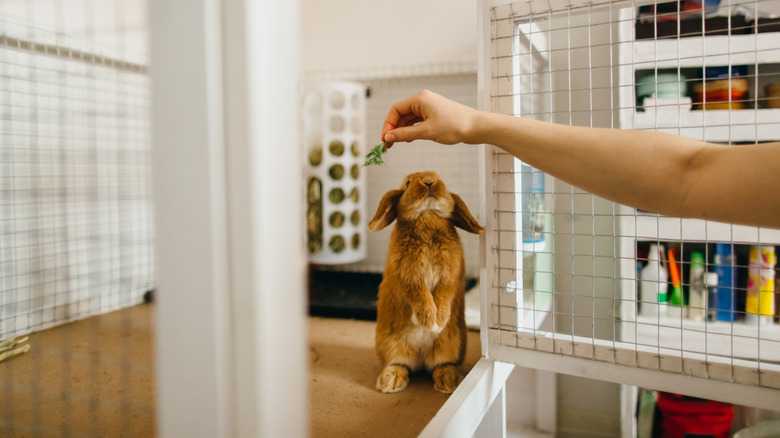
Make The Cutest DIY Litter Box For Your Bunnies Using An IKEA Must-Have
Pet ParentingDIY Project IdeasMake The Cutest DIY Litter Box For Your Bunnies Using An IKEA Must-HaveByJessica DesrosiersMarch 3, 2025 3:25 pm ESTTanja Ivanova/Getty ImagesWe may receive a commission on purchases made from links.Rabbits can run very fast and get the "zoomies" when excited and having fun. In addition, bored rabbits may kick at their cages at night — a sign they need a little more space to dash around. However, while giving your rabbit more opportunities to explore your home is good, they still need an area where they can safely go potty. Luckily, you can turn an IKEA storage table into a beautiful spot to keep your rabbit's litter box out of the way. This hack is great for containing your pet's messes without detracting from your home's decor (though it will require some personalization if you live outside of the U.K. or Australia).To try the hack at home, cut a square in the side of a HOL Storage Table large enough for your bunny to fit through. Cutting along the natural seams of the table's weave can ensure there are no loose edges. Then, sand down the sides to remove any sharp bits your rabbit can get cut on. Finally, open the lid and place your rabbit's litter box inside. You may want to entice your pet to check it out by offering a few treats such as hay hung above it.How to make the DIY rabbit litter box work for youViolet_Nyx / RedditWhile this hack is great for pet owners in the U.K. and Australia, the HOL Storage Table isn't sold outside of these locations. There are a couple of alternatives you can use if you're located in the U.S. IKEA offers the NÄMMARÖ Storage Box, which features a similar size and design. Be aware, however, that it is composed of stained wood, which may not be suitable for bunnies that like to chew on furniture. You can strip it and re-stain with a pet-safe wood stain to play it safe.Another alternative is a Wooden Grid Side Table by ZLHome. Though smaller in size than its IKEA counterpart, it features a similar, hackable design. It's made of pine wood, but isn't stained. Untreated pine should be thoroughly dried to ensure it doesn't cause any issues for rabbits.Regardless of the box you use, make sure your rabbit's litter is accessible and easy for you to clean up. If they still make a bit of a mess, giving your rabbit a bath can help them stay clean while roaming about. You can also add some additional personal touches to this hack, such as a comfy cushion for your rabbit to lounge on top or fun, rabbit-safe treats to make the space more welcoming.
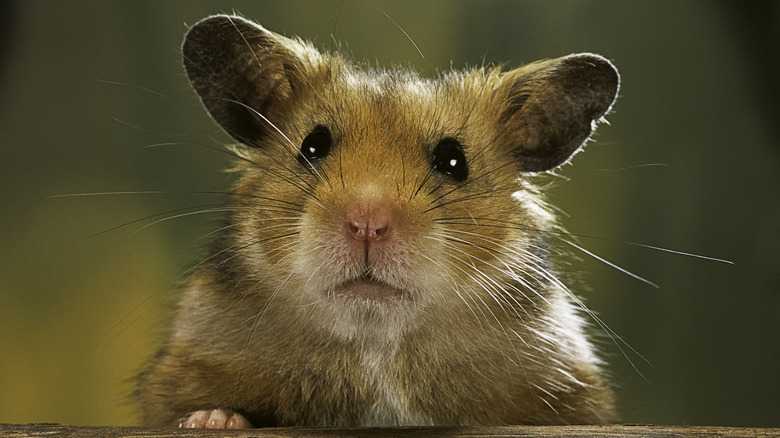
Hamster Seizures: What To Know
Other Cute AnimalsHamster Seizures: What To KnowByCynthia AnayaUpdated: Oct. 29, 2024 3:34 pm ESTPaul Starosta/Getty ImagesSeizures commonly occur in humans for different reasons, but they can also affect animals, including hamsters.Certain hamster species are more prone to seizures than others, such as the Syrian hamster (per the Journal of Heredity). An Epilepsy & Behavior article published in 2017 stated that other hamsters have audiogenic seizures (AGS), which are triggered by sound and caused by a rare brain disease. Diabetes, a disease that commonly affects Chinese dwarf hamsters, can also lead to seizures.Watching any animal or person have a seizure can be frightening, especially when it's your first time. A number of questions may surface in your mind: Is this even a seizure (or is the hamster having a stroke)? Is there anything I can do to try to stop it? What should I do after it's over? Did something cause it? Will it happen again? Should I be concerned? In general, if you have questions about your hamster's health, the first person you should contact is your veterinarian. However, there are symptoms you can look for and approaches you can take that may help in the case of a seizure.How to tell if your hamster is having a seizure (and what to do)Yta23/ShutterstockHamster seizures aren't common, and limited published material is available on the topic. However, the Journal of Heredity includes information about spontaneous seizures, specifically in Syrian golden hamsters. In this species, seizures might be characterized by "a reduction in normal activity as well as obvious clumsiness ... for the first few minutes" of being placed in a new cage. You may also notice the ears held closely against the head, abnormal walking, and subtle facial contortions. Whether you have a Syrian or any other type of hamster, additional seizure symptoms could include collapsing on the floor, losing consciousness, involuntary shaking, stiffening of limbs, or involuntary bowel movements.If you witness signs of a seizure, do your best to remain calm and make sure your hamster is safe until the episode ends.Remove any nearby items that may harm them, or use your hand to gently contain them to a certain area. Some animal seizures can last for a minute or two, but for Syrian hamsters, they can last up to five hours. Call your veterinarian to ask for guidance and to determine if emergency care is necessary. Even if the seizure seems mild and ends quickly, you may still want to schedule a visit with your vet to discuss treatment or preventive measures, such as alterations to your hamster's diet.

15 Pumpkintastic Pets At Pumpkin Patches For When You're Dreaming About Halloween
Other Cute Animals15 Pumpkintastic Pets At Pumpkin Patches For When You're Dreaming About HalloweenByCuteness TeamUpdated Aug 3, 2023You know the saying: it's Halloween somewhere! Enjoy these cats and dogs who are already ready to ring in the fall season.1. Princess of the pumpkin mountain!elsa_themaltipoo via Instagram1. Princess of the pumpkin mountain!More Like ThisDogs14 Pets Who Want to be Your ValentineDogs15 Pets Enjoying HanukkahCats20 Black Cats Getting Ready For Spooky Season2. This little Corgi is almost camouflaged!LittleCooperBear Via Instagram2. This little Corgi is almost camouflaged!3. Could there BE a more perfect Halloween image??Mulberry Pond Pumpkin Patch via Facebook3. Could there BE a more perfect Halloween image??4. You found me!thecotonstorm via Instagram4. You found me!5. I'm getting some great decor ideas!teddy_goldendoodleworld via Instagram5. I'm getting some great decor ideas!6. We love a cat that dresses on theme.bob1234561 via Reddit6. We love a cat that dresses on theme.7. A Fall outing in style!lunabear.corgi via Instagram7. A Fall outing in style!8. I see you...looking adorable with these pumpkins!casper_thecrazypup via Instagram8. I see you...looking adorable with these pumpkins!9. "This pumpkin and I are meant to be."los_carnales_frenchies via Instagram9. "This pumpkin and I are meant to be."10. Pumpkin patch pose!two.feet.eight.paws via Instagram10. Pumpkin patch pose!11. TFW you're having anxiety about having to choose just onelifeofbarney_x via Instagram11. TFW you're having anxiety about having to choose just one12. Contemplating life surrounded by pumpkinsu/Guerkemw via Reddit12. Contemplating life surrounded by pumpkins13. I don't always go to pumpkin patches, but when I do...I look extremely cool.ltc_bunkerdoodle via Instagram13. I don't always go to pumpkin patches, but when I do...I look extremely cool.14. It sure is great to find small ones.worldofjaxonmorkie via Instagram14. It sure is great to find small ones.15. So happy it's pumpkin season again!meg.n.roo via Instagram15. So happy it's pumpkin season again!
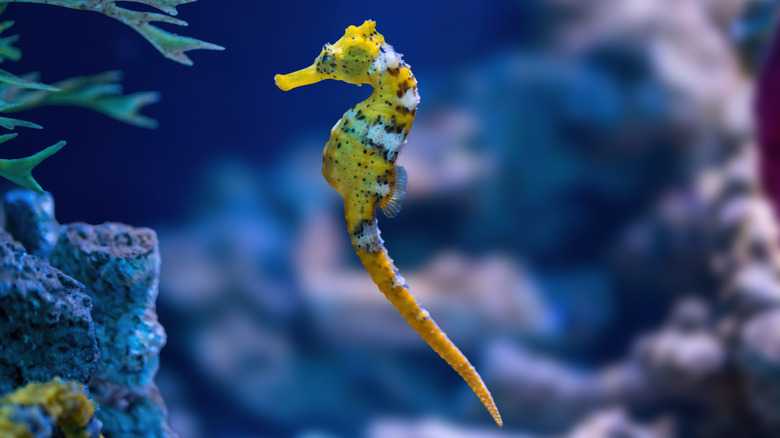
Can You Keep Seahorses As Pets In Your Home Aquarium?
Other Cute AnimalsFishCan You Keep Seahorses As Pets In Your Home Aquarium?ByCori ChapmanFeb. 24, 2025 1:25 pm ESTDiego Grandi/ShutterstockYou may have seen seahorses while out at an aquarium, but did you know that they can be kept as pets at home as well? It may not seem so because seahorses are often known to be harder to keep fish. However, they can be kept in home aquariums with some preparation and care. Seahorses were only bred in captivity relatively recently. Initially, wild seahorses were caught and placed in aquariums, but many died shortly after due to stress and starvation from refusing to eat. Luckily, seahorses were finally successfully bred in captivity, helping to create a population that was more at home in home aquariums, readily accepted hand-feeding, and was less stressed out by transport.Before you care for a seahorse at home, you should have the right setup to ensure they stay happy and healthy. To add seahorses to an aquarium, the tank should be at least 18 inches tall to allow them to happily move around. A wide tank is also a good idea, as seahorses prefer to move side to side as well. The size and number of seahorses also impact the size of the tank — so go larger if you are keeping multiple. You can even go extra big by making a DIY 300-gallon tank at home for the ultimate experience. It's also good to make sure the tank has plenty of good bacteria to support a healthy ecosystem.Friendship and feeding of your seahorseAire Images/Getty ImagesSeahorses may seem exotic and need a lot of care, but they can be easy if you know what to do. Seahorses are rather social creatures, so having at least a pair helps maximize happiness for your beloved water pets. It's important that the pair is the same gender, otherwise, you may find yourself with several (thousand) more seahorses in the near future! You might also want to keep these delicate creatures away from other carnivorous aquarium fish that may think they're a tasty snack.Regarding their diet, seahorses are carnivorous, so should eat a variety of foods. You can offer Mysis shrimp, though it is best to avoid frozen shrimp and look for fresh. Other than Mysis shrimp, any small crustaceans are suitable for a seahorse's diet. Captive-bred seahorses are also very friendly when it comes to feeding time. They enjoy being hand-fed for more interaction than some other fish. Their food can be left in the aquarium, but any uneaten portions should be removed to keep the aquarium clean. Owning a seahorse can be a fun, and interactive, experience. It's best to ensure you have a properly set up tank and know the basics of caring for them before bringing one home. Once you're ready to go, you can have some fun watching these adorable creatures swim around.
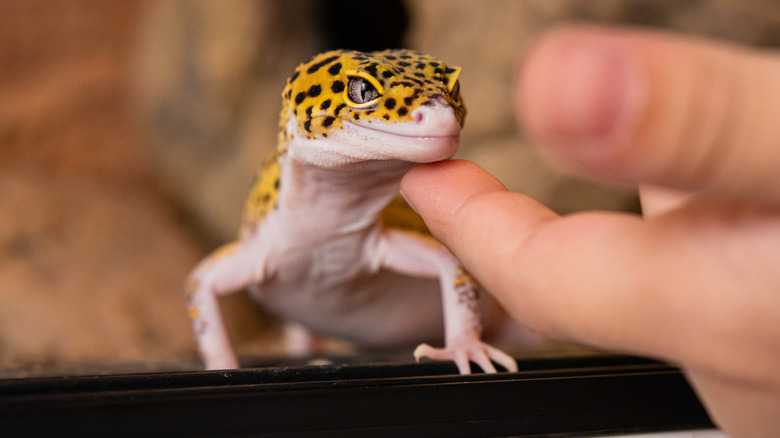
A Low-Maintenance Gecko Breed Known For Its Coloration Can Live Up To 20 Years
Other Cute AnimalsA Low-Maintenance Gecko Breed Known For Its Coloration Can Live Up To 20 YearsByAdam SymchukApril 8, 2025 9:25 am ESTAlexandra Jursova/Getty ImagesJumping into the world of reptiles can be challenging, as everything from their day-to-day needs to their environment and food drastically differs from those of more popular pets. Yet, welcoming a reptile like a gecko into a home can create a unique bonding experience and the chance to observe how it grows and adapts to its environment. For new reptile owners, choosing a more low-maintenance option is often recommended, and one of the most popular choices is the leopard gecko, which gets its name from the leopard species of cats thanks to their shared color patterns.The leopard gecko's reputation for being low-maintenance comes from various reasons, starting with its cool, gentle, and calm demeanor. It also grows to be manageable for most new owners, around 7 to 10 inches. Feeding a gecko is also minimal; their diet consists of live insects, and they only need to be fed a few times a week. Additionally, managing an enclosure can often be done with spot-cleaning every day days and a thorough cleaning once a month.With proper care, the leopard gecko can also be a long-term companion. In captivity, a leopard gecko lives between 10 and 20 years. While determining the age of a gecko after reaching full maturity can be challenging, the oldest living leopard gecko on record is Gertrude from Germany, who is said to be over 40 years old and still kicking at the time of writing. With its potential longevity and low maintenance, the leopard gecko can be a perfect longtime companion and provide the first steps toward an owner becoming a gecko enthusiast.The importance of health and care in a leopard gecko's longevityanomaly026/ShutterstockGeckos might be low-maintenance, but they still require proper care. For instance, geckos need ample space despite their small size. For an adult, a 20-gallon aquarium with a range of temperatures to suit their needs is recommended. Flooring should consist of materials that are easy to clean and not typically ingested by geckos, such as paper towels, newspapers, or reptile carpet. Moreover, proper hiding places and clean spaces will help create a positive environment. Then, when it comes to food, which is typically insects, it needs to be purchased instead of found in the wild to avoid any potential toxicity.In addition to conditions that geckos can be predisposed to, such as anorexia, bacterial infections, and Metabolic bone disease, trauma can have long-term effects. Trauma can include a gecko being attacked by other pets, losing its tail after being held by its owner (never hold it by its tail), or falling from heights. Proper handling and staying aware of potential health concerns will allow lizard parents to recognize when medical follow-up is needed. This can include decreased appetite with weight loss, lesions or swelling on the skin, lethargy, difficulties breathing, or diarrhea. If in doubt because of unfamiliarity with a lizard companion, contact a veterinarian to see if an appointment is necessary.Catering to a leopard gecko's needs will help ensure longevity and good health, not to mention plenty of time to snap photos to share with other reptile pet lovers online. Ultimately, preparation and research remain essential in building that happy home for your new adorable reptile companion that may be a decades-long friendship.
The Steps To Take If You Encounter An Injured Wild Animal
Other Cute AnimalsThe Steps To Take If You Encounter An Injured Wild AnimalBySanaphay RattanavongFeb. 10, 2025 11:25 am ESTLucas Ninno/Getty ImagesSeeing a hurt animal in the wild is heartbreaking, but intervening the wrong way can do more harm than good. Every year, well-meaning attempts to help wildlife lead to unintended consequences. For instance, one young Colorado girl mistook a coyote hiding behind and partially obscured by a tree for a dog and advanced toward it, resulting in an attack. In another case, someone removed a black bear cub from a tree to get a photo with it, causing the bear significant distress before it was rescued and released back into the wild. These incidents highlight the dangers of acting impulsively, as well as the importance of observing and understanding wildlife behavior. For starters, you can read up on the differences between domestic and wild dogs to understand them better.When you encounter an injured animal, begin with careful observation. Signs of distress may include visible injuries, abnormal behavior, or, in young animals, prolonged absence of a parent. However, not all lone animals need help — many, like fawns or baby birds, are often left alone temporarily, so it's important to consider this sign in tandem with others. Safety is also crucial. Injured animals can be unpredictable, so maintain a safe distance, keep children and pets away, and avoid direct contact. If handling is necessary, wear gloves or use a towel, and wash your hands thoroughly afterward. Minimize stress for the injured animal and call for helpThomas B Lee/ShutterstockOnce you've assessed the situation and ensured your safety, the next step is to take action responsibly. For example, a family in Texas recently attempted to help a baby bird by folding a warm tortilla around it to protect it. This could have caused unnecessary stress, not to mention potentially cutting off its oxygen supply. The family called a wildlife rehabilitator after handling the bird, though this should've been the first step after noticing it was injured, per Animal Rescue of the Rockies.In contrast, one woman in Minnesota encountered a snowy owl trapped in a car grille. She carefully removed the owl, caressed it in a blanket, and left it in a hushed room overnight. In the morning, she transported it to a licensed wildlife rehabilitator. Her actions — minimizing stress and seeking professional help — potentially gave the owl its best chance at recovery.When you come across an injured wild animal, contacting professionals should always be your first step. While waiting for assistance — or transporting the animal — it's important to minimize its stress. Place the animal in a well-ventilated box lined with a soft cloth. Make sure it has enough room to breathe but not enough to move excessively, as this could worsen its injuries. Keep the environment as quiet and dark as possible to reduce fear and agitation, and avoid feeding or giving water to the animal unless directed by a professional. For species-specific advice, check out our guides on how to help a bird with a broken wing or how to help an injured duck.If you encounter an injured or sick wild animal, contact a local wildlife rehabilitator for help. To find assistance in your area, visit theHumane Society of the United States websiteorAnimal Help Now's online directory.

How To Tell When A Fish Is Ready To Give Birth
Other Cute AnimalsFishHow To Tell When A Fish Is Ready To Give BirthByCatherine IrvingUpdated: Dec. 10, 2024 4:36 pm ESTFotografia Inc./Getty ImagesBeing able to tell when a fish is about to give birth requires patience and careful observation. Some fish lay eggs while others are called live-bearers and give birth to live young. Examples of live-bearers include swordtails, fancy guppies, and mollies, among many others. Other fish in the same tank as the live-bearer may eat the young if you do not separate them upon birth.TipConsider a baby nursery box designed for live-bearers and their young to separate them from hungry fish looking for a snack.Observe when your fish mate. A female fish is typically pregnant for four to six weeks.Step 1Observe the belly to determine if it is bloated or increasing in size from week to week. Some fish have large stomachs regardless of pregnancy. But pregnant fish will usually have a square outline to their belly just before giving birth.Step 2Look for the gravid spot on the fish's abdomen near the rear tail. The spot should appear large and dark when her eggs are fertilized. You will know your fish is close to giving birth when the spot becomes nearly black. Some fish may show white spots instead of black.Step 3Watch your fish swim and see if the female is prone to nesting. Pregnant fish will typically slow down and act sluggish, lethargic, and less mobile when getting close to giving birth. You will also notice pregnant fish enjoy resting along your tank's plants or accessories in the days before giving birth.Step 4Check your fish's daily diet routine. A pregnant fish nearing birth is more likely to stop eating as frequently or stop altogether. Most fish are naturally big eaters and swarm the top of the tank at the first sign of food. Pregnant fish ready to give birth are more likely to rest or swim idly by than eat.
The Best Bird Mothers In The Animal Kingdom Will Have You 'Aww'ing All Day
Other Cute AnimalsBirdsThe Best Bird Mothers In The Animal Kingdom Will Have You 'Aww'ing All DayByAdam SymchukMay 1, 2025 9:25 am ESTVladislav T. Jirousek/ShutterstockMotherhood takes many forms across the animal kingdom, from snakes that lay their eggs and let their offspring fend for themselves to African elephant calves that spend the first four to six years under a mother's watchful eye. Looking strictly at our feathered friends, there is variation to be found as well, with Cornell Lab's Clement Checklist recognizing 11,145 species of birds. That makes for many mothers, like their patient dog-mom counterparts, raising adorable baby chicks worldwide in various environments.All birds will raise their little hatchlings the best they can, given their environment and circumstances. However, considering what humans value in the mother-child relationship, some birds can be regarded as the best by exhibiting traits that make that bond so cherished. These protective mothers go above and beyond to ensure their little ones have a chance at success once they leave the nest. At the same time, the dedication and love of raising a chick will have you "aww"ing at their unwavering commitment and the bonds formed from hatching to that first step out of the nest.King penguins go to great lengths to protect their youngDavid Merron Photography/Getty ImagesPenguins have come to be revered as amazing mothers (and fathers). This trait can be attributed to the popular 2005 documentary "March of the Penguins," which showcased the birds' persistence in harsh climates, including the lengths they go to protect their young. The remarkable journey chronicled in the documentary has led to admiration and online homage in the form of adorably funny penguin memes. The title of best mother of the animal kingdom is deserved, as the penguin's plight goes above and beyond when compared to other seabirds.Penguins, particularly the king penguin, spend a lot of time raising their chicks. This period can last up to fifteen months and can be divided into two stages. The first is around 37 days, where the chicks are strictly guarded under the protection of their parents. During this time, the mother is the primary watcher, but she will leave to forage for food and let dad take turns watching over the newborn. Afterward, in stage two, the cute little fluffballs form communities called creches under the watchful eye of the larger community of parents. King penguins will spend a summer and two winters ensuring their offspring are safe and well-fed before letting them take their first waddles towards independence.One remarkable story highlights the bald eagle as a great motherJoseph Lacivita/ShutterstockJackie and Shadow, the recent online sensation, have had social media abuzz with the remarkable story of their quest to become parents. The Big Bear Lake duo in California had a hard road to parenthood, with a few failed attempts at hatching eggs before finally welcoming three eaglets to their nest. Since then, the public has been watching via a 24-hour camera set-up to monitor the family and capture moments highlighting the family's challenges and triumphs, with a particular love for Jackie as a dedicated mother. Jackie has stood guard against predators and has shown the bald eagle's exceptional commitment to keeping eggs covered and warm during harsh winter weather.Jackie and Shadow are not wholly unique in their parenting. Bald eagles attentively watch over their young for 10 to 12 weeks after they hatch and before they can fledge. During this period, the mother will seldom leave the nest other than to stretch her wings and relieve herself. The father becomes a dedicated protector and food gatherer, sharing feeding and protection duties when possible. With dedication, the two parents can raise one to three chicks to carry on the legacy of the majestic bald eagle and, hopefully, go on to raise their own families.Eider ducks will sacrifice their warmth and health for their youngAnsaharju/Getty ImagesAlthough the eider expresses many of the same behaviors as many other duck species, it faces unique challenges regarding parenthood due to the harsh climates in the northern hemisphere. Notably, to help keep its nest warm, a mother eider will pluck the down feathers from her chest to ensure proper insulation for her young during the 24-to-26-day incubation period. During incubation, the mother eider will not eat and can lose almost 45% of her body mass — certainly some serious dedication.They say it takes a village to raise a family, and the eider ducks embody this sentiment. A mother will lead her chicks to water when ready to leave the nest, joining other families to make a large group of up to 150 ducklings. A true gathering of a community, non-breeding females also aid in raising and protecting the young during this time. The group will stick together until the duckling is ready to prove itself independent, at around 55 to 60 days. A dedicated mother and a great community undoubtedly make the eider ducks "aww"-inducing bird families.Greater flamingos work together to raise their youngJksl/ShutterstockThe greater flamingo combines many traits of the best mother birds while going above and beyond in other ways. Notably, greater flamingos form small communities of 15 to 50 pairs and synchronize their breeding to ensure all chicks are raised together. This long-term community is built around monogamy, as many flamingos form lifelong pairings and rely on those parental and communal bonds to raise their young.Each pair lays a single egg, which incubates for 27 to 31 days. The little flamingo spends additional time under their mother to help strengthen their bodies before exploring outside their nest. A flamingo's nest requires a lot of hard work from both parents. Using mud, a pair of flamingos gather enough material to create a large, stable structure that stays safe and secure in shallow waters; these nests can be up to a foot tall.Once they hatch, parents must feed the chicks by mouth until their beaks grow from the straight ones they are born with into the curved ones of adults. Until they are old enough to function independently, the chick relies on its parents for food and the tight-knit community for protection and support. From the penguin to the flamingo, nature reminds us of the resilience and care required to raise a family; we can learn a lot from these remarkable feathered mothers.
A Pet Bird Known For Following Commands Can Live For Over 80 Years
Other Cute AnimalsBirdsA Pet Bird Known For Following Commands Can Live For Over 80 YearsByRosie GovinMarch 8, 2025 3:25 pm ESTMurilo Mazzo/ShutterstockWe may receive a commission on purchases made from links."Polly want a cracker?" More like, "Polly want a lifelong companion!" If you're thinking about taking in a pet bird, it's important to know that some of the most beautiful, charismatic birds out there also have some of the longest lifespans of all pets. An extremely intelligent, communicative bird, the umbrella cockatoo, also known as the white cockatoo or the great white-crested cockatoo, can live for up to 80 years, so bringing one into your home is as close to a lifetime commitment as it gets.Umbrella cockatoos are tropical birds native to Indonesia, and they have that signature white crest that pops up when they are excited or agitated. In fact, most of their body is white, with the exception of yellow feathers under their wings and tails. They're medium-sized birds that get up to 18 inches in length, but as far as pet birds go, they're quite a presence. Not just physically, either — umbrella cockatoos are birds with big personalities who require an involved pet parent.Umbrella cockatoo personalityPadodo/ShutterstockUmbrella cockatoos require lots of love, attention, and stimulation, so they're not the best choice for the absentee pet owner, and they should be adopted by experienced bird owners. In the wild, these birds live in groups, so they don't spend much time alone, and they don't adapt well to those kinds of situations. Umbrella cockatoos that are left alone for too long could develop destructive behaviors, like chewing on their feathers or screeching.These birds are super smart — some are able to learn upwards of 50 words, they love to play and are very affectionate, and they can use tools like twigs to scratch themselves. You can't say that about too many types of pets! While they form strong connections to the people in their lives, they can also be described as moody.Umbrella cockatoos can be extremely playful one second and then turn on a dime and bite and scream the next. Let's just say that umbrella cockatoos are not among the quietest pet birds. Keep in mind that they typically don't do well with big changes or major shifts in their routine, like new family members (aka babies) or new daily schedules. If you are prepared for an occasionally fair-weather friend who is nevertheless fascinating and quite fond of their companions, the umbrella cockatoo may be an option for you.Umbrella cockatoo caretatianaput/ShutterstockAs the umbrella cockatoo is on the larger side for a pet bird, they need a considerable amount of room. Their cages should be as large as possible, big enough that there's room for a play stand, like MCage's Wrought Iron Parrot Play Gym. A bird that is kept in too small of a space is at risk of injuring themselves or getting sick. Ideally, you can also include some enrichment objects like swings, ladders, and chew toys that exercise their beak to keep them occupied. They also require 10-12 hours of sleep every night and regular baths to control the dust from their down.You're probably wondering what an umbrella cockatoo can and can't eat. Nutritious pellets made for cockatoos should make up the bulk of their diet, but because they are natural foragers, they should also be supplied with a variety of fruits, vegetables, and wholesome grains like quinoa. These should make up about 20% of their overall food intake. Nuts can be given as an occasional treat. Like most other pets, umbrella cockatoos should also have access to fresh water at all times.Intelligent, playful birds like the umbrella cockatoo need lots of exercise and mental stimulation every day to the tune of two hours minimum outside of their cages. This will stop your cockatoo from screaming for attention. They can learn games like rolling a ball back and forth and tricks like saying words. Cockatoos love routine, so it's a great idea to schedule their playtime and stick to that schedule. Overall, these birds are great, long-lived friends if given enough care and attention.

14 Ways To Make Moving With A Pet So Much Easier
Pet Parenting14 Ways To Make Moving With A Pet So Much EasierByLisa MaloneyApril 27, 2025 9:05 am ESTStandret/ShutterstockMoving house is challenging enough — but when you add pets into the mix, you're dealing with living, feeling creatures who probably have some strong opinions about the sudden upheaval all around them. Whether you're trying to herd cats who disappear at the first sign of moving boxes or dealing with uncontrolled chewing as a sign your dog is stressed out, taking the time to do a little advance planning, lay down some key supplies, and understand certain types of training and familiarization can help make moving with pets ever so much easier.Have a go-bag for your petlarisa Stefanjuk/ShutterstockAnyone who's moved once or twice will know how important it is to have everyday essentials ready to grab during your move. This goes double for your pet, who has neither the thumbs nor (probably) the reasoning skills to pack for themselves. You can be the shining hero, however, if you add essential items for your pet in the "go-bag" you carry for yourself during the move — or perhaps give them a go-bag of their own.For humans, go-bag essentials might include snacks, toiletries, medications, important papers, and a fresh change of clothes (or at least fresh socks and underwear). The travel essentials for your dog or other pets really aren't all that different: Think food and water bowls, plus the food and water of course; then add treats, a favorite blanket or bed, favorite toys, vaccination records, a leash and harness, kitty litter, and so on. Your goal is to include everything your pet needs in a typical day, plus reassuring comfort items and anything else you could imagine needing in an emergency. For your pet's comfort, practice beforehandEyeem Mobile Gmbh/Getty ImagesMoving comes with new experiences for everybody. For you, that might mean the challenge of sorting through your accumulated life possessions and choosing what makes the cut to come with you to your new home. For your pet, the new experiences could mean anything from spending extended time in a carrier, going for long car rides, staying in a hotel, or even flying in an airplane. The more you can do to break these experiences down into their most basic components, and then give your pet an opportunity to get familiar with them in advance, the easier it'll be for both of you. For example: If you're planning to drive your pet cross-country during a move, start by getting your pet used to the carrier you'll use while in the car. Leave the carrier out and open so your pet can explore it, and consider scattering a few treats inside as an extra lure. Once your pet goes into the carrier willingly, consider using it as a feeding station. There is no surer, faster way of building a positive association with the carrier than pairing it with food. Once your pet is comfortable inside the carrier, you can get it used to going for car rides. Start short and work up to longer rides/drives, with plenty of treats along the way. Some of the other "skills" that might come in handy during a move include leash-training your dog (and sometimes, your cat), using a travel litter box or pee pads, meeting new people and pets, and simply exploring new environments. Even pet birds might enjoy an opportunity to get used to traveling in a travel cage since it might be substantially smaller than what it's used to at home. Preserve your pet's routineOlga Pankova/Getty ImagesOur furry friends aren't just creatures of habit — they can be downright neurotic about it. The more of their normal routine you preserve throughout the move, the easier it'll be for them to adjust. As a bonus, because your pet's daily schedule is probably predicated to some degree on your own, preserving its sense of normalcy might bolster your comfort level, too. If you're not sure how to structure your pet's routine during the move, try writing out the elements of your pet's life as you move through the day. When do you feed it, walk it, play with it, give it puzzle toys or other items for enrichment, or tuck it away for bed? That will give you the skeleton of a schedule to build your moving day(s) around, which doubles as a framework for building out the "new normal" routine once you've moved. Take your pet with youAleksandarnakic/Getty ImagesIn a similar vein, unless you're employing a company that specializes in moving pets over long distances, the safest place for your pet to travel is with you. Not only will your pet be more comfortable that way, but you're also uniquely suited to "read" your pet's tells and identify what sort of support it needs during the move. For example, if you know your pup is prone to car sickness, you're already a step ahead in terms of identifying potential problems and, hopefully, dealing with them before they get too serious. Identifying hurdles like motion sickness is exactly why it's so important to practice the elements of moving beforehand. If you wait until the big move to put your pet in the car, there might not be much you can do about the motion sickness. However, if you've tried it beforehand and spotted that your furry loved one is feeling ill, you'll have time to talk to your vet about anti-nausea medication or other remedies.Consider all of the boxesBymuratdeniz/Getty ImagesIt's worth taking a minute to imagine what a sudden deluge of moving boxes might look like from your pet's point of view. We all know cats love boxes, but even they might be put off by their sudden appearance, or the disappearance of your belongings into them. Whatever kind of pet you have, there are two general approaches to keeping it comfortable around moving supplies. One is to turn the unfamiliar into something familiar, by collecting packing boxes early and giving your pet a chance to explore them. The other is to pack out of sight of your pets, which usually boils down to keeping your pets out of whatever room you're packing in on any given day. Either way, remember that having lots of boxes around can create hiding opportunities for small pets like cats, so it's important to keep track of where your pets are and always check inside boxes before sealing them up. It's also very important to know when it's time to separate your pets from the chaos of moving for their own safety, no matter how comfortable they might seem in the moment.Keep your pet close and containedsophiecat/ShutterstockFew things are as heartbreaking as realizing that your best furry (or feathered, or scaled) friend has gone missing during a move. This especially applies to cats and dogs and free-ranging birds, all of whom are more likely to have the run of the house than, say, a lizard or a fish. Happily, there's a lot you can do to keep your pets from escaping or getting lost. The number one thing is to designate a safe, contained place for them — whether that means a separate room with a big sign on the door to keep it closed, or a large cage or crate that gives them enough room to be comfortable, but still keeps them safely contained. If the moving or home environment is too chaotic for that to feel like a secure solution, consider boarding your pet with family or friends, or even at a professional boarding facility, for the most intense days of the move. Although none of you will enjoy being apart from each other, it's worth the peace of mind to know your pet won't panic and slip out the door in the middle of the chaos. Pet-proof the new place, then let them exploreCunfek/Getty ImagesJust as it's a very smart move to keep your pets tucked in a safe, secure place during all the bustle of moving boxes and furniture out of your old home, it's equally important to ensure your pets have a safe place as people are hustling in and out of your new home. If you let them free-roam right away, even a pet who's previously stuck close to home might be so discomfited by the experience of moving that it goes into hiding, dashes through open doors, or even sets off in search of the familiar digs you just moved out of.If you start with a designated "safe room" for your pet, full of familiar toys, beds, crates, and your pet's other belongings, it'll be able to become comfortable in that new space. Once the immediate hustle and bustle of moving in is over, consider expanding that comfort zone just a room or two at a time, keeping your pet well-supervised when it first explores any new area. Make sure you spend plenty of time with it during this settling-in period: After all, you're its emotional support human.At the same time — or ideally, before you've moved your pet into the new place — you can set about making your new home pet-safe. Look out for known hazards like unsecured cleaning supplies that a nervous (or curious) chewer might get into, pest control items that might've been placed by the previous tenants or owners, the cords to window blinds, electrical cords your pet might chew, uncovered swimming pools, and anything else that might look tempting. Consider crate training and research carriers beforehandDiane Keough/Getty ImagesIn a general sense, crate training a puppy or older dog — or even a cat — is all about giving your pet a designated safe place, which can be invaluable during the inevitable chaos of moving house. That crate training is especially useful when the designated safe place can travel with you. If the crate you've been using is too large or unwieldy to travel with, it's worth taking the time in advance to familiarize your pet with whatever travel carrier you've chosen to use instead. If you're traveling by plane, train, or any other service that has regulations about which pet carriers are acceptable, put in some research beforehand to make sure you're choosing the right carrier for your pet. At a minimum, your pet should be able to stand up, sit down, and turn around inside the carrier comfortably, and there should be adequate ventilation. If your pet is coming in an airplane cabin with you, you might prefer a soft-sided carrier that's easier to tuck under the seat in front of you. If your pet is traveling via the pet hold in the belly of the plane, however, a hard-sided carrier is the standard.A note about very large or tall dogs: Many airlines have limits on what size carrier they can accommodate in the pet hold, and owners of very large dogs sometimes struggle to find a travel carrier that's large enough for their dog but also small enough to be accepted on the plane. In this case, it's especially vital that you research the requirements ahead of time: If your pet can't fit into the hold of the plane, you can hire a professional pet-shipping service to get them to your new residence.Plan for your pet's comfortoasisamuel/ShutterstockWe humans are well-equipped to handle the stress of a long move, especially if it involves extremely hot or cold temperatures. We can add or remove clothing layers to stay comfortable, and have thumbs to operate an air conditioner or heater. Our pets, on the other hand — pun not intended — don't have those useful thumbs, and aren't able to speak out loud to tell us how they're feeling. They're also permanently zipped into their fur coats which, although they're great for some degree of temperature regulation, can only stretch so far to handle extreme heat or cold.Due to this, it's on us to plan for the comfort, safety, and well-being of our furry friends while traveling. At a minimum, consider how you'll maintain a comfortable temperature for your pet on your chosen mode of travel, and make sure you give it sufficient breaks to relieve itself, eat, drink, and also play or at least stretch its legs. If you're making a cross-country drive, for example, you might want to break it up into shorter days so your older dog doesn't have to spend all day curled in his travel crate. Or, if you have a cat who you know will be miserable in cars or hotels no matter what, you might choose to do the drive in fewer, longer days, and get it over with as quickly as possible. Make sure your pet is microchipped and the microchip is registeredMaria Sbytova/ShutterstockIf your pet does go missing, having it microchipped greatly increases your odds of being reunited. A 2014 study published in The Veterinary Journal found that pets with microchips were 21 times as likely to be reunited with their owners — as long as your microchip registry is kept current with your correct information. In most cases, this update can be done online via your pet's microchip manufacturing company website.If you're not sure whether your dog, cat, or other pet is microchipped, now is the perfect time to double-check and, if necessary, get it done. As you move, don't forget the vital step of updating your pet's microchip registry with your new address and any other changes in contact information. The same applies to your pet's collar and tags.Provide familiar comfort items before, during, and after the moveSvetlana Rey/ShutterstockYour pets use their keen senses to make sense of the world around them — especially their sense of smell. With that in mind, it's a true kindness to pre-stock your new home with as many familiar comfort items as possible, to help your pet settle in and realize this is now "home." This can mean keeping your pet's favorite toys or bed ready and available during the move. This can also mean bringing pieces of your clothing that you've already worn — so the clothes smell like you — or maybe favorite blankets that smell like home.After your move, items such as a cat tree or your dog's crate can also be familiar places to relax. The more familiar things you can have deployed around your new home before your pet even arrives, the easier it'll be for it to understand that it is, once again, exactly where it needs to be.Choose pet-friendly accommodations if you need themLightField Studios/ShutterstockIf your move takes more than one day, pet-friendly mobile apps or a few prudent online searches can help you track down pet-friendly accommodations. Whether you're staying in a hotel or a short-term rental, take a minute to make sure what sort of pets it accepts. Often, "pet-friendly" really means dog-friendly, and travelers with cats, birds, or other pets may find themselves out in the cold. Some locations may also have weight limits or pet number limits.Similarly, make sure you understand any extra fees associated with bringing your pets, as well as any rules that apply. For example, some hotels forbid leaving your pets alone in the room, even if they're crated. While that's safest — because there's no chance of housekeeping accidentally letting them out — it also means that if you can't split your party and send someone out while another person stays with your pet, you might struggle to get necessities like grocery runs taken care of safely. Consider your (new) local regulations regarding petsPeopleImages.com - Yuri A/ShutterstockWill your pet be on the right side of the law in your new home? There's only one way to be sure: Do some research beforehand. Some of the factors most likely to change from one locality to another include leash laws for dogs (and cats), and whether it's legal to let your pets outside unattended. Learning the lay of the (new) land ahead of time can help you save on fines, criminal penalties, and the social challenges that often come from violating local norms. Some countries even ban certain dog breeds, especially bully breeds, or place them under strict regulation. For example, American bullies are banned from the United Kingdom, Turkey, and the United Arab Emirates, and their presence is heavily regulated in the Republic of Ireland, where they must be muzzled and kept on a fairly short leash when out in public. That's not the sort of thing that you'd want to find out after you've already moved. Finally, as long as you have your research hat on, go ahead and do a little legwork to identify emergency vet clinics near your new home. It's hopefully unlikely that you'll need one but, if bad luck strikes and you do have a pet emergency after moving, you'll be glad you took the time to identify emergency services. Talk to your vet before your moveMiniseries/Getty ImagesYour veterinarian is an absolutely vital source of support throughout your pet's life, so make sure to stay in close contact with them before, during, and after your move. They can provide you with any paperwork you might need — including health certificates and vaccination records — along with preventive medications, suggestions to mitigate the stress of the move for your pet, and information about any new parasites or health conditions that might be an issue in your new home. Depending on how your pet is handling the move, your veterinarian might also prescribe calming medications to make the relocation easier for everybody — and if you're moving too far away to stay with the same vet, they might be able to refer you to a veterinary clinic near your new home. Moving can be stressful for you and your pets. Luckily, taking the time to research beforehand, setting up a positive, comforting environment before and after the move, and just giving your pets a little extra love and care can help ease the transition to a new space.
What It Might Mean If Your Pet Hamster Has Matted Fur (And When To Worry)
Other Cute AnimalsWhat It Might Mean If Your Pet Hamster Has Matted Fur (And When To Worry)ByJessica DesrosiersMarch 4, 2025 11:25 am ESTSol De Zuasnabar Brebbia/Getty ImagesWe may receive a commission on purchases made from links.Most hamsters are pros at keeping their fur looking great through self-grooming. You'll often see them happily rubbing their hands over their faces and bodies to clean their coats. Certain breeds, such as teddy bear hamsters, benefit from additional weekly brushing to stop mats from forming in their longer coats. Some hamsters also enjoy dust baths.However, if your hamster struggles to groom themself or you notice matted fur, it could be a cause for concern. Signs of illness, such as dull eyes, weight loss, diarrhea, or goop in the eyes or nose, in conjunction with matted fur mean it's time to visit the vet, per Animal Humane Society. One source of fur matting can be wet tail, a watery diarrhea potentially caused by factors like bacteria, stress, or poor diet. As it can result in serious dehydration, it's best to seek treatment from a vet ASAP.Parasites, both internal and external, can lead to matted fur through excessive scratching or diarrhea. Treating parasites like fleas on your hamster can prevent further issues. In addition, infections of the eyes and ears can lead to discharge that causes matted hair around the face. Other causes, such as cuts, scrapes, and skin infections, may produce matting around the affected skin. Luckily, you can do a lot to help prevent these problems.How to stop your hamster's fur from mattingMike_shots/ShutterstockGood nutrition, routine cleaning of your hamster's environment, and regular care can help reduce some of the causes of matted fur. Make sure your pet enjoys a balanced diet of hamster-safe foods, including grains, fresh fruit and vegetables, and the occasional treat. It's also a good idea to remove any leftover food or soiled water daily.The bedding in your hamster's cage should also be replaced weekly during cage cleanings. Using absorbent materials like Carefresh Paper Bedding or safe wood shavings will help keep the environment more sanitary. Avoid bedding made from pine or cedar to reduce respiratory issues. Clean food, water dishes, and accessories at least once a week.Keeping your hamster well groomed can also alert you to any parasites and matting before they become serious. Long-haired hamsters can be brushed weekly with a small pet brush or fine-toothed comb to remove dirt and debris. Meanwhile, short-haired hamsters may enjoy dust baths to help remove excess oil from their fur. If you notice any changes in your hamster's behavior or symptoms of illness, seek professional help.Always consult your veterinarian before making changes to your pet's diet, exercise, or care. To find an accredited veterinarian in your area, you can search theAmerican Animal Hospital Association's online database.
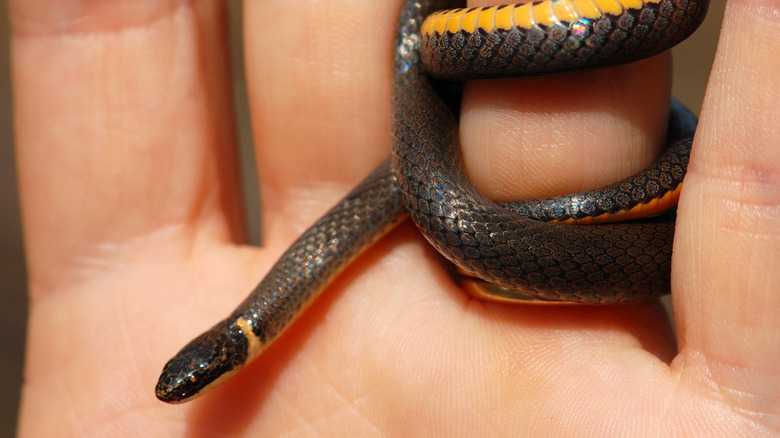
How To Care For Ringneck Snakes
Other Cute AnimalsHow To Care For Ringneck SnakesByJill HarnessUpdated: Dec. 9, 2024 3:08 pm ESTthe4js/iStock/GettyImagesSlithery, scaly snakes can make cool pets that are fun to hold. But when you think of pet snakes, you might think of big boa constrictors or other large snakes that are hard to hold onto even with two hands. But not all snakes are so massive. In fact, the tiny ringneck snake can be held easily in one hand —sometimes even happily curling around just one single finger. While larger snakes take up a ton of room, the ringneck snake often needs a tank only slightly bigger than a shoebox. As a bonus, they eat insects like worms, crickets and slugs rather than mammals like mice, rats or baby bunnies.About ringneck snakesRingneck snakes are small snakes that live throughout North and Central America, with a territory that spans from Canada all the way through Mexico. As the name implies, the snakes have a distinctive yellow ring on their neck. They have stunning colors that are prized among snake owners, with their backs generally ranging from black to brown to gray and bright stomachs ranging from red to orange to yellow.They are small snakes, generally growing to only 10 to 15 inches depending on the subspecies, and they rarely get wider than the width of a pencil. This means that a full-grown ringneck snake pet will be about the size of many other baby snakes. While they are extremely common, these snakes are rarely seen because they are small, very shy, live in the forest, and spend most of their time hiding in places like rocks, logs, and leaf litter.While the ringneck snake does have venom, the venom does not pose a threat to humans. Additionally, the teeth are small and located in the back of the mouth, which means that they cannot get their teeth into your skin. While bites are very rare, when they do occur, Reptile Wikipedia says that they can last up to a minute, and the result is a slight sting and warm sensation. The bites do not hurt.Getting a ringneck snake petBecause ringneck snakes are difficult to breed in captivity, most ringneck snakes kept as pets come from the wild, whether they were captured by the owner or a snake dealer. While ringneck snakes are fairly common throughout North and Central America, there are some subspecies that are protected by conservation laws, according to Animal Diversity Web.These subspecies include the San Diego ringneck snakes and San Bernardino ringneck snakes of Southern California, the Key ringneck snakes of the Florida Keys, and the regal ringneck snakes and Northwestern ringneck snakes of Iowa. Because these subspecies are all threatened in their native environments, their capture and captivity should be avoided.A baby ringneck snake is born ready to care for himself and does not require help from his parent, so if you happen to stumble upon ringneck snake eggs and can successfully incubate and hatch them, you can raise the hatchlings just like you would an older snake. It is worth noting thought that mostly because of their size and their shy personality, the ringneck snake is very delicate and is not necessarily a good pet for a first-time owner.Caring for a ringneck snakeRingneck snake care begins with a proper cage. That means a 10-gallon cage with a mesh top that will stop the snake from escaping. These snakes require plenty of hiding places, so things like hollowed logs and caves are necessary to prevent the snake from feeling stressed. Put 3 inches of potting soil, sand, and peat moss in the cage so the snake can burrow and hide herself, and mist this bedding with a spray bottle every other day in order to keep the environment suitably moist.Keep the cage at the proper temperature, which should be 70-75 degrees for most species. Some subspecies from warmer climates such as Mexico might prefer temperatures that are slightly warmer than this, though, so keep your snake's native habitat in mind when setting the temperature.Give your snake a shallow water dish that is not heavy, or it could crush the snake, according to the Backwater Reptiles Blog. Feed your snake two to four times a week. Most snakes will prefer earthworms, but based on the snake's native habitat, other insects may be preferred, such as crickets or slugs. This insect-based diet makes the ringneck snake a popular choice with people who like the idea of owning a snake, but can't stomach feeding their snake little mice or other rodents.
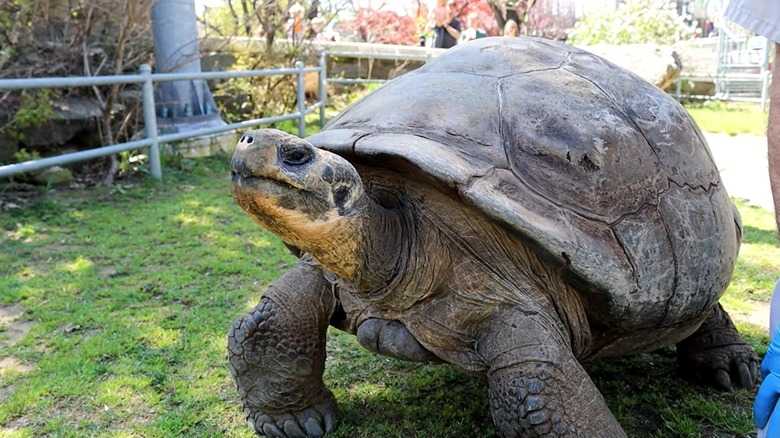
The Land Animal That Became A New Parent At An Age Humans Can Only Dream Of
Other Cute AnimalsThe Land Animal That Became A New Parent At An Age Humans Can Only Dream OfByAdam SymchukApril 13, 2025 1:25 pm ESTPhiladelphia Zoo / YouTubePeople can learn plenty from observing motherhood in the wild. Whether preparing for a new litter of puppies or visiting a zoo to see its latest little addition, seeing animals' love for each other across species can be eye-opening. While each new addition to a family is a little miracle unto itself, some hold a significance that makes them newsworthy.One remarkable birth occurred on April 4, 2025, at the Philadelphia Zoo. It was announced that a pair of Galapagos tortoises nearing their hundreds had hatched four eggs. It was the zoo's first birth of the near-extinct tortoise in over 150 years. The proud parents, the oldest residents at the zoo, were the aptly named Mommy and her partner, Abrazzo. Mommy, a long-time resident who arrived in 1932, is 97 years old, while Abrazzo is 96. While there have been successful hatchings, with the previous one in 2019 in Columbia, South Carolina, Mommy is on record as the oldest first-time mom among the Galapagos.Compared to humans, 97 is an outstanding age to live to, let alone become a mother. Yet, in captivity, the large tortoise can boast an impressive lifespan, with the oldest on record being Harriet at the Australia Zoo, at 175. Still, Mommy's motherhood isn't just a curiosity; it's a lifeline for her species, as the happy family will help with future conservation and awareness of the threatened tortoise.The importance of Galapagos tortoises hatchlingsPhiladelphia Zoo / YouTubeMommy and Abrazzo's four little ones are essential in helping to conserve the Galapagos tortoise population. There are only around 15,000 total left in the wild and captivity. However, there are various sub-species, some more endangered than others. The new hatchlings from the Philadelphia Zoo belong to the Western Santa Cruz Galapagos species; you can see the proud parents and babies in the video below from the Philadelphia Zoo YouTube channel.The Western Santa Cruz Galapagos tortoise, with a population of 3,400, is registered as critically endangered on the International Union for Conservation of Nature's Red List. The birth of the four shelled siblings has increased the number of tortoises in captivity in American zoos to 48. In a statement by the vice president of animal well-being and conservation at the Philadelphia Zoo, Rachel Metz, reiterated the importance of the four new additions: "At one point, each of the Galapagos Islands had its own unique Galapagos tortoise, but sadly, several of them are now extinct. These hatchlings not only protect the species from extinction, but serve as important ambassadors to inspire guests to save wildlife and wild places."Those who want to see the adorable and historic additions to the Philadelphia Zoo can view them after April 23, 2025. Even if you can't make the trip, animal enthusiasts and lovers have plenty of reasons to celebrate the new addition and what it means for the longevity of the rare Western Santa Cruz Galapagos tortoise. Want to read more about remarkable events happening in the animal kingdom? Check out the article on the unique 'one-in-a-million' animal spotted in Western Texas.
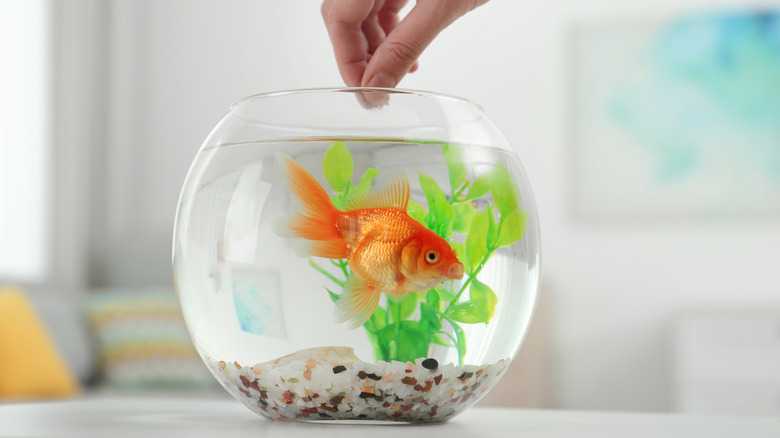
List Of Foods Goldfish Can Eat
Other Cute AnimalsFishList Of Foods Goldfish Can EatByCuteness StaffUpdated: Dec. 4, 2024 11:56 am ESTNew Africa/ShutterstockIn the wild, goldfish munch on aquatic plants, bugs, small crustaceans, and even smaller fish. These provide the necessary protein to survive. However, fish that live in an aquarium aren't exposed to these natural food sources. Instead, they are dependent on whatever food is given to them.As a pet parent, it's your responsibility to ensure your fish receive all the nutrients necessary to support their well-being. While a tin of fish flakes provides a convenient way to feed your omnivorous fish, if you want your goldfish to thrive, your best bet is to supplement their diet with nutrient-dense, natural foods. Goldfish can be appreciative eaters, consuming all that you're willing to feed them. They'll happily consume both plants and meats, provided they're cut small enough to fit in their tiny mouths. These natural food sources can provide them with the supplemental protein and optimal nutrition. Adding variety to meals is also a great way to keep your goldfish happy.Goldfish can eat cucumbers and other vegetablesFly View Productions/Getty ImagesIt's not much trouble to prep a dinner for a goldfish. In some cases, fresh food can rival or exceed the nutrition found in the goldfish flakes. Raid the fridge to find appropriate vegetables and fruit for your goldfish: a cooked pea with the shell removed, a blanched romaine lettuce leaf, or bits of cooked zucchini and cucumber.According to Luke's Goldies, you can prepare cucumber for your goldfish by removing the seeds from the fruit and finely chopping it into a tiny mince. Next, submerge the cucumber in into a bowl of water. From there, boil the water or microwave it until the cucumber has softened. Cool the cooked cucumber in a bath of ice water before distributing it to your fish in the aquarium. Goldfish appreciate animal proteinsQuang nguyen vinh/ShutterstockIf you keep reptiles or amphibians as pets, you might have something on hand that your goldfish will enjoy. Toss in a few fresh, frozen, or freeze-dried brine shrimp, mealworms, or crickets. Goldfish will also eat earthworms, waxworms, bloodworms, blackworms, and daphnia. According to some goldfish parents on Reddit, the best way to feed them these proteins is to chop them up into tiny bits for easy consumption. Goldfish living outside in a pond where temperatures fluctuate will especially relish these natural, high-value foods.Keep in mind that any food leftover in the aquarium will start to rot and cause the water to become cloudy. Poor water quality is the most common cause of any fish disease, so be sure to any remove bits of fresh food or leftover pellets with a net or aquarium forceps after feeding. Maintain a healthy environment for your goldfish by sticking to a regular cleaning schedule and replacing one-third of the aquarium water on a weekly basis.
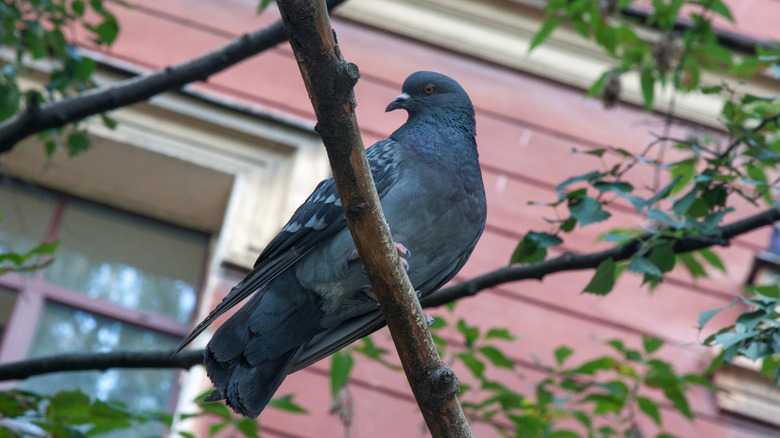
How To Call A Pigeon
Other Cute AnimalsBirdsHow To Call A PigeonByHailey HudsonUpdated: Dec. 9, 2024 4:17 pm ESTSherrit/ShutterstockSometimes, you may want to call pigeons to you so you can feed them or take care of them. You can do this by making a pigeon call by blowing into your hands. While it can take some practice to master this technique, you'll eventually be able to attract pigeons by making a pigeon call.Why do pigeons call each other?Pigeons are small birds in the same family as doves. They are flocking birds and strong fliers. Pigeons can be any one of a range of colors, including brown, gray, black, and white. They eat a variety of foods, such as berries, vegetation, weed seeds, bird seed, or food given to them by humans.A common form of communication among pigeons is calling. This happens when pigeons produce high-pitched sounds in order to communicate with each other. Pigeons call to each other for reasons such as courtship, revealing their location, or sharing a food source. Humans can also call pigeons in order to hunt them or feed them.How to do a pigeon callTo perform a pigeon call, first wet your hands. Cup your hands like the shape of the letter "C" and put one hand into your other hand, palms facing inward. Your two hands together should now form an "O" shape.Press your thumbs together and bend your thumbs over your index fingers. A small hole will form between your thumbs. Place your top lip above the knuckles of your thumb and place your bottom lip below your knuckles. Then, blow gently down to the hole between your thumbs. This is how you do a pigeon call.Robbie Ross/iStock/GettyImagesWhat sounds do pigeons make?You might hear a pigeon make several different sounds. One sound that pigeons make is a song. This is a series of throaty coos. The pigeon will simultaneously strut, bow, inflate his throat, and fan his tail.Pigeons also call when they are trying to attract a mate. The call is a prolonged cooing sound. If a pigeon is scared or startled, you will hear him make a short grunt.When a pigeon takes off into the air, he will beat his wings together, producing a slapping sound. Often, pigeons stamp their feet on the ground when they land. All of these different sounds are forms of pigeon speaking to help them communicate with each other and feel safe in their environment.Pavel Adashkevich / EyeEm/EyeEm/GettyImagesDo pigeons like humans?Many people wonder if pigeons like humans. Pigeons are generally not afraid of humans. Typically, these birds are sweet and sociable, especially if you're offering them food. As you interact with pigeons in the wild or on a city street, remember to never be cruel to them. Don't yell at the birds or try to frighten them for fun. You also shouldn't try to pick up a pigeon. Sit down, be still and quiet, and let the pigeons come to you. You can use your pigeon call to try to attract more birds your way.
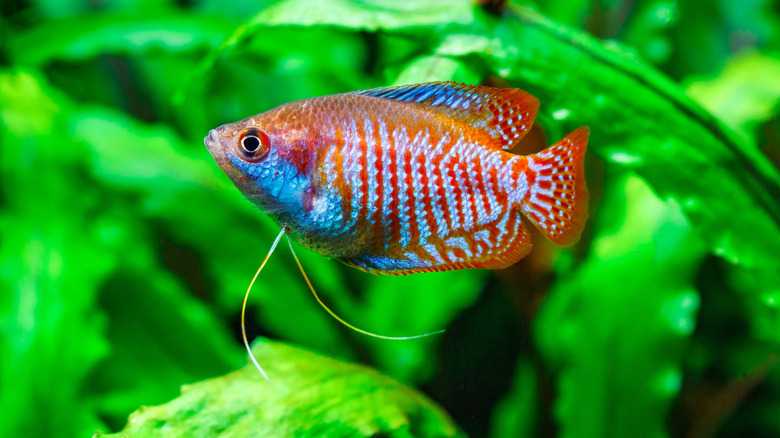
Do Gourami Fish Get Pregnant? Here's What To Look For
Other Cute AnimalsFishDo Gourami Fish Get Pregnant? Here's What To Look ForByPaige MountainUpdated: Oct. 24, 2024 4:35 pm ESTBukhta Yurii/ShutterstockGourami are a popular choice as freshwater aquarium inhabitants for fish enthusiasts everywhere. There are many different species of gourami, which means there's one out there suited for every fish lover. If you're a proud gourami caretaker, there may come a time when you decide you want more of these cherished fish, and you might make the decision to breed them. Or maybe you suspect one of your current gouramis is already carrying eggs and are wondering what the signs are.Technically speaking, gourami don't get pregnant,but rather become gravid.Gourami lay eggs to reproduce; when a female fish is gravid, it means she is carrying these eggs and preparing to lay them rather than giving birth to living fry.If you think your gourami fish could be gravid, keep an eye out for certain common behaviors.Signs your gourami fish is gravidMagdalena Teterdynko/ShutterstockIf you have a male and female gourami fish in the same tank, there are some signs to look out for that could indicate your female fish is gravid and that egg laying may soon unfold. Similar to when other animal species get pregnant,you may notice your female gourami fish become wider when she is carrying eggs. Along with this change to her physical appearance, you can also watch for signs from the male and female that they are getting ready for egg laying.When gourami fish lay eggs, they create what is called a bubble nest. If you notice your male gourami seems to be working on building this nest, he could be preparing for the female to lay eggs soon. If you observe your male and female fish intertwined under the bubble nest, it likely means your female is now laying eggs and the male is fertilizing them.Breeding gourami fishAleron Val/ShutterstockIf you decide you want to breed your gourami fish, there are some tank requirements you'll need to adhere to in order to help your them reproduce. The water level in the breeding tank should be around 6 inches deep. When the breeding pair are in the tank, you should take a few days to gradually increase the water temperature until it reaches 82-85 degrees. Make sure the tank you use for breeding has a lid, as the fry will require a temperature-controlled environment. You should also include some floating decor or plants, not only for aesthetic purposes, but because male gourami tend to build their bubble nests connected to these objects.When you have the breeding tank set up and ready for your male and female gourami pair, you will want to move the female in first to get her used to the tank and look for potential spots to lay eggs. Once she's been acclimated, you can go ahead and add the male in. It will likely take multiple days for the fish to mate, so don't be discouraged if they don't do so right away. Once the eggs are laid, you will need to remove the female from the tank immediately, as she could begin eating the eggs. The male shouldn't be removed at this stage, as he will take care of the fry until they are able to be fully independent.
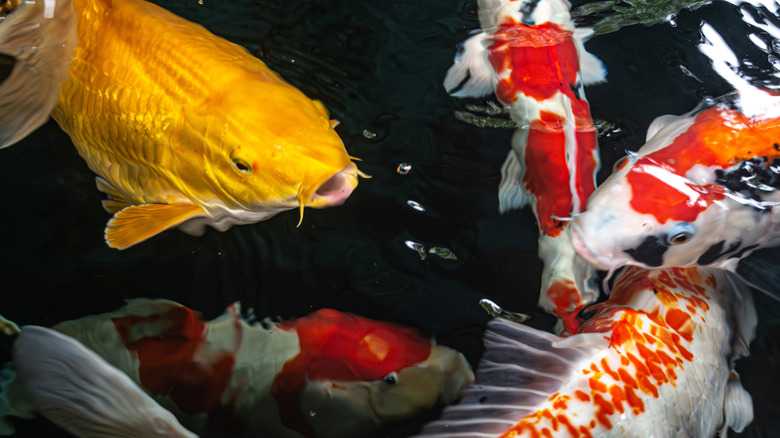
One Pet Fish Type Can Live Longer Than The Rest (Here's How)
Other Cute AnimalsFishOne Pet Fish Type Can Live Longer Than The Rest (Here's How)ByAdam SymchukMarch 7, 2025 11:25 am ESTSimplyWandering/ShutterstockPet fish can be the perfect highlight in a stunning outdoor garden or a vibrant focal point in a room where their aquarium showcases the beauty of aquatic life. While some people dismiss fish as pets — citing perceived lack of intelligence or short lifespans relative to cost — many of these assumptions are based on misconceptions. In reality, fish can have an abundance of personality and some species are among the longest-living pets. One, in particular, stands out for its remarkable longevity: the koi. With proper care, these elegant carp can become lifelong companions, outliving popular pets like cats and dogs.Koi fish are cherished globally for their unique markings and docile nature. With the right care, they can live between 25 and 40 years under optimal conditions in domestic ponds and environments. This lifespan surpasses that of the goldfish, a fish that isn't as easy for beginners as once thought, which usually lives 10 to 30 years under proper care. However, the koi's impressive longevity does not come naturally, and owners must provide them with a tailored environment and adequate care to help them thrive.Replicating a Koi's natural habitat, maintaining a healthy diet, ensuring clean water, and allowing them to hibernate are essential steps for nurturing these prized fish and ensuring they live long, healthy lives.The ideal conditions for a koiWestend61/Getty ImagesKoi thrive best in an environment mimicking their native habitat, particularly an outdoor mud pond. A mud pond is an excavated area filled with water, often lined with Bentonite clay if the natural soil is unsuitable. These ponds cultivate natural food sources like algae, insects, and other invertebrates. Having ample space and encouraging natural behaviors is ideal for raising a koi.However, caring for koi goes far beyond simply building a pond and putting the carp in it. A potential breeder/owner must optimize oxygen levels, pH balance, and water quality. Koi also flourish in communities with other pet fish, even developing distinct personalities. They coexist well with goldfish if both species' needs are equally met.Wintering is crucial in helping koi achieve a longer lifespan. While this process requires careful preparation and presents challenges in changing feeding and maintaining their space, allowing koi to hibernate during winter mimics their natural environment and slows their metabolism. Although koi can live long lives, reaching their maximum life expectancy depends on carefully considering essential factors.Additional factors that can affect lifespanBoogich/Getty ImagesKoi fish are known for their impressive lifespan no matter where they are located. However, their longevity is even more remarkable in Japan, their country of origin. This can be attributed primarily to their cultural significance. In Japan, the Koi symbolizes various things such as courage, perseverance, bravery, virility, strength, and love; effigies of the fish are also often given as good luck charms for students before exams. This reverence for the pristine carp translates into more thorough care for the health and longevity of the koi.Japanese koi are considered a stronger breed than those in the West, with breeders focusing on maintaining a high-quality gene pool and achieving larger sizes. The best koi fish also rarely leave Japan, making it harder for outside breeders to achieve similar outcomes. Their care extends to feeding practices, as Japanese koi are often transferred to large earth ponds, allowing them to grow in spacious environments with access to natural food sources. In contrast, many Western koi owners prioritize growing their pet fish faster over offering a natural diet. Japan's cold winters also ensure that the carp undergoes a natural winterization, a process not always as adhered to by owners outside their native country. Regardless of where their koi originates, those willing to invest the effort will find a long-living, beautiful pet with abundant personality.
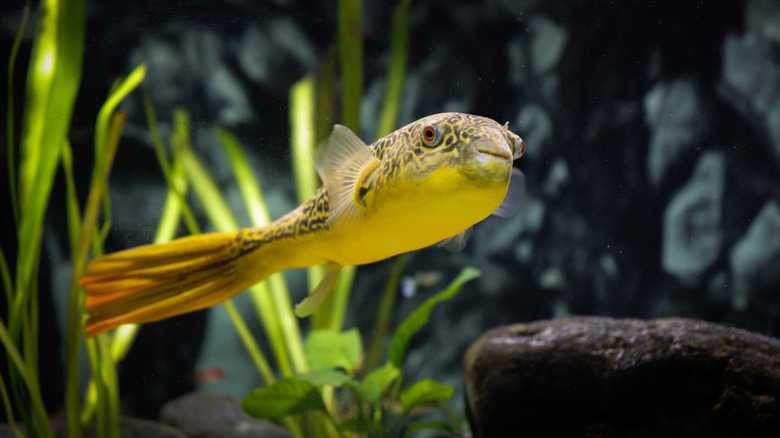
One Of The Largest Blowfish You Can Own As A Pet Can Live For Over 20 Years
Other Cute AnimalsFishOne Of The Largest Blowfish You Can Own As A Pet Can Live For Over 20 YearsByAdam SymchukApril 7, 2025 9:25 am ESTContentus/ShutterstockAn aquarium offers a view into another world, inspiring wonder, education, and celebration of nature's beauty. For the determined aquarists, fish can also become a collection of unique species and color morphs to accentuate their aquariums. One choice that's certainly a showstopper is the long-living Mbu pufferfish, also known as the giant pufferfish because of its size.A native African freshwater species hailing from the Congo River, the Mbu pufferfish can grow to 30 inches long, though many reach a length between 24 and 28 inches. This measurement is double the size of the second-largest freshwater pufferfish, the Fahaka puffer, which can grow to 15 inches. At the same time, the Mbu is unique within the pufferfish family because it's known to inflate its muscles as a flex, commonly known as "practice puffs." For owners, this gives them a brief chance to see a pufferfish in action, as some other species only inflate due to environmental stressors.In captivity, an Mbu pufferfish can live to be over 20 years old with proper care and consideration. While not boasting the same pet lifespan as the long-living koi fish, a well-cared-for Mbu can become a long-term commitment for a potential owner. Considering the size and longevity of the Mbu, adequate care is essential in allowing it to reach its full potential, meaning this isn't a pet purchase to be taken lightly.The challenges of caring for a Mbu pufferfish to its full sizeexs_r/ShutterstockTo get a Mbu pufferfish to live its longest life and reach its maximum size, it needs a tank that's 8x3x3 feet or larger. This size likely means that fish enthusiasts need to purchase and construct the aquarium at home or build their own fish tank. The Mbu should also be the only one of its kind in any aquarium, and some owners advise keeping them entirely separate from any fish, though you can gauge how they react with others before separating them.An Mbu can be injured in interactions with fish bigger than it, stingrays, or tank-mates that may go after the same food. Generally, avoiding territorial or aggressive fish will make for a happier, more balanced tank. The puffer is known to be sensitive, and it displays this visually when its regular colors wash out and areas around its face darken. Addressing potential stressors when they appear will help longevity, and an Mbu should never be provoked into puffing up, which results from purposely stressing or scaring the fish.Feeding your Mbu pufferfish a balanced diet and wearing down its teeth with hard food are essential; this species needs a variety of feed, including high-grade pellets, frozen crayfish or crabs, snails, insects, and earthworms. Other considerations for a healthy environment include maintaining agreeable water values. Ultimately, with love and attention, the Mbu pufferfish can have an impressive lifespan beyond popular pets like cats and dogs and make for a remarkable addition to any collection.
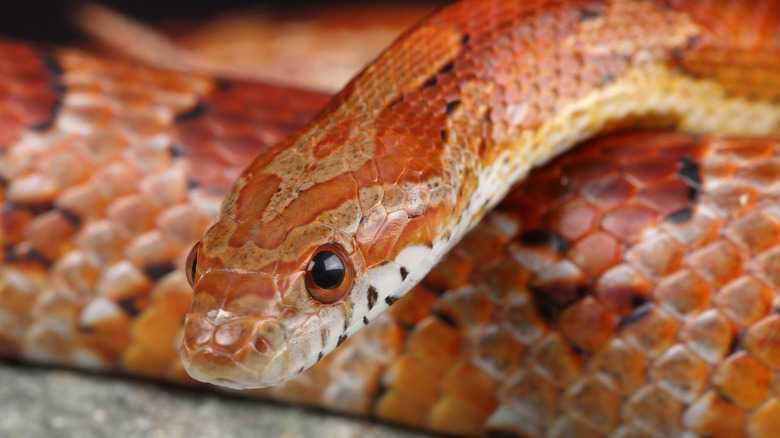
How Often Should You Feed A Corn Snake? Less Than You Might Think
Other Cute AnimalsHow Often Should You Feed A Corn Snake? Less Than You Might ThinkByAdam SymchukApril 3, 2025 9:25 am ESTRMMPPhotography/ShutterstockWe may receive a commission on purchases made from links.While many homes welcome cats or dogs, others opt for a pet that is considered more unconventional: snakes. Those who have accepted the scaly friends into their home often tout various reasons why snakes make great pets — from their calm nature, low maintenance, long lifespans beyond cats and dogs, unique bonding experience, and variety of species and patterns. For many snake enthusiasts, their first introduction comes from the corn snake, which is considered an excellent starter for its size and ease of care, particularly regarding feeding.How much to feed a corn snake depends on its age and size; in captivity, it can live to be 23 or older and grows between 2 to 6 feet in length. In conversation with Reptifiles, professional reptile husbandry researcher and consultant Mariah Healey outlined how the amount to feed a corn snake varies by age and size. Hatchlings, which can range from 8 to 20 inches, should be fed every 5 to 7 days to coincide with their quick growth; juveniles, which range from 20 to 45 inches, can then be fed every seven to 10 days; and the 'sub-adult' phase, where it is between 35 to 50 inches, requires feeding every 10 to 12 days. Once a snake matures and reach its full length, feeding should occur 14 to 21 days apart. However, there is some nuance with adult snakes as adjustments will be made for overweight adults, opting for meals every 21 to 45 days, and underweight corn snakes needing more frequent feeding every 10 to 14 days until back at a healthy weight. A senior corn snake over 18 years old also requires a more regular meal plan, eating every 10 to 14 days. There can be many nuances to feeding a pet snake, and adapting along with your snake and seeking professional advice or veterinarian input can ensure proper feeding times and amounts.What to feed a corn snakeMariano Sayno/Getty ImagesLike other snake breeds, a corn snake will thrive on a diet of primarily mice or rats. It is recommended to avoid live feed, as a struggling animal could potentially hurt a pet snake. Instead, mice or rats should be purchased frozen, thawed a day or two prior, and brought to room temperature an hour or two before feeding. The size of its meal factors in raising a healthy corn snake. To figure this out, any food given should be 1 to 1.5 the width of the corn snake at the broadest part of the body, ignoring the head. In some cases, a corn snake may need to take two smaller portions of food that should not exceed 10% of the snake's body weight. For a juvenile corn snake, the diet should start with small 'pinkies' (hairless mice) before moving to 'fuzzies,' or slightly larger mice. MiceDirect offers various sizes, including a Combo Pack of Small Pinkies specifically for a growing corn snake and a Combo Pack of 20 Small Fuzzies to allow the proper size of feed throughout a snake's life cycle.Snakes are carnivores, so adhering to an established diet and avoiding human food like vegetables, fruits, grains, and processed foods is essential. Quail eggs can be given as a treat, but it is best to stick to regular feed that meets its nutritional requirements. While feeding can be a bonding time for pet parents of cats and dogs, it is not the same case for snakes. Finding a routine and feeding the proper amount can help ensure a happy pet. A happy snake has a way of sssssssslithering straight into the hearts of its owner; treat it well, and the relationship can be rewarding one that lasts decades.Always consult your veterinarian before making changes to your pet's diet, exercise, or care. To find an accredited veterinarian in your area, you can search theAmerican Animal Hospital Association's online database.